

Standardizing the isolation of stromal vascular fraction (SVF) from adipose tissue is crucial for advancing research in the field.
We recognize that working with adipose tissue poses significant challenges due to its high lipid content and relatively low protein concentration.
The Adipose Tissue Fractionation Kit offers a significant advancement in this area by enabling efficient separation of water-soluble protein fractions from water-insoluble fractions.
This results in cleaner, more consistent outcomes for researchers, particularly when conducting western blot analysis of protein from tissue samples.
Key Takeaways
- Efficient separation of protein fractions from adipose tissue samples.
- Improved consistency in research outcomes through standardized SVF isolation.
- Enhanced western blot analysis with cleaner protein samples.
- Critical for understanding metabolic disorders and conditions related to adipose tissue.
- Facilitates comparison between different studies in adipose tissue biology.
Understanding Adipose Tissue Analysis Challenges
Adipose tissue, particularly white adipose tissue, presents unique analytical difficulties. As we delve into the complexities of adipose tissue, it becomes clear that its heterogeneous composition poses significant challenges for researchers.
The Complexity of Adipose Tissue Composition
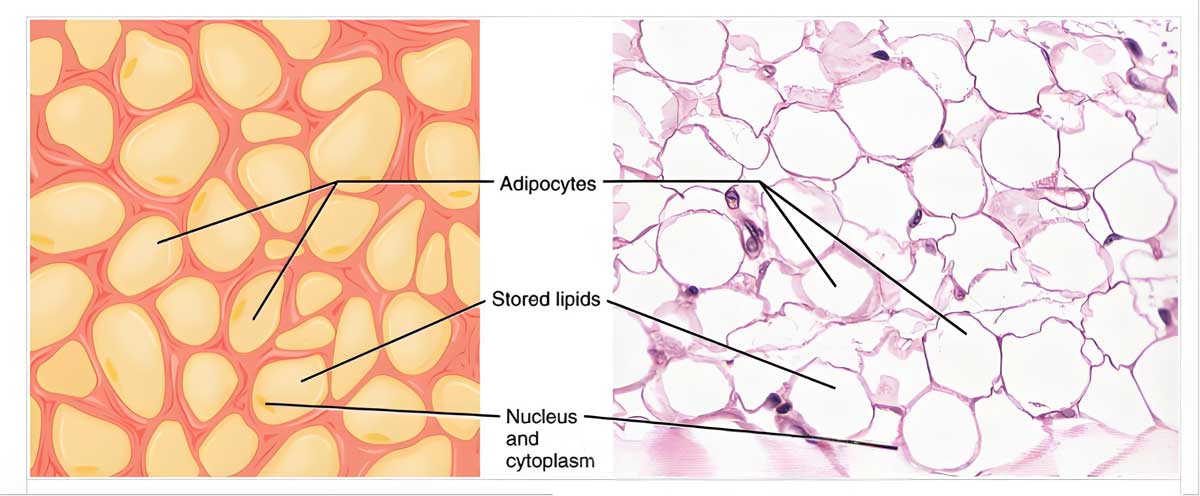
Adipose tissue is not just a simple fat storage depot; it’s a complex organ comprising various cell types, including mature adipocytes, preadipocytes, immune cells, endothelial cells, and extracellular matrix components. This diversity of cellular components contributes to the challenges in analyzing adipose tissue. As stated by recent studies, “The multifaceted role of adipose tissue in energy metabolism and endocrine regulation underscores its complexity.”
Challenges in Protein Extraction from Lipid-Rich Tissues
The high lipid-to-protein ratio in adipose tissues, with proteins accounting for less than 2% of the total mass, creates significant obstacles for conventional protein extraction methods. Water-oil emulsions formed during sample processing interfere with protein isolation, leading to contamination and reduced yields. We need specialized methodologies to overcome these challenges and obtain reliable results. Efficient protein extraction is crucial for downstream applications such as Western blotting.

Stem Cell Exosomes
To overcome these challenges, researchers require advanced tools and techniques. The complexity of adipose tissue necessitates fractionation approaches that can distinguish between different cellular components and their respective protein profiles. By understanding these challenges, we can better appreciate the need for innovative solutions in adipose tissue analysis.
Adipose Tissue Fractionation Kit: Advanced Solution for Researchers
We have developed a cutting-edge Adipose Tissue Fractionation Kit that simplifies the process of protein extraction from adipose tissue. This innovative kit is designed to overcome the challenges associated with adipose tissue processing and protein extraction.
Key Components and Technology
The Adipose Tissue Fractionation Kit employs a specialized porous filter with unique surface properties and a predefined pore size, coupled with a specially formulated detergent-free fractionation buffer. This technology enables the effective separation of water-soluble protein fractions from water-insoluble components.
Unique Buffer System for Optimal Protein Separation
The kit features a proprietary buffer system that is free of detergents, primary amines, and reducing agents, ensuring compatibility with sensitive downstream applications like mass spectrometry. The unique buffer formulation effectively disrupts challenging water-oil emulsions without compromising protein integrity, allowing for clean separation of protein fractions.
The comprehensive kit includes all necessary components: Buffer A (15 ml), Buffer B (15 ml), 1.5 ml Microfuge Tubes (20 units), Pestles for 1.5 ml Tubes (2 units), Filter Cartridge with Collection Tubes (20 units), and Protein Extraction Powder (2 grams).
Applications in Western Blot Analysis and Beyond
With the adipose tissue fractionation kit, scientists can perform detailed protein analysis using Western blotting and other methods. The kit’s ability to separate proteins into distinct fractions enables researchers to gain a deeper understanding of adipose tissue composition.
Protein Marker Identification
Western blot analysis of fractionated proteins from rat white adipose tissue (WAT) reveals distinct protein profiles between water-soluble and water-insoluble components. Key cellular protein markers are identified using specific antibodies, including Na/K ATPase alpha1, lamin B1, ubiquinol-cytochrome C reductase core protein, and GAPDH.
| Protein Marker | Cellular Location | Fraction |
|---|---|---|
| Na/K ATPase alpha1 | Plasma membrane | Water-insoluble |
| Lamin B1 | Nuclear envelope | Water-insoluble |
| GAPDH | Cytosol | Water-soluble |
Compatibility with Downstream Applications
The clean protein extracts obtained using this tissue fractionation method are compatible with various downstream applications, including TMT labeling, enzyme digestion, and mass spectrometry analysis. This versatility enables researchers to explore multiple avenues of protein analysis.
Conclusion: Advancing Adipose Tissue Research with Standardized Methods
With the Adipose Tissue Fractionation Kit, the complexities of adipose tissue analysis are simplified. This kit provides a reliable and reproducible protocol for separating water-soluble and water-insoluble fractions, addressing a critical need in the research community. By enabling more detailed characterization of adipose tissue proteomes, it facilitates new discoveries about the endocrine and metabolic functions of adipose tissues.
The kit’s comprehensive nature supports diverse research applications, from basic protein marker identification to complex proteomics analysis of white adipose tissue. As a result, researchers can achieve consistent results across different experiments and laboratories, enhancing the comparability of findings in the field of adipose biology.
References and further readings:
1. Markan, K. R., Naber, M. C., Small, S. M., Peltekian, L., Kessler, R. L., & Potthoff, M. J. (2017). FGF21 resistance is not mediated by downregulation of beta-klotho expression in white adipose tissue. Molecular Metabolism.2. Liu, X., Tong, W., Zhao, X., Zhang, H., Tang, Y., & Deng, X. Chinese herb extract improves liver steatosis by promoting the expression of high molecular weight adiponectin in NAFLD rats. Molecular Medicine Reports.
3. Subbaramaiah K etal (2018). Prostaglandin E2down-regulates sirtuin 1 (SIRT1) leading to elevated levels of aromatase, providing insights into the obesity-breast cancer connection.J Biol Chem. 2018 Nov 8.
FAQ
What is the purpose of the Adipose Tissue Fractionation Kit?
The kit is designed to facilitate the separation of proteins from lipid-rich adipose tissues, enabling researchers to analyze protein markers in both water-soluble and insoluble fractions.
How does the kit handle lipid-rich samples?
Our unique buffer system is optimized for the efficient extraction of proteins from adipose tissues, allowing for the separation of proteins into distinct fractions.
Is the kit compatible with downstream applications such as Western blot analysis?
Yes, the kit is designed to be compatible with various downstream applications, including Western blot analysis, enabling researchers to identify protein markers in different fractions.
Can the kit be used with different types of adipose tissues?
The kit is particularly useful for analyzing white adipose tissue, but it can be applied to various adipose tissue samples, providing flexibility for researchers.
What are the benefits of using this kit for protein analysis?
By utilizing our kit, researchers can efficiently separate and analyze proteins from adipose tissues, gaining insights into endocrine functions and cellular processes.
How does the kit contribute to advancing research in the field?
By standardizing the fractionation process, our kit enables researchers to obtain high-quality protein samples, facilitating comparative studies and promoting a deeper understanding of adipose tissue biology.
Leo Bios
Hello, I’m Leo Bios. As an assistant lecturer, I teach cellular and
molecular biology to undergraduates at a regional US Midwest university. I started as a research tech in
a biotech startup over a decade ago, working on molecular diagnostic tools. This practical experience
fuels my teaching and writing, keeping me engaged in biology’s evolution.
Leave a Comment
Your email address will not be published. Required fields are marked *