SKU: WP2351 Categories: ,

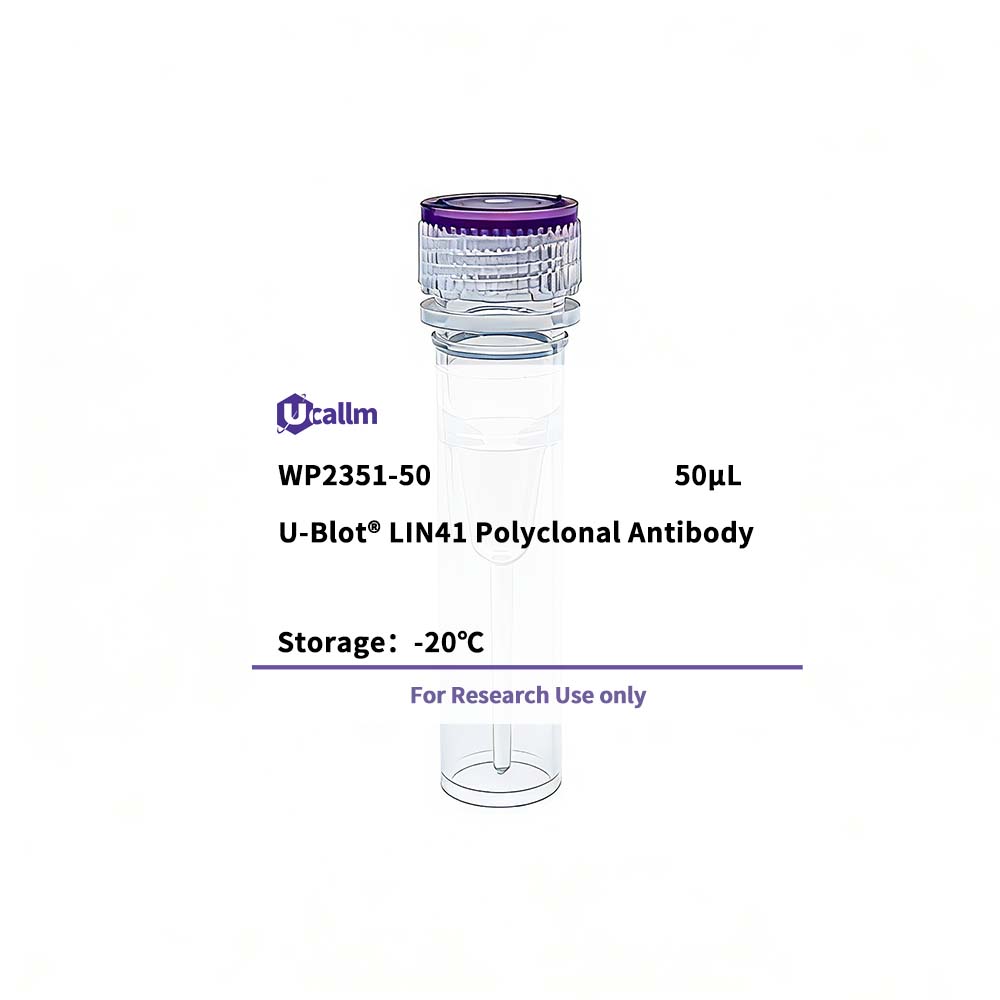
LIN41 Polyclonal Antibody

Price range: $268.00 through $328.00

SKU: WP2351-100
Enter the quantity you would like, or drag the panel to find the quantity and price that best for you
Bulk QuoteAuthorize OEM & ODM

Product details

Background:

The protein encoded by this gene is an E3 ubiquitin-protein ligase that binds with miRNAs and maintains the growth and upkeep of embryonic stem cells. This gene also is involved in the G1-S phase transition of the cell cycle. [provided by RefSeq, Dec 2015],


Specifications

Size50μL/100μL
TargetLIN41
ReactivityHuman, Mouse, Rat
ApplicationsWB, ELISA
MW(Calculated)
MW(Observed)95kD
Host SpeciesRabbit
IsotypeIgG
Conjugate/ModificationUnmodified
Recommended Dilution RatioWB 1:500-2000; ELISA 1:5000-20000
FormulationLiquid in PBS containing 50% glycerol,0.5% BSA and 0.02% sodium azide.
PurificationThe antibody was affinity-purified from rabbit antiserum by affinity-chromatography using epitope-specific immunogen.
Storage-15°C to -25°C/1 year(Do not lower than -25°C)
Concentration1 mg/ml
ClonalityPolyclonal
Clone Number
ImmunogenSynthesized peptide derived from part region of human protein
SpecificityLIN41 Polyclonal Antibody detects endogenous levels of protein.
Gene NameTRIM71 LIN41
Protein NameTripartite motif-containing protein 71 (Protein lin-41 homolog)
Other Name
SpeciesHuman
Gene ID131405
UniprotQ2Q1W2,
Species.1Mouse
Gene ID.1
Uniprot.1Q1PSW8,
Species.2Rat
Gene ID.2
Uniprot.2D3ZVM4
Cellular LocalizationCytoplasm, P-body .
Tissue ExpressionSpecifically expressed in testis.
Signaling_pathwayHuman Diseases >> Cancer: overview >> MicroRNAs in cancer
Research Areas>>MicroRNAs in cancer
FunctionFunction:May be involved in controlling the timing of organ formation during development.,induction:Down-regulated by retinoic acid in Tera-2 cells.,similarity:Belongs to the TRIM/RBCC family.,similarity:Contains 1 filamin repeat.,similarity:Contains 1 RING-type zinc finger.,similarity:Contains 2 B box-type zinc fingers.,similarity:Contains 6 NHL repeats.,tissue specificity:Specifically expressed in testis.,
Please login to post questions
Back to Top
Product has been added to your cart

