

Product details
Background:
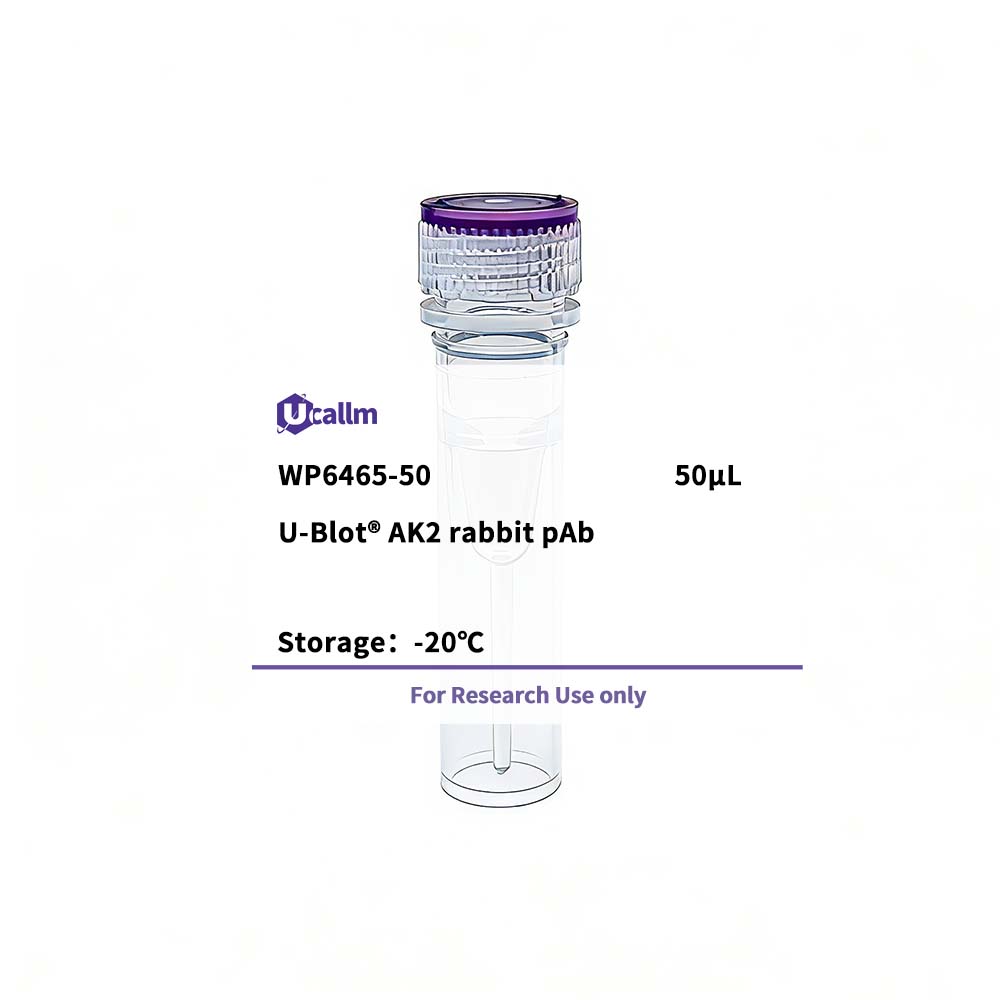
Price range: $268.00 through $328.00
Background:
| Size | 50μL/100μL |
| Target | AK2 |
| Reactivity | Human, Mouse, Rat |
| Applications | WB |
| MW(Calculated) | 26kD |
| MW(Observed) | |
| Host Species | Rabbit |
| Isotype | IgG |
| Conjugate/Modification | Unmodified |
| Recommended Dilution Ratio | WB 1:500-2000 |
| Formulation | Liquid in PBS containing 50% glycerol, 0.5% BSA and 0.02% sodium azide. |
| Purification | The antibody was affinity-purified from rabbit antiserum by affinity-chromatography using epitope-specific immunogen. |
| Storage | -15°C to -25°C/1 year(Do not lower than -25°C) |
| Concentration | 1 mg/ml |
| Clonality | Polyclonal |
| Clone Number | |
| Immunogen | Synthesized peptide derived from human AK2 |
| Specificity | This antibody detects endogenous levels of AK2 at Human, Mouse,Rat |
| Gene Name | AK2 ADK2 |
| Protein Name | Adenylate kinase 2, mitochondrial (AK 2) (ATP-AMP transphosphorylase 2) |
| Other Name | |
| Species | Human |
| Gene ID | 204 |
| Uniprot | P54819, |
| Species.1 | Mouse |
| Gene ID.1 | 11637 |
| Uniprot.1 | Q9WTP6, |
| Species.2 | Rat |
| Gene ID.2 | 24184 |
| Uniprot.2 | P29410 |
| Cellular Localization | Mitochondrion intermembrane space . |
| Tissue Expression | Present in most tissues. Present at high level in heart, liver and kidney, and at low level in brain, skeletal muscle and skin. Present in thrombocytes but not in erythrocytes, which lack mitochondria. Present in all nucleated cell populations from blood, while AK1 is mostly absent. In spleen and lymph nodes, mononuclear cells lack AK1, whereas AK2 is readily detectable. These results indicate that leukocytes may be susceptible to defects caused by the lack of AK2, as they do not express AK1 in sufficient amounts to compensate for the AK2 functional deficits (at protein level). |
| Signaling_pathway | |
| Research Areas | |
| Function | Catalyzes the reversible transfer of the terminal phosphate group between ATP and AMP. Plays an important role in cellular energy homeostasis and in adenine nucleotide metabolism. Adenylate kinase activity is critical for regulation of the phosphate utilization and the AMP de novo biosynthesis pathways. Plays a key role in hematopoiesis. |



