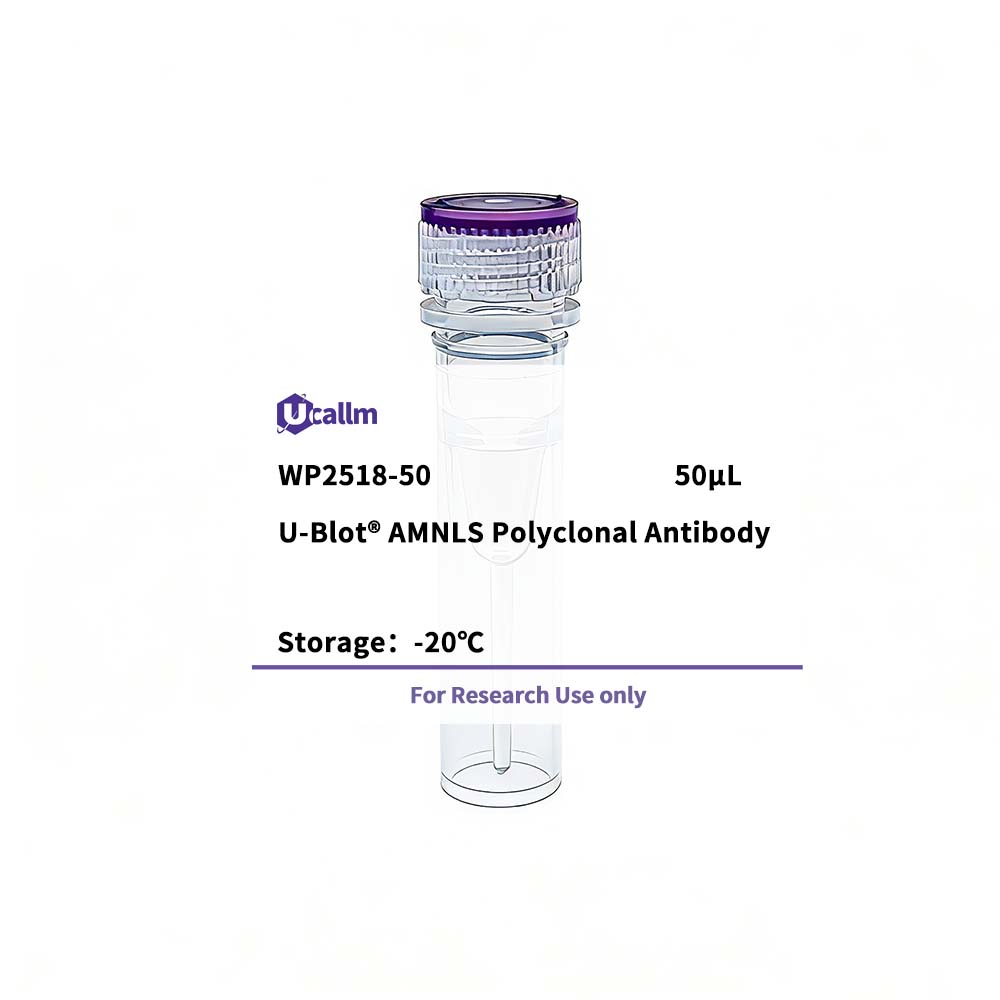
SKU: WP2518 Categories: ,

AMNLS Polyclonal Antibody

Price range: $268.00 through $328.00

SKU: WP2518-100
Enter the quantity you would like, or drag the panel to find the quantity and price that best for you
Bulk QuoteAuthorize OEM & ODM

Product details

Background:

The protein encoded by this gene is a type I transmembrane protein. It is thought to modulate bone morphogenetic protein (BMP) receptor function by serving as an accessory or coreceptor, and thus facilitates or hinders BMP binding. It is known that the mouse AMN gene is expressed in the extraembryonic visceral endoderm layer during gastrulation, but it is found to be mutated in amnionless mouse. The encoded protein has sequence similarity to short gastrulation (Sog) and procollagen IIA proteins in Drosophila. [provided by RefSeq, Jul 2008],


Specifications

Size50μL/100μL
TargetAMNLS
ReactivityHuman, Mouse
ApplicationsWB, ELISA
MW(Calculated)
MW(Observed)49kD
Host SpeciesRabbit
IsotypeIgG
Conjugate/ModificationUnmodified
Recommended Dilution RatioWB 1:500-2000; ELISA 1:5000-20000
FormulationLiquid in PBS containing 50% glycerol,0.5% BSA and 0.02% sodium azide.
PurificationThe antibody was affinity-purified from rabbit antiserum by affinity-chromatography using epitope-specific immunogen.
Storage-15°C to -25°C/1 year(Do not lower than -25°C)
Concentration1 mg/ml
ClonalityPolyclonal
Clone Number
ImmunogenSynthesized peptide derived from part region of human protein
SpecificityAMNLS Polyclonal Antibody detects endogenous levels of protein.
Gene NameAMN UNQ513/PRO1028
Protein NameProtein amnionless
Other Name
SpeciesHuman
Gene ID81693
UniprotQ9BXJ7,
Species.1Mouse
Gene ID.1
Uniprot.1Q99JB7
Species.2
Gene ID.2
Uniprot.2
Cellular Localization[Isoform 1]: Apical cell membrane; Single-pass type I membrane protein . Cell membrane; Single-pass type I membrane protein . Endosome membrane . Membrane, coated pit .; [Soluble protein amnionless]: Secreted .
Tissue ExpressionDetected in proximal tubules in the kidney cortex (at protein level) (PubMed:14576052, PubMed:29402915). Long isoforms are highly expressed in small intestine, colon and kidney (renal proximal tubule epithelial cells). Shorter isoforms are detected at lower levels in testis, thymus and peripheral blood leukocytes.
Signaling_pathway
Research Areas
FunctionAlternative products:At least 5 isoforms, 1, 2, 3, 4 and 5, are produced,Disease:Defects in AMN are a cause of recessive hereditary megaloblastic anemia 1 (MGA1) [MIM:261100]; also referred to as MGA1 Norwegian type or Imerslund-Grasbeck syndrome (I-GS). MGA1 is due to selective malabsorption of vitamin B12. Defects in vitamin B12 absorption lead to impaired function of thymidine synthase. As a consequence DNA synthesis is interrupted. Rapidly dividing cells involved in erythropoiesis are particularly affected.,Function:Necessary for efficient absorption of vitamin B12. May direct the production of trunk mesoderm during development by modulating a bone morphogenetic protein (BMP) signaling pathway in the underlying visceral endoderm.,miscellaneous:The mutations described in PubMed:12590260 all affect the N-terminus of the protein; shorter isoforms produced from alternative transcription start sites might still fulfill a role in embryogenesis. This might explain the discrepancy with the embryonic lethality of null mutants in mice.,similarity:Contains 1 VWFC domain.,subunit:Interacts with CUBN/cubilin.,tissue specificity:Long isoforms are highly expressed in small intestine, colon and kidney (renal proximal tubule epithelial cells). Shorter isoforms are detected at lower levels in testis, thymus and peripheral blood leukocytes.,
Please login to post questions
Back to Top
Product has been added to your cart
