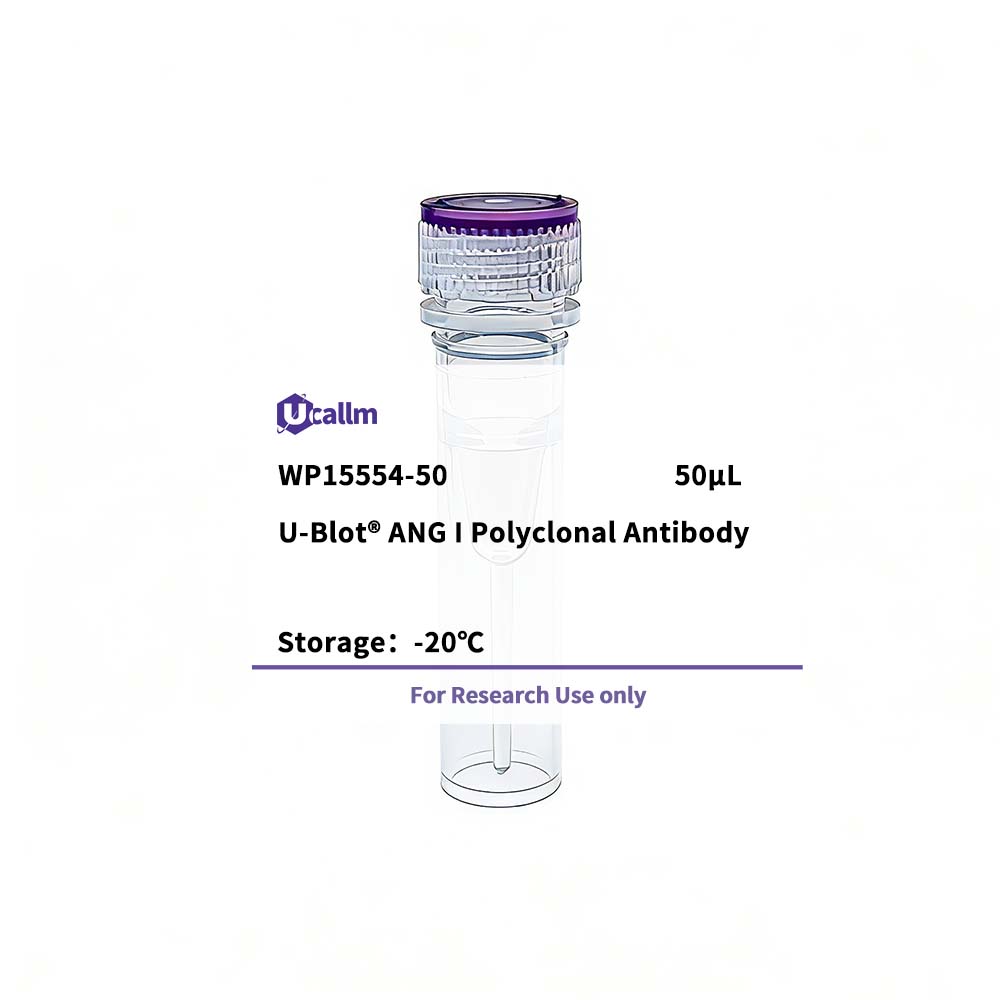
SKU: WP15554 Categories: ,

ANG I Polyclonal Antibody

Price range: $268.00 through $328.00

SKU: WP15554-100
Enter the quantity you would like, or drag the panel to find the quantity and price that best for you
Bulk QuoteAuthorize OEM & ODM

Product details

Background:

angiogenin(ANG) Homo sapiens The protein encoded by this gene is an exceedingly potent mediator of new blood vessel formation. It hydrolyzes cellular tRNAs resulting in decreased protein synthesis and is similar to pancreatic ribonuclease. In addition, the mature peptide has antimicrobial activity against some bacteria and fungi, including S. pneumoniae and C. albicans. Alternative splicing results in two transcript variants encoding the same protein. This gene and the gene that encodes ribonuclease, RNase A family, 4 share promoters and 5' exons. Each gene splices to a unique downstream exon that contains its complete coding region. [provided by RefSeq, Aug 2014],


Specifications

Size50μL/100μL
TargetAng-1
ReactivityHuman, Mouse
ApplicationsWB, IHC, IF, ELISA
MW(Calculated)
MW(Observed)17kD
Host SpeciesRabbit
IsotypeIgG
Conjugate/ModificationUnmodified
Recommended Dilution RatioWB 1:500-1:2000; IHC: 1:100-1:300; ELISA 1:10000; IF 1:50-200 / Note: For IHC, we suggest antigen retrieval with TE buffer pH 9.0 (Cat#WT1004)
FormulationLiquid in PBS containing 50% glycerol, 0.5% BSA and 0.02% sodium azide.
PurificationThe antibody was affinity-purified from rabbit antiserum by affinity-chromatography using epitope-specific immunogen.
Storage-15°C to -25°C/1 year(Do not lower than -25°C)
Concentration1 mg/ml
ClonalityPolyclonal
Clone Number
ImmunogenThe antiserum was produced against synthesized peptide derived from the N-terminal region of human N-ternal ANG. AA range:11-60
SpecificityANG I Polyclonal Antibody detects endogenous levels of ANG I protein.
Gene NameANG
Protein NameAngiogenin
Other NameANG; / RNASE5; / Angiogenin; / Ribonuclease 5; / RNase 5
SpeciesHuman
Gene ID283
UniprotP03950,
Species.1Mouse
Gene ID.1
Uniprot.1P21570
Species.2
Gene ID.2
Uniprot.2
Cellular LocalizationCytoplasmic vesicle, secretory vesicle lumen . Secreted . Nucleus . Nucleus, nucleolus . Rapidly endocytosed by target cells and translocated to the nucleus where it accumulates in the nucleolus and binds to DNA (PubMed:12051708). .
Tissue ExpressionExpressed predominantly in the liver. Also detected in endothelial cells and spinal cord neurons.
Signaling_pathwayHuman Diseases >> Neurodegenerative disease >> Amyotrophic lateral sclerosis
Research Areas>>Amyotrophic lateral sclerosis
FunctionCaution:It is uncertain whether Met-1 or Met-3 is the initiator.,developmental stage:Low level expression in the developing fetus, increased in the neonate, and maximal in the adult.,Disease:Defects in ANG are the cause of susceptibility to amyotrophic lateral sclerosis type 9 (ALS9) [MIM:611895]. ALS is a degenerative disorder of motor neurons in the cortex, brain stem and spinal cord. ALS is characterized by muscular weakness and atrophy.,Function:May function as a tRNA-specific ribonuclease that binds to actin on the surface of endothelial cells; once bound, angiogenin is endocytosed and translocated to the nucleus, thereby promoting the endothelial invasiveness necessary for blood vessel formation. Angiogenin induces vascularization of normal and malignant tissues. Abolishes protein synthesis by specifically hydrolyzing cellular tRNAs.,online information:Angiogenin,similarity:Belongs to the pancreatic ribonuclease family.,tissue specificity:Expressed predominantly in the liver. Also detected in endothelial cells and spinal cord neurons.,
Please login to post questions
Back to Top
Product has been added to your cart
