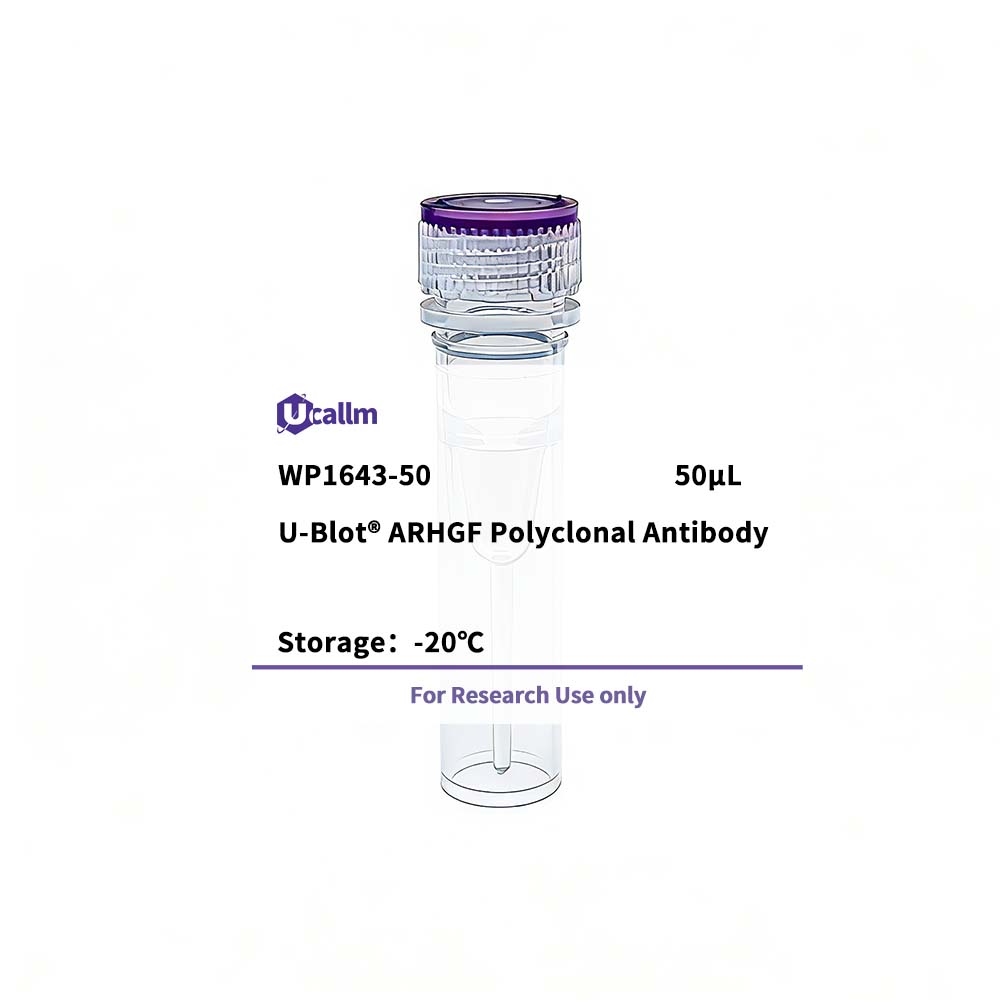
SKU: WP1643 Categories: ,

ARHGF Polyclonal Antibody

Price range: $268.00 through $328.00

SKU: WP1643-100
Enter the quantity you would like, or drag the panel to find the quantity and price that best for you
Bulk QuoteAuthorize OEM & ODM

Product details

Background:

Rho GTPases play a fundamental role in numerous cellular processes that are initiated by extracellular stimuli that work through G protein-coupled receptors. This gene encodes a protein that functions as a specific guanine nucleotide exchange factor for RhoA. It also interacts with ephrin A4 in vascular smooth muscle cells. Two alternatively spliced transcripts variants that encode the same protein have been found for this gene. [provided by RefSeq, Aug 2010],


Specifications

Size50μL/100μL
TargetARHGF
ReactivityHuman, Mouse
ApplicationsWB, ELISA
MW(Calculated)
MW(Observed)92kD
Host SpeciesRabbit
IsotypeIgG
Conjugate/ModificationUnmodified
Recommended Dilution RatioWB 1:500-2000; ELISA 1:5000-20000
FormulationLiquid in PBS containing 50% glycerol,0.5% BSA and 0.02% sodium azide.
PurificationThe antibody was affinity-purified from rabbit antiserum by affinity-chromatography using epitope-specific immunogen.
Storage-15°C to -25°C/1 year(Do not lower than -25°C)
Concentration1 mg/ml
ClonalityPolyclonal
Clone Number
ImmunogenSynthesized peptide derived from human protein . at AA range: 560-640
SpecificityARHGF Polyclonal Antibody detects endogenous levels of protein.
Gene NameARHGEF15 KIAA0915
Protein NameRho guanine nucleotide exchange factor 15 (Ephexin-5) (E5) (Vsm-RhoGEF)
Other Name
SpeciesHuman
Gene ID22899
UniprotO94989,
Species.1Mouse
Gene ID.1
Uniprot.1Q5FWH6
Species.2
Gene ID.2
Uniprot.2
Cellular LocalizationCell projection, dendrite . Expressed exclusively in dendrites of the developing hippocampus. .
Tissue ExpressionExpressed in the vascular smooth muscle of coronary artery.
Signaling_pathway
Research Areas
FunctionFunction:Specific GEF for RhoA activation and the regulation of vascular smooth muscle contractility.,PTM:Phosphorylated on tyrosine residues upon EFNA1 stimulation.,similarity:Contains 1 DH (DBL-homology) domain.,subunit:Interacts with EPHA4.,tissue specificity:Expressed in the vascular smooth muscle of coronary artery.,
Please login to post questions
Back to Top
Product has been added to your cart
