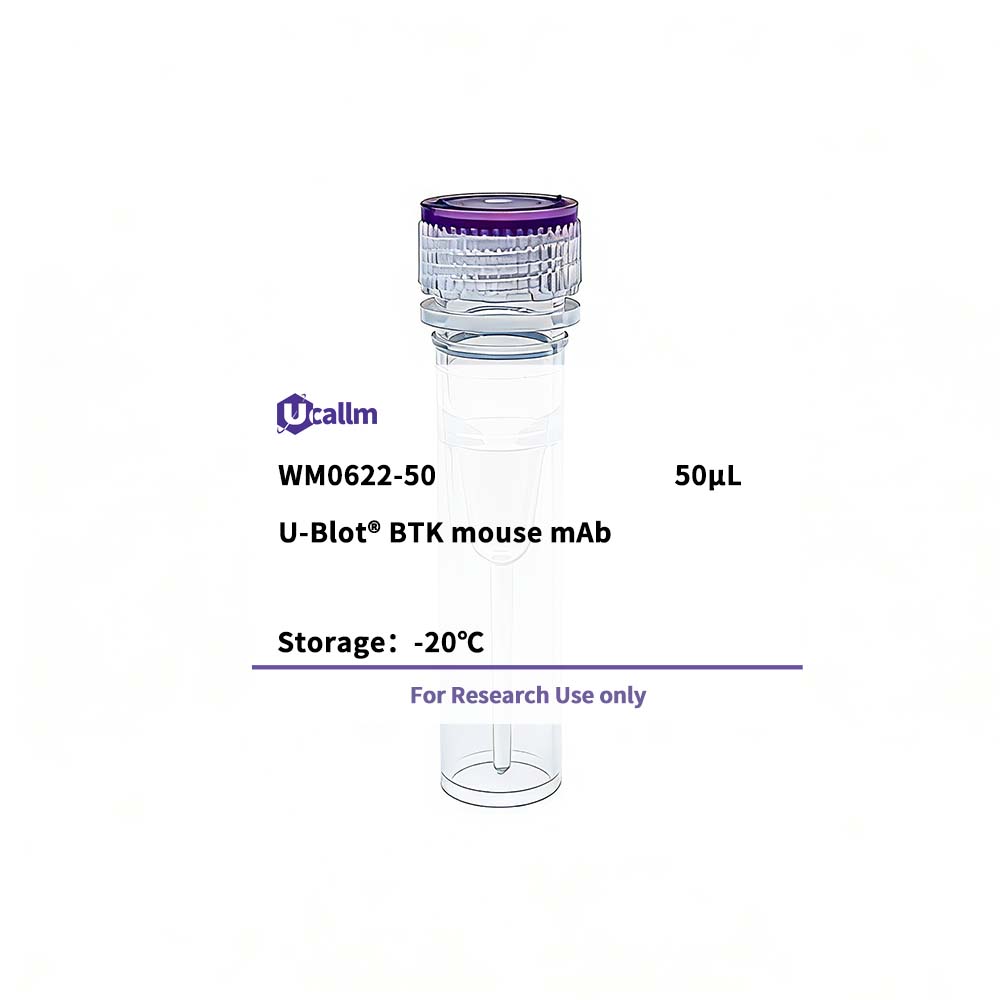
SKU: WM0622 Categories: ,

BTK mouse mAb

Price range: $268.00 through $328.00

SKU: WM0622-50
Enter the quantity you would like, or drag the panel to find the quantity and price that best for you
Bulk QuoteAuthorize OEM & ODM

Product details

Background:
The protein encoded by this gene plays a crucial role in B-cell development. Mutations in this gene cause X-linked agammaglobulinemia type 1, which is an immunodeficiency characterized by the failure to produce mature B lymphocytes, and associated with a failure of Ig heavy chain rearrangement. Alternative splicing results in multiple transcript variants encoding different isoforms. [provided by RefSeq, Dec 2013],

Specifications

TargetBtk
ReactivityHuman
ApplicationsWB, IP
MW(Calculated)
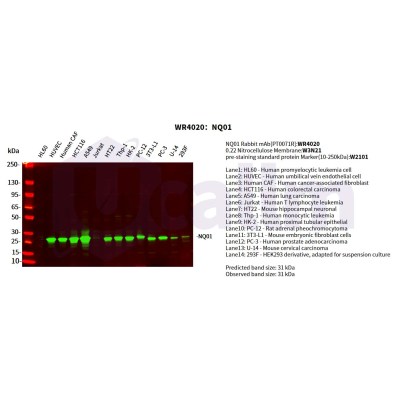
MW(Observed)77kD
Host SpeciesMouse
Isotype
Conjugate/ModificationUnmodified
Modification
Recommended Dilution RatioWB 1:1000
FormulationLiquid in PBS containing 50% glycerol, 0.5% BSA and 0.02% sodium azide.
Source
PurificationThe antibody was affinity-purified from mouse ascites by affinity-chromatography using epitope-specific immunogen.
Purity
Storage-15°C to -25°C/1 year(Do not lower than -25°C)
Concentration
ClonalityMonoclonal
Clone Number8G5
ImmunogenPurified recombinant human BTK protein fragments expressed in E.coli.
Sequence
SpecificityThis antibody detects endogenous levels of BTK and does not cross-react with related proteins.
Gene Namebtk
Protein Name
Other NameAgammaglobulinaemia tyrosine kinase; / AGMX 1; / AGMX1; / AT; / ATK; / B cell progenitor kinase; / B-cell progenitor kinase; / BPK; / Bruton agammaglobulinemia tyrosine kinase; / Bruton tyrosine kinase; / Bruton’s Tyrosine Kinase; / Btk; / BTK_HUMAN; / IMD 1; / IMD1; / MGC126261; / MGC126262; / OTTHUMP00000063593; / PSCTK 1; / PSCTK1; / Tyrosine protein kinase BTK; / Tyrosine-protein kinase BTK; / XLA
SpeciesHuman
Gene ID-1695
UniprotQ06187,
Species.1Mouse
Gene ID-2
Uniprot.1P35991
Species.2
Gene ID-3
Uniprot.2
Organism-4
Gene ID-4
SwissProt-4
BackgroundThe protein encoded by this gene plays a crucial role in B-cell development. Mutations in this gene cause X-linked agammaglobulinemia type 1, which is an immunodeficiency characterized by the failure to produce mature B lymphocytes, and associated with a failure of Ig heavy chain rearrangement. Alternative splicing results in multiple transcript variants encoding different isoforms. [provided by RefSeq, Dec 2013],
Cellular LocalizationCytoplasm. Cell membrane; Peripheral membrane protein. Nucleus. In steady state, BTK is predominantly cytosolic. Following B-cell receptor (BCR) engagement by antigen, translocates to the plasma membrane through its PH domain. Plasma membrane localization is a critical step in the activation of BTK. A fraction of BTK also shuttles between the nucleus and the cytoplasm, and nuclear export is mediated by the nuclear export receptor CRM1.
Tissue ExpressionPredominantly expressed in B-lymphocytes.
Signaling_pathwayOrganismal Systems >> Immune system >> Platelet activation;Organismal Systems >> Immune system >> B cell receptor signaling pathway;Organismal Systems >> Immune system >> Fc epsilon RI signaling pathway;Organismal Systems >> Development and regeneration >> Osteoclast differentiation;Human Diseases >> Immune disease >> Primary immunodeficiency;Environmental Information Processing >> Signal transduction >> NF-kappa B signaling pathway
Research Areas>>NF-kappa B signaling pathway; / >>Osteoclast differentiation; / >>Platelet activation; / >>B cell receptor signaling pathway; / >>Fc epsilon RI signaling pathway; / >>Epstein-Barr virus infection; / >>Primary immunodeficiency
FunctionCatalytic activity:ATP + a [protein]-L-tyrosine = ADP + a [protein]-L-tyrosine phosphate.,cofactor:Binds 1 zinc ion per subunit.,Disease:Defects in BTK are the cause of X-linked agammaglobulinemia (XLA) [MIM:300755]; also called X-linked agammaglobulinemia type 1 (AGMX1) or immunodeficiency type 1 (IMD1). XLA is a humoral immunodeficiency disease which results in developmental defects in the maturation pathway of B-cells. Affected boys have normal levels of pre-B-cells in their bone marrow but virtually no circulating mature B-lymphocytes. This results in a lack of immunoglobulins of all classes and leads to recurrent bacterial infections like otitis, conjunctivitis, dermatitis, sinusitis in the first few years of life, or even some patients present overwhelming sepsis or meningitis, resulting in death in a few hours. Treatment in most cases is by infusion of intravenous immunoglobulin.,Disease:Defects in BTK may be the cause of X-linked hypogammaglobulinemia and isolated growth hormone deficiency (XLA-IGHD) [MIM:307200]; also known as agammaglobulinemia and isolated growth hormone deficiency or Fleisher syndrome or isolated growth hormone deficiency type 3 (IGHD3). In rare cases XLA is inherited together with isolated growth hormone deficiency (IGHD).,enzyme regulation:Inhibited by IBTK. Activated by phosphorylation.,Function:Plays a crucial role in B-cell ontogeny. Transiently phosphorylates GTF2I on tyrosine residues in response to B-cell receptor cross-linking. Required for the formation of functional ARID3A DNA-binding complexes.,online information:BTK mutation db,PTM:Autophosphorylated on Tyr-223 and Tyr-551. Phosphorylation of Tyr-223 may create a docking site for a SH2 containing protein.,similarity:Belongs to the protein kinase superfamily. Tyr protein kinase family.,similarity:Belongs to the protein kinase superfamily. Tyr protein kinase family. TEC subfamily.,similarity:Contains 1 Btk-type zinc finger.,similarity:Contains 1 PH domain.,similarity:Contains 1 protein kinase domain.,similarity:Contains 1 SH2 domain.,similarity:Contains 1 SH3 domain.,subunit:Binds GTF2I through the PH domain. Interacts with SH3BP5 via the SH3 domain. Interacts with IBTK via its PH domain. Interacts with GTF2I and ARID3A.,
RRID
Please login to post questions
Back to Top
Product has been added to your cart