

Product details
Background:
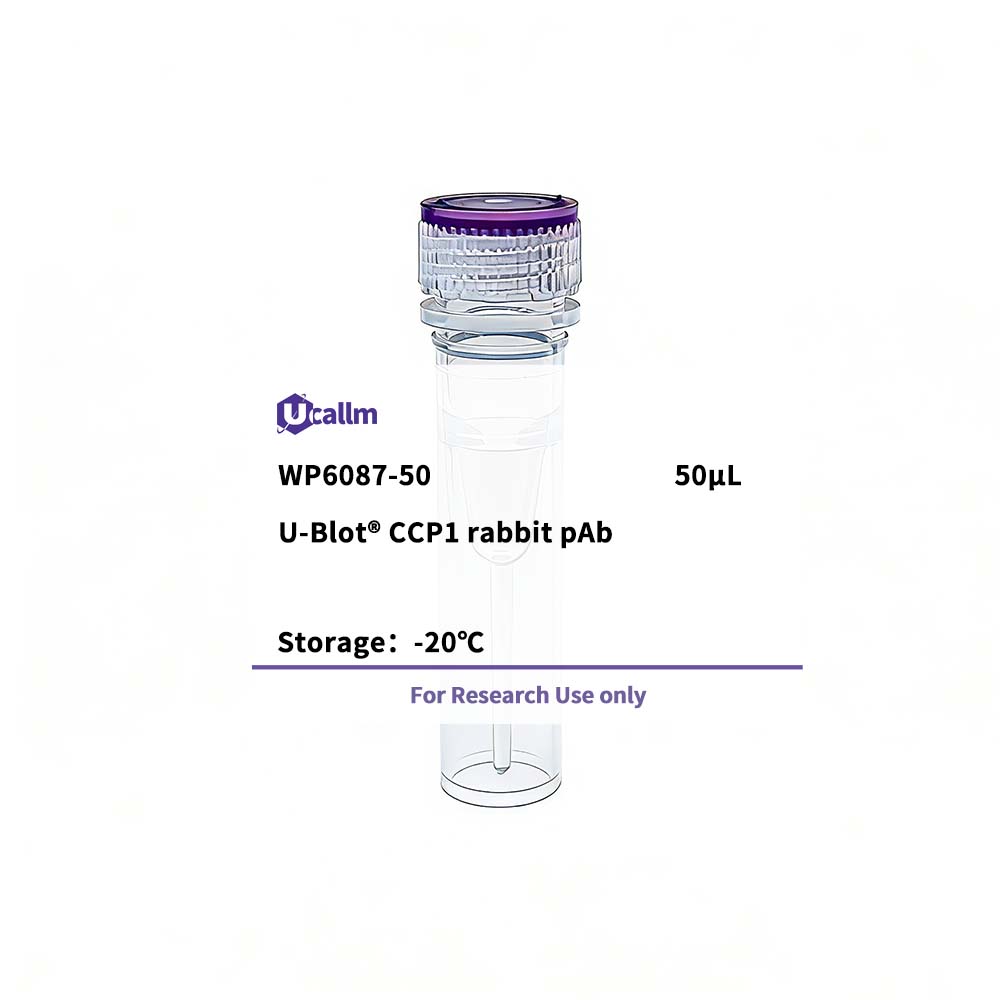
Price range: $268.00 through $328.00
Background:
| Size | 50μL/100μL |
| Target | AGTPBP1 |
| Reactivity | Human, Mouse |
| Applications | WB |
| MW(Calculated) | 135kD |
| MW(Observed) | |
| Host Species | Rabbit |
| Isotype | IgG |
| Conjugate/Modification | Unmodified |
| Recommended Dilution Ratio | WB 1:500-2000 |
| Formulation | Liquid in PBS containing 50% glycerol, 0.5% BSA and 0.02% sodium azide. |
| Purification | The antibody was affinity-purified from rabbit antiserum by affinity-chromatography using epitope-specific immunogen. |
| Storage | -15°C to -25°C/1 year(Do not lower than -25°C) |
| Concentration | 1 mg/ml |
| Clonality | Polyclonal |
| Clone Number | |
| Immunogen | Synthesized peptide derived from human CCP1 |
| Specificity | This antibody detects endogenous levels of CCP1 at Human, Mouse |
| Gene Name | AGTPBP1 CCP1 KIAA1035 NNA1 |
| Protein Name | Cytosolic carboxypeptidase 1 (ATP/GTP-binding protein 1) (Nervous system nuclear protein induced by axotomy protein 1 homolog) |
| Other Name | |
| Species | Human |
| Gene ID | 23287 |
| Uniprot | Q9UPW5, |
| Species.1 | Mouse |
| Gene ID.1 | 67269 |
| Uniprot.1 | Q641K1 |
| Species.2 | |
| Gene ID.2 | |
| Uniprot.2 | |
| Cellular Localization | Cytoplasm . Cytoplasm, cytosol . Nucleus . Mitochondrion . Localizes in both the cytoplasm and nuclei of interphase and dividing cells. . |
| Tissue Expression | |
| Signaling_pathway | |
| Research Areas | |
| Function | Metallocarboxypeptidase that mediates protein deglutamylation of tubulin and non-tubulin target proteins . Catalyzes the removal of polyglutamate side chains present on the gamma-carboxyl group of glutamate residues within the C-terminal tail of alpha- and beta-tubulin . Specifically cleaves tubulin long-side-chains, while it is not able to remove the branching point glutamate . Also catalyzes the removal of polyglutamate residues from the carboxy-terminus of alpha-tubulin as well as non-tubulin proteins such as MYLK . Involved in KLF4 deglutamylation which promotes KLF4 proteasome-mediated degradation, thereby negatively regulating cell pluripotency maintenance and embryogenesis . |





