


CD151 Polyclonal Antibody
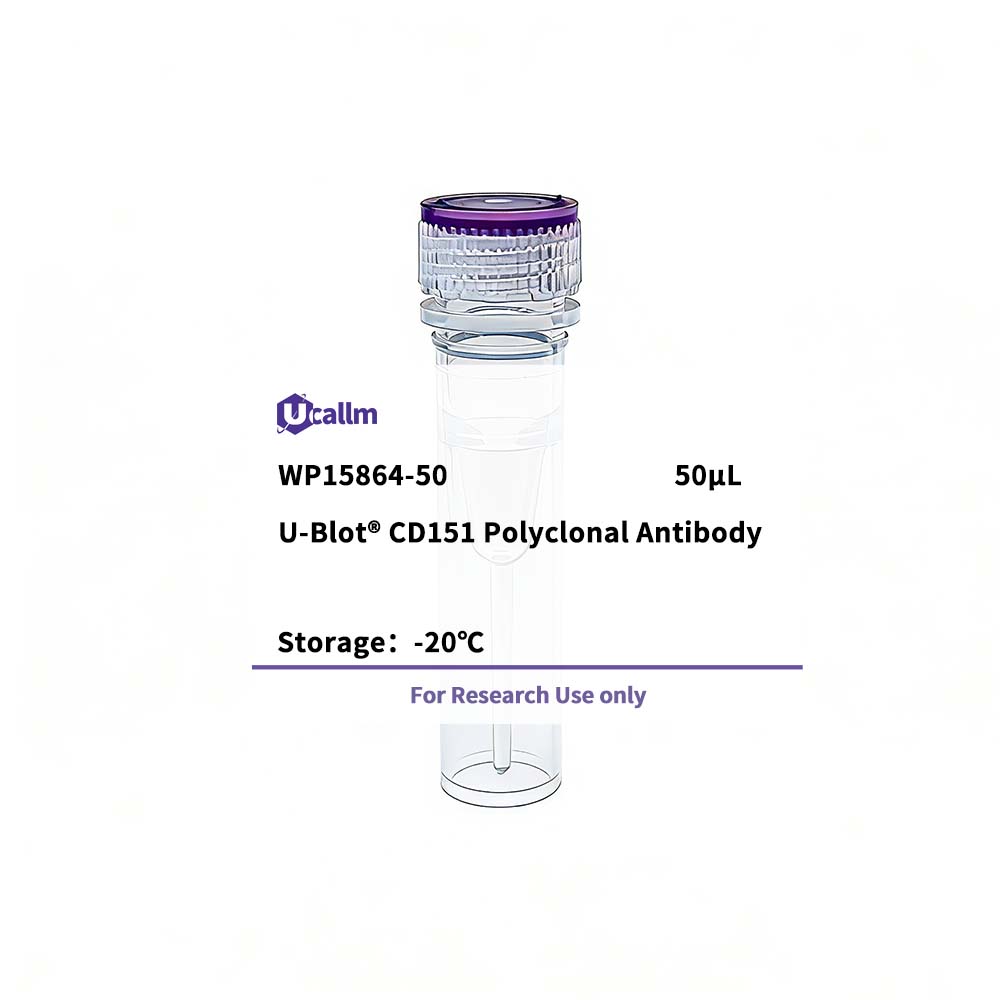
Ucallm_WP15864-50
Price range: $268.00 through $328.00
Product details
Background:
The protein encoded by this gene is a member of the transmembrane 4 superfamily, also known as the tetraspanin family. Most of these members are cell-surface proteins that are characterized by the presence of four hydrophobic domains. The proteins mediate signal transduction events that play a role in the regulation of cell development, activation, growth and motility. This encoded protein is a cell surface glycoprotein that is known to complex with integrins and other transmembrane 4 superfamily proteins. It is involved in cellular processes including cell adhesion and may regulate integrin trafficking and/or function. This protein enhances cell motility, invasion and metastasis of cancer cells. Multiple alternatively spliced transcript variants that encode the same protein have been described for this gene. [provided by RefSeq, Jul 2008],
Specifications
| Size | 50μL/100μL |
| Target | CD151 |
| Reactivity | Human, Mouse, Rat |
| Applications | IHC, IF, ELISA |
| MW(Calculated) | |
| MW(Observed) | |
| Host Species | Rabbit |
| Isotype | IgG |
| Conjugate/Modification | Unmodified |
| Recommended Dilution Ratio | IHC 1:50-200; ELISA 1:10000-20000; IF 1:50-200 / Note: For IHC, we suggest antigen retrieval with TE buffer pH 9.0 (Cat#WT1004) |
| Formulation | Liquid in PBS containing 50% glycerol, 0.5% BSA and 0.02% sodium azide. |
| Purification | The antibody was affinity-purified from rabbit antiserum by affinity-chromatography using epitope-specific immunogen. |
| Storage | -15°C to -25°C/1 year(Do not lower than -25°C) |
| Concentration | 1 mg/ml |
| Clonality | Polyclonal |
| Clone Number | |
| Immunogen | Synthetic peptide from human protein at AA range: 91-140 |
| Specificity | The antibody detects endogenous CD151 |
| Gene Name | CD151 TSPAN24 |
| Protein Name | CD151 antigen (GP27) (Membrane glycoprotein SFA-1) (Platelet-endothelial tetraspan antigen 3) (PETA-3) (Tetraspanin-24) (Tspan-24) (CD antigen CD151) |
| Other Name | CD151 antigen; / GP27; / Membrane glycoprotein SFA-1; / Platelet-endothelial tetraspan antigen 3; / PETA-3; / Tetraspanin-24; / Tspan-24; / CD antigen CD151 |
| Species | Human |
| Gene ID | 977 |
| Uniprot | P48509, |
| Species.1 | Mouse |
| Gene ID.1 | 12476 |
| Uniprot.1 | O35566, |
| Species.2 | Rat |
| Gene ID.2 | |
| Uniprot.2 | Q9QZA6 |
| Cellular Localization | Membrane; Multi-pass membrane protein. |
| Tissue Expression | Expressed in a variety of tissues including vascular endothelium and epidermis. Expressed on erythroid cells, with a higher level of expression in erythroid precursors than on mature erythrocytes. |
| Signaling_pathway | |
| Research Areas | |
| Function | Disease:Defects in CD151 are the cause of nephropathy with pretibial epidermolysis bullosa and deafness (NPEBD) [MIM:609057]. NPEBD is characterized by the association of hereditary nephritis, epidermolysis bullosa, deafness, and beta-thalassemia minor.,Function:Essential for the proper assembly of the glomerular and tubular basement membranes in kidney.,induction:By HTLV-1.,online information:Blood group antigen gene mutation database,polymorphism:CD151 defines the MER2=RAPH1 antigen of the RAPH blood group system. 92% of Caucasians are MER2-positive and 8% are apparently MER2-negative.,similarity:Belongs to the tetraspanin (TM4SF) family.,subunit:Interacts with integrins alpha3beta1, alpha5beta1, alpha3beta1 and alpha6beta4, with CD9 and CD181.,tissue specificity:Expressed in a variety of tissues including vascular endothelium and epidermis. Expressed on erythroid cells, with a higher level of expression in erythroid precursors than on mature erythrocytes., |
Please login to post questions
Related products


