SKU: WM1304 Categories: ,

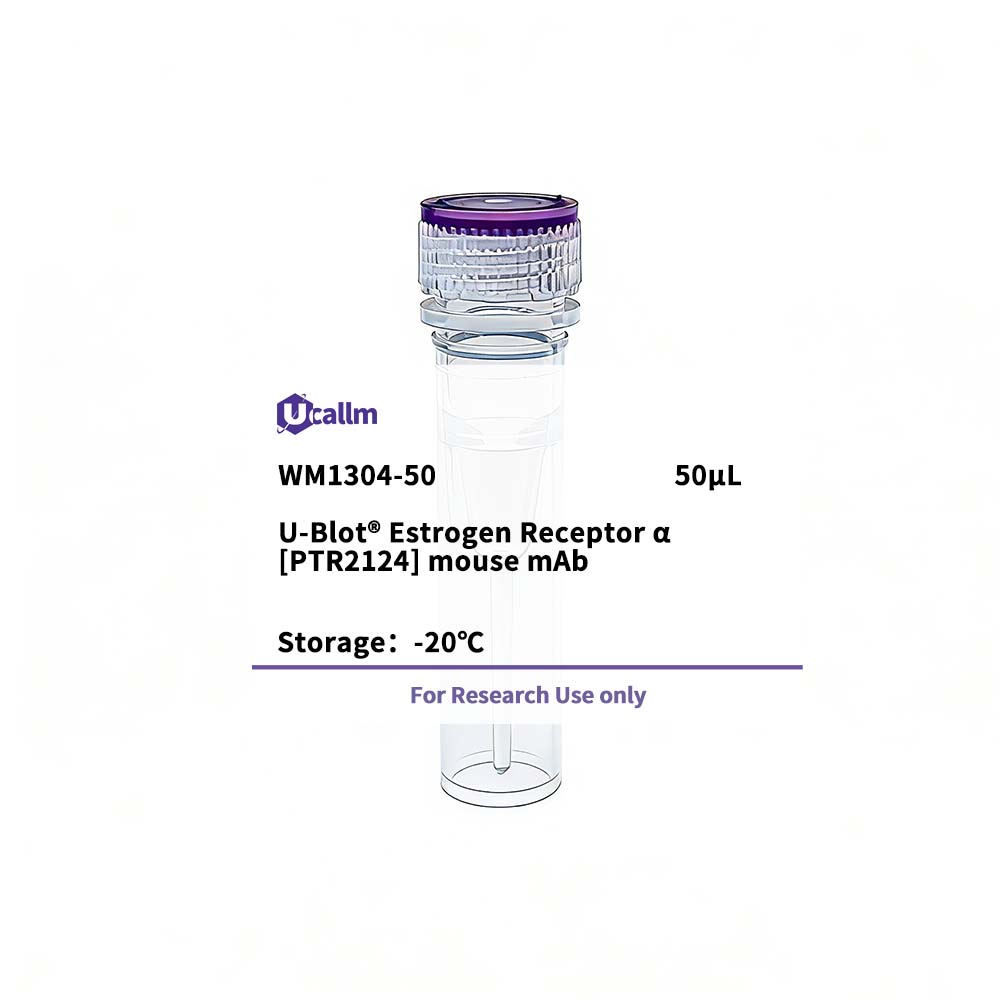
Estrogen Receptor α [PTR2124] mouse mAb

Price range: $268.00 through $328.00

SKU: WM1304-50
Enter the quantity you would like, or drag the panel to find the quantity and price that best for you
Bulk QuoteAuthorize OEM & ODM

Product details

Background:
estrogen receptor 1(ESR1) Homo sapiens This gene encodes an estrogen receptor, a ligand-activated transcription factor composed of several domains important for hormone binding, DNA binding, and activation of transcription. The protein localizes to the nucleus where it may form a homodimer or a heterodimer with estrogen receptor 2. Estrogen and its receptors are essential for sexual development and reproductive function, but also play a role in other tissues such as bone. Estrogen receptors are also involved in pathological processes including breast cancer, endometrial cancer, and osteoporosis. Alternative promoter usage and alternative splicing result in dozens of transcript variants, but the full-length nature of many of these variants has not been determined. [provided by RefSeq, Mar 2014],

Specifications

Size50μL/100μL
TargetESR1
ReactivityHuman
ApplicationsIHC, WB, IF, ELISA
MW(Calculated)66kD
MW(Observed)67kD
Host SpeciesMouse
IsotypeIgG2b,Kappa
Conjugate/ModificationUnmodified
Recommended Dilution RatioIHC 1:200-1000; WB 1:500-2000; IF 1:100-500; ELISA 1:1000-5000 / Note: For IHC, we suggest antigen retrieval with TE buffer pH 9.0 (Cat#WT1004)
FormulationPBS, 50% glycerol, 0.05% Proclin 300, 0.05%BSA
PurificationRecombinant Antibody expressed in animal component-free (ACF) media, purified via Protein G affinity chromatography.
Storage-15°C to -25°C/1 year(Do not lower than -25°C)
Concentration1 mg/ml
ClonalityMonoclonal
Clone NumberRMMR2124
ImmunogenSynthesized peptide derived from human Estrogen Receptor α. AA range: 450-595
SpecificityThis antibody detects endogenous levels of Estrogen Receptor α protein.
Gene NameESR1 ESR NR3A1
Protein NameEstrogen receptor (ER) (ER-alpha) (Estradiol receptor) (Nuclear receptor subfamily 3 group A member 1)
Other NameEstrogen receptor; / ER; / ER-alpha; / Estradiol receptor; / Nuclear receptor subfamily 3 group A member 1
SpeciesHuman
Gene ID2099
UniprotP03372,
Species.1Mouse
Gene ID.113982
Uniprot.1P19785,
Species.2Rat
Gene ID.224890
Uniprot.2P06211
Cellular LocalizationNuclear
Tissue ExpressionWidely expressed (PubMed:10970861). Not expressed in the pituitary gland (PubMed:10970861).; [Isoform 3]: Widely expressed, however not expressed in the pituitary gland.
Signaling_pathwayOrganismal Systems >> Endocrine system >> Estrogen signaling pathway;Organismal Systems >> Endocrine system >> Prolactin signaling pathway;Organismal Systems >> Endocrine system >> Thyroid hormone signaling pathway;Human Diseases >> Cancer: overview >> Pathways in cancer;Human Diseases >> Cancer: specific types >> Breast cancer
Research Areas
FunctionNuclear hormone receptor. The steroid hormones and their receptors are involved in the regulation of eukaryotic gene expression and affect cellular proliferation and differentiation in target tissues. Ligand-dependent nuclear transactivation involves either direct homodimer binding to a palindromic estrogen response element (ERE) sequence or association with other DNA-binding transcription factors, such as AP-1/c-Jun, c-Fos, ATF-2, Sp1 and Sp3, to mediate ERE-independent signaling. Ligand binding induces a conformational change allowing subsequent or combinatorial association with multiprotein coactivator complexes through LXXLL motifs of their respective components. Mutual transrepression occurs between the estrogen receptor (ER) and NF-kappa-B in a cell-type specific manner. Decreases NF-kappa-B DNA-binding activity and inhibits NF-kappa-B-mediated transcription from the IL6 promoter and displace RELA/p65 and associated coregulators from the promoter. Recruited to the NF-kappa-B response element of the CCL2 and IL8 promoters and can displace CREBBP. Present with NF-kappa-B components RELA/p65 and NFKB1/p50 on ERE sequences. Can also act synergistically with NF-kappa-B to activate transcription involving respective recruitment adjacent response elements; the function involves CREBBP. Can activate the transcriptional activity of TFF1. Also mediates membrane-initiated estrogen signaling involving various kinase cascades. Essential for MTA1-mediated transcriptional regulation of BRCA1 and BCAS3 .; [Isoform 3]: Involved in activation of NOS3 and endothelial nitric oxide production . Isoforms lacking one or several functional domains are thought to modulate transcriptional activity by competitive ligand or DNA binding and/or heterodimerization with the full-length receptor . Binds to ERE and inhibits isoform 1 .
Please login to post questions
Back to Top
Product has been added to your cart
