SKU: WM1675 Categories: ,

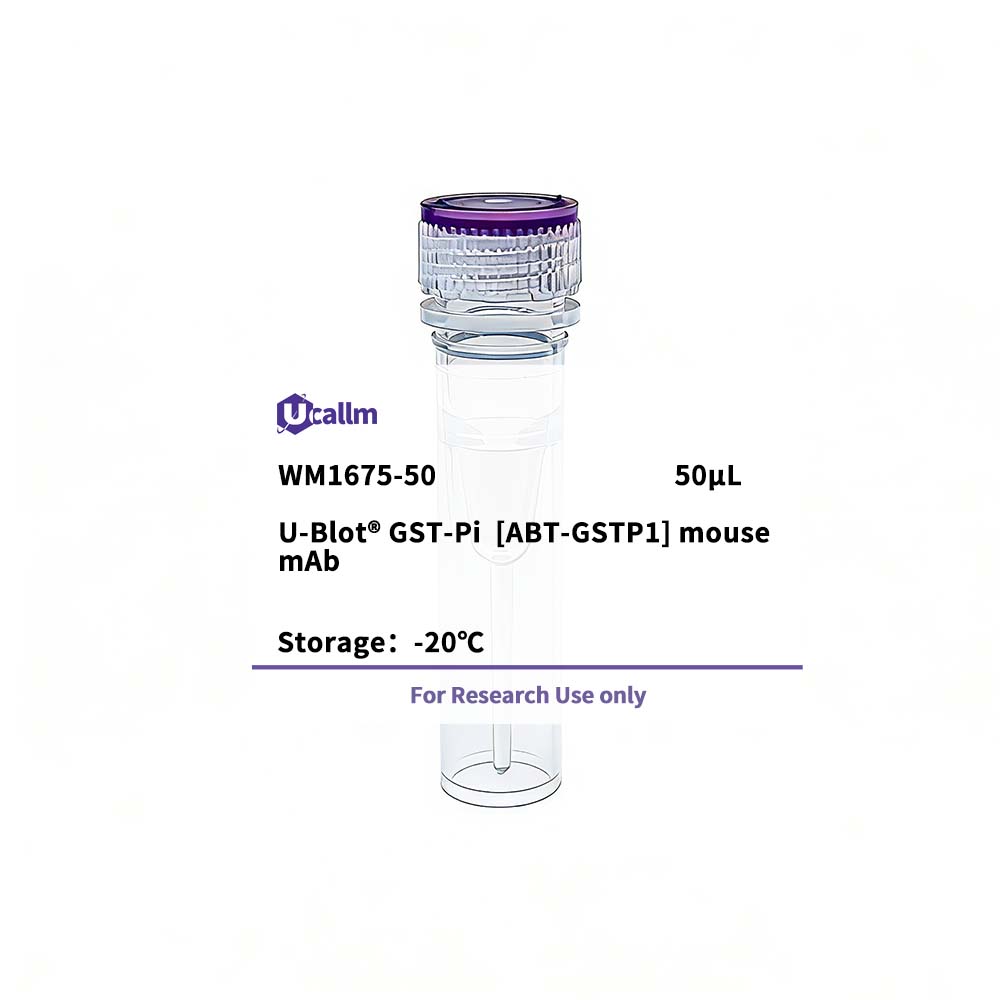
GST-Pi [ABT-GSTP1] mouse mAb

Price range: $268.00 through $328.00

SKU: WM1675-50
Enter the quantity you would like, or drag the panel to find the quantity and price that best for you
Bulk QuoteAuthorize OEM & ODM

Product details

Background:
Glutathione S-transferases (GSTs) are a family of enzymes that play an important role in detoxification by catalyzing the conjugation of many hydrophobic and electrophilic compounds with reduced glutathione. Based on their biochemical, immunologic, and structural properties, the soluble GSTs are categorized into 4 main classes: alpha, mu, pi, and theta. This GST family member is a polymorphic gene encoding active, functionally different GSTP1 variant proteins that are thought to function in xenobiotic metabolism and play a role in susceptibility to cancer, and other diseases. [provided by RefSeq, Jul 2008],


Specifications

Size50μL/100μL
TargetGST-Pi
ReactivityHuman
ApplicationsIHC, ELISA
MW(Calculated)23kD
MW(Observed)26kD
Host SpeciesMouse
IsotypeIgG1,Kappa
Conjugate/ModificationUnmodified
Recommended Dilution RatioIHC 1:200-400; ELISA 1:500-5000 / Note: For IHC, we suggest antigen retrieval with TE buffer pH 9.0 (Cat#WT1004)
FormulationPBS, 50% glycerol, 0.05% Proclin 300, 0.05%BSA
PurificationThe antibody was affinity-purified from ascites by affinity-chromatography using specific immunogen.
Storage-15°C to -25°C/1 year(Do not lower than -25°C)
Concentration
ClonalityMonoclonal
Clone NumberRMM-GSTP1
ImmunogenSynthesized peptide derived from human GST-Pi AA range: 150-210
SpecificityThe antibody can specifically recognize human GST-Pi protein.
Gene NameGSTP1 FAEES3 GST3
Protein NameGST-Pi
Other NameGlutathione S-transferase P; / GST class-pi; / GSTP1-1
SpeciesHuman
Gene ID2950
UniprotP09211
Species.1
Gene ID.1
Uniprot.1
Species.2
Gene ID.2
Uniprot.2
Cellular LocalizationCytoplasmic
Tissue Expression
Signaling_pathwayHuman Diseases >> Cancer: overview >> Pathways in cancer;Human Diseases >> Cancer: specific types >> Hepatocellular carcinoma;Human Diseases >> Cancer: specific types >> Prostate cancer
Research Areas>>Glutathione metabolism; / >>Metabolism of xenobiotics by cytochrome P450; / >>Drug metabolism - cytochrome P450; / >>Drug metabolism - other enzymes; / >>Metabolic pathways; / >>Platinum drug resistance; / >>Pathways in cancer; / >>Chemical carcinogenesis - DNA adducts; / >>Prostate cancer; / >>Hepatocellular carcinoma; / >>Fluid shear stress and atherosclerosis
FunctionCatalytic activity:RX + glutathione = HX + R-S-glutathione.,Function:Conjugation of reduced glutathione to a wide number of exogenous and endogenous hydrophobic electrophiles.,online information:The Singapore human mutation and polymorphism database,similarity:Belongs to the GST superfamily. Pi family.,similarity:Contains 1 GST C-terminal domain.,similarity:Contains 1 GST N-terminal domain.,subunit:Homodimer.,
Please login to post questions
Back to Top
Product has been added to your cart

