

L-Selectin Polyclonal Antibody
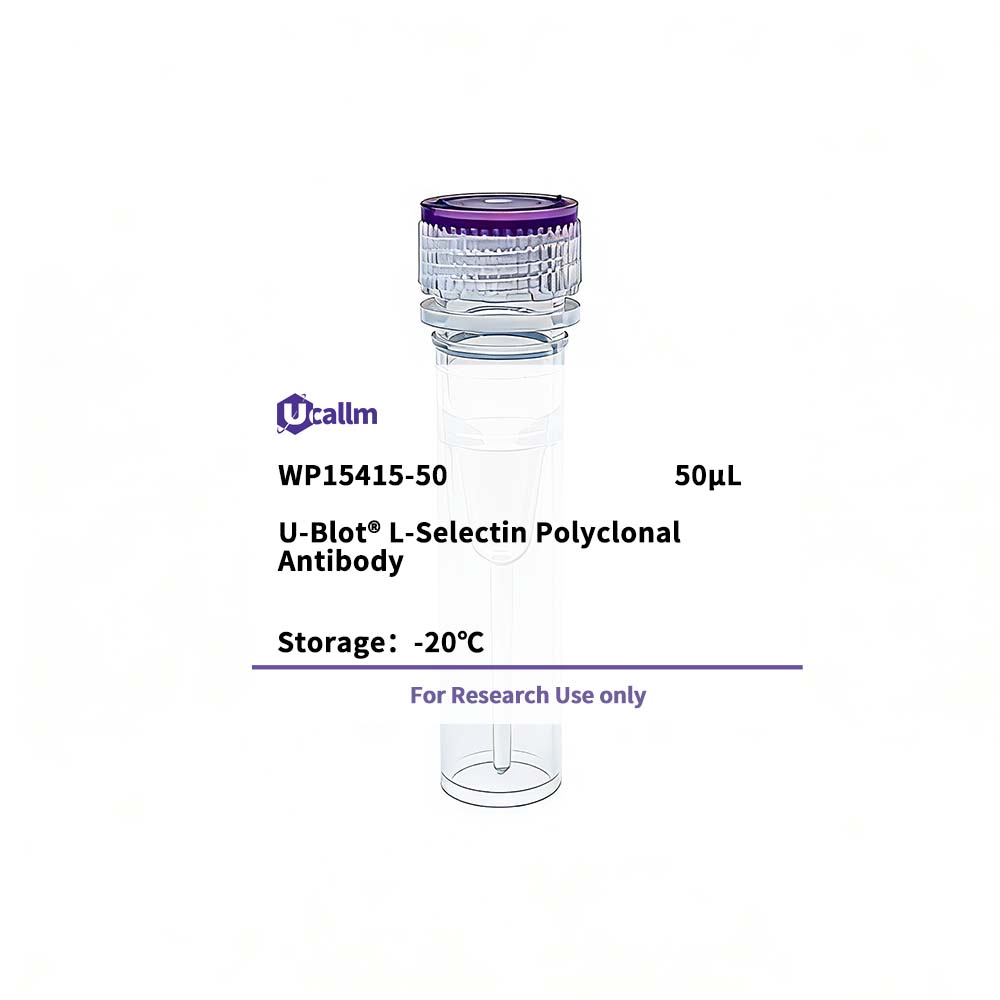
Ucallm_WP15415-50
Price range: $268.00 through $328.00
Product details
Background:
This gene encodes a cell surface adhesion molecule that belongs to a family of adhesion/homing receptors. The encoded protein contains a C-type lectin-like domain, a calcium-binding epidermal growth factor-like domain, and two short complement-like repeats. The gene product is required for binding and subsequent rolling of leucocytes on endothelial cells, facilitating their migration into secondary lymphoid organs and inflammation sites. Single-nucleotide polymorphisms in this gene have been associated with various diseases including immunoglobulin A nephropathy. Alternatively spliced transcript variants have been found for this gene. [provided by RefSeq, Oct 2009],
Specifications
| Size | 50μL/100μL |
| Target | L-Selectin |
| Reactivity | Human, Mouse, Rat |
| Applications | WB, ELISA, IHC |
| MW(Calculated) | |
| MW(Observed) | 42kD |
| Host Species | Rabbit |
| Isotype | IgG |
| Conjugate/Modification | Unmodified |
| Recommended Dilution Ratio | WB 1:500-2000; IHC 1:50-300; ELISA 1:2000-20000 / Note: For IHC, we suggest antigen retrieval with TE buffer pH 9.0 (Cat#WT1004) |
| Formulation | Liquid in PBS containing 50% glycerol, 0.5% BSA and 0.02% sodium azide. |
| Purification | The antibody was affinity-purified from rabbit antiserum by affinity-chromatography using epitope-specific immunogen. |
| Storage | -15°C to -25°C/1 year(Do not lower than -25°C) |
| Concentration | 1 mg/ml |
| Clonality | Polyclonal |
| Clone Number | |
| Immunogen | The antiserum was produced against synthesized peptide derived from the Internal region of human SELL. AA range:91-140 |
| Specificity | L-Selectin Polyclonal Antibody detects endogenous levels of L-Selectin protein. |
| Gene Name | SELL |
| Protein Name | L-selectin |
| Other Name | SELL; / LNHR; / LYAM1; / L-selectin; / CD62 antigen-like family member L; / Leukocyte adhesion molecule 1; / LAM-1; / Leukocyte surface antigen Leu-8; / Leukocyte-endothelial cell adhesion molecule 1; / LECAM1; / Lymph node homing receptor; / TQ1; / gp90-MEL; / CD62L |
| Species | Human |
| Gene ID | 6402 |
| Uniprot | P14151, |
| Species.1 | Mouse |
| Gene ID.1 | 20343 |
| Uniprot.1 | P18337, |
| Species.2 | Rat |
| Gene ID.2 | |
| Uniprot.2 | P30836 |
| Cellular Localization | Cell membrane; Single-pass type I membrane protein . |
| Tissue Expression | Expressed in B-cell lines and T-lymphocytes. |
| Signaling_pathway | Environmental Information Processing >> Signaling molecules and interaction >> Cell adhesion molecules |
| Research Areas | >>Cell adhesion molecules |
| Function | Function:Cell surface adhesion protein. Mediates the adherence of lymphocytes to endothelial cells of high endothelial venules in peripheral lymph nodes. Promotes initial tethering and rolling of leukocytes in endothelia.,online information:L-selectin,similarity:Belongs to the selectin/LECAM family.,similarity:Contains 1 C-type lectin domain.,similarity:Contains 1 EGF-like domain.,similarity:Contains 2 Sushi (CCP/SCR) domains.,subunit:Interaction with PSGL1/SELPLG is required for promoting recruitment and rolling of leukocytes. This interaction is dependent on the sialyl Lewis X glycan and tyrosine sulfation modifications of PSGL1. Sulfation on Y-51 of PSGL1 is important for L-selectin binding.,tissue specificity:Expressed in B cell lines and T lymphocytes., |
Please login to post questions
Related products





