


MNX1 Polyclonal Antibody
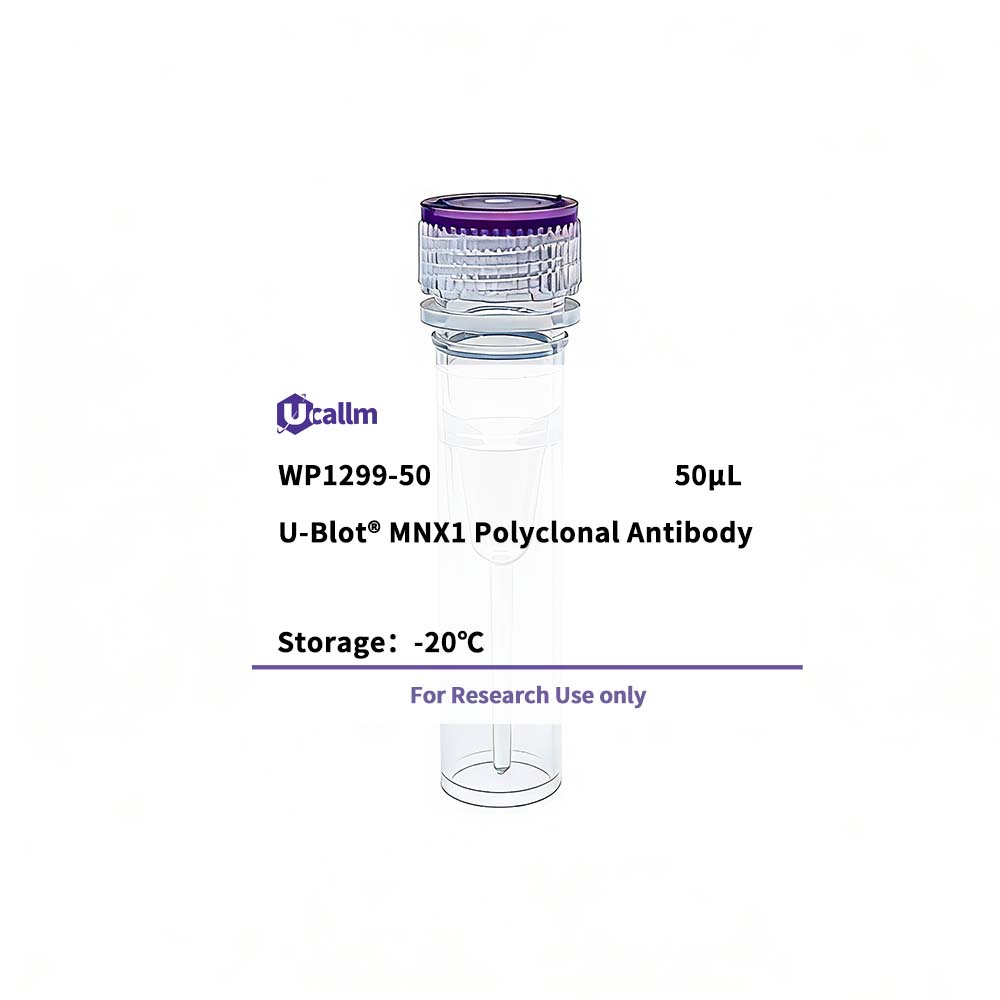
Ucallm_WP1299-50
Price range: $268.00 through $328.00
Product details
Background:
This gene encodes a nuclear protein, which contains a homeobox domain and is a transcription factor. Mutations in this gene result in Currarino syndrome, an autosomic dominant congenital malformation. Alternatively spliced transcript variants encoding different isoforms have been found for this gene. [provided by RefSeq, Sep 2009],
Specifications
| Size | 50μL/100μL |
| Target | MNX1 |
| Reactivity | Human, Mouse |
| Applications | WB, ELISA |
| MW(Calculated) | |
| MW(Observed) | 44kD |
| Host Species | Rabbit |
| Isotype | IgG |
| Conjugate/Modification | Unmodified |
| Recommended Dilution Ratio | WB 1:500-2000; ELISA 1:5000-20000 |
| Formulation | Liquid in PBS containing 50% glycerol,0.5% BSA and 0.02% sodium azide. |
| Purification | The antibody was affinity-purified from rabbit antiserum by affinity-chromatography using epitope-specific immunogen. |
| Storage | -15°C to -25°C/1 year(Do not lower than -25°C) |
| Concentration | 1 mg/ml |
| Clonality | Polyclonal |
| Clone Number | |
| Immunogen | Synthesized peptide derived from human protein . at AA range: 260-340 |
| Specificity | MNX1 Polyclonal Antibody detects endogenous levels of protein. |
| Gene Name | MNX1 HLXB9 |
| Protein Name | Motor neuron and pancreas homeobox protein 1 (Homeobox protein HB9) |
| Other Name | |
| Species | Human |
| Gene ID | 3110 |
| Uniprot | P50219, |
| Species.1 | Mouse |
| Gene ID.1 | |
| Uniprot.1 | Q9QZW9 |
| Species.2 | |
| Gene ID.2 | |
| Uniprot.2 | |
| Cellular Localization | Nucleus. |
| Tissue Expression | Expressed in lymphoid and pancreatic tissues. |
| Signaling_pathway | |
| Research Areas | >>Maturity onset diabetes of the young |
| Function | Disease:Defects in MNX1 are a cause of Currarino syndrome [MIM:176450]. The triad of a presacral tumor, sacral agenesis and anorectal malformation constitutes the Currarino syndrome which is caused by dorsal-ventral patterning defects during embryonic development. The syndrome occurs in the majority of patients as an autosomal dominant trait.,Function:Putative transcription factor involved in pancreas development and function.,similarity:Contains 1 homeobox DNA-binding domain.,tissue specificity:Expressed in lymphoid and pancreatic tissues., |
Please login to post questions
Related products




