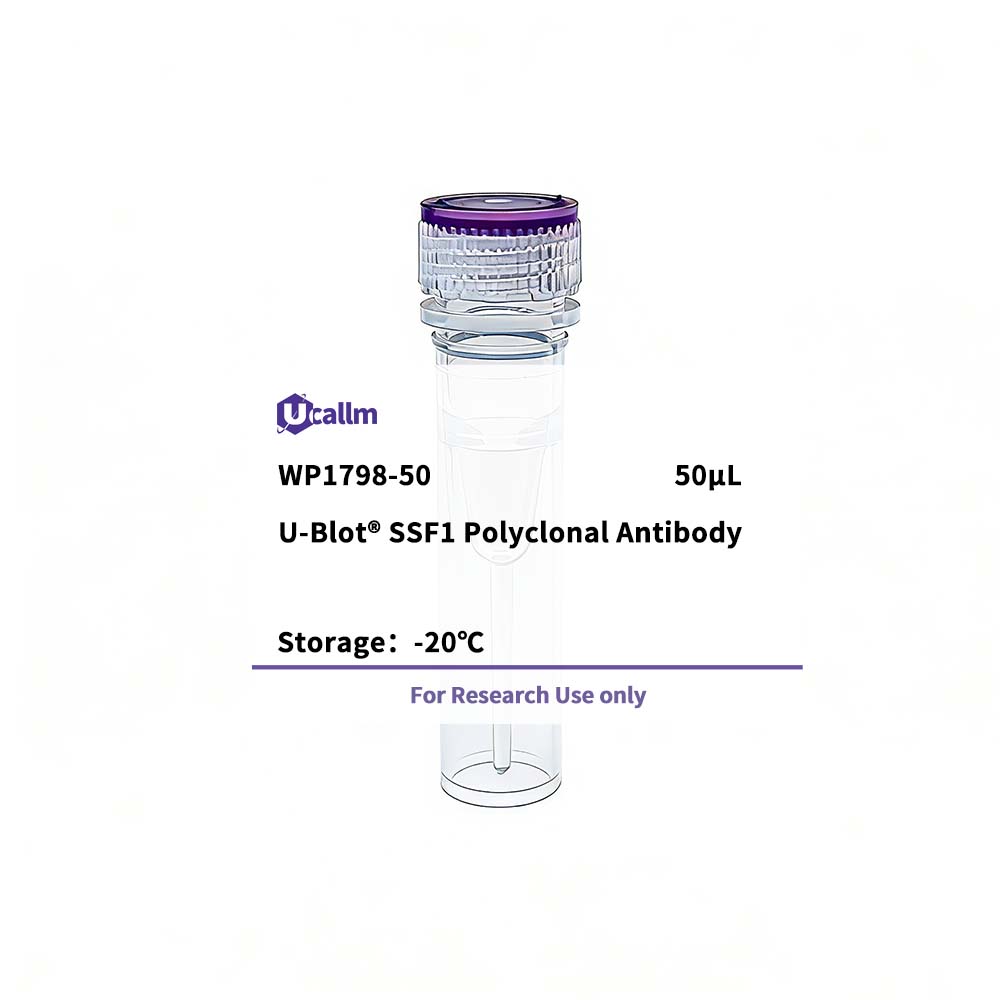
SKU: WP1798 Categories: ,

SSF1 Polyclonal Antibody

Price range: $268.00 through $328.00

SKU: WP1798-100
Enter the quantity you would like, or drag the panel to find the quantity and price that best for you
Bulk QuoteAuthorize OEM & ODM

Product details

Background:

The protein encoded by this gene is an evolutionarily conserved protein similar to yeast SSF1 as well as to the gene product of the Drosophila gene peter pan (ppan). SSF1 is known to be involved in the second step of mRNA splicing. Both SSF1 and ppan are essential for cell growth and proliferation. Exogenous expression of this gene was reported to reduce the anchorage-independent growth of some tumor cells. Read-through transcription of this gene with P2RY11/P2Y(11), an adjacent downstream gene that encodes an ATP receptor, has been found. These read-through transcripts are ubiquitously present and up-regulated during granulocyte differentiation. [provided by RefSeq, Nov 2010],

Specifications

Size50μL/100μL
TargetSSF1
ReactivityHuman, Mouse
ApplicationsWB, ELISA
MW(Calculated)
MW(Observed)52kD
Host SpeciesRabbit
IsotypeIgG
Conjugate/ModificationUnmodified
Recommended Dilution RatioWB 1:500-2000; ELISA 1:5000-20000
FormulationLiquid in PBS containing 50% glycerol,0.5% BSA and 0.02% sodium azide.
PurificationThe antibody was affinity-purified from rabbit antiserum by affinity-chromatography using epitope-specific immunogen.
Storage-15°C to -25°C/1 year(Do not lower than -25°C)
Concentration1 mg/ml
ClonalityPolyclonal
Clone Number
ImmunogenSynthesized peptide derived from part region of human protein
SpecificitySSF1 Polyclonal Antibody detects endogenous levels of protein.
Gene NamePPAN BXDC3 SSF1
Protein NameSuppressor of SWI4 1 homolog (Ssf-1) (Brix domain-containing protein 3) (Peter Pan homolog)
Other Name
SpeciesHuman
Gene ID56342
UniprotQ9NQ55,
Species.1Mouse
Gene ID.1
Uniprot.1Q91YU8
Species.2
Gene ID.2
Uniprot.2
Cellular LocalizationNucleus, nucleolus .
Tissue ExpressionWidely expressed.
Signaling_pathway
Research Areas
FunctionFunction:May have a role in cell growth.,miscellaneous:A putative trans-splicing which involves PPAN and P2RY11 gene regions produces a fusion protein.,similarity:Contains 1 Brix domain.,tissue specificity:Ubiquitous.,
Please login to post questions
Back to Top
Product has been added to your cart

