SKU: WR6058 Categories: ,

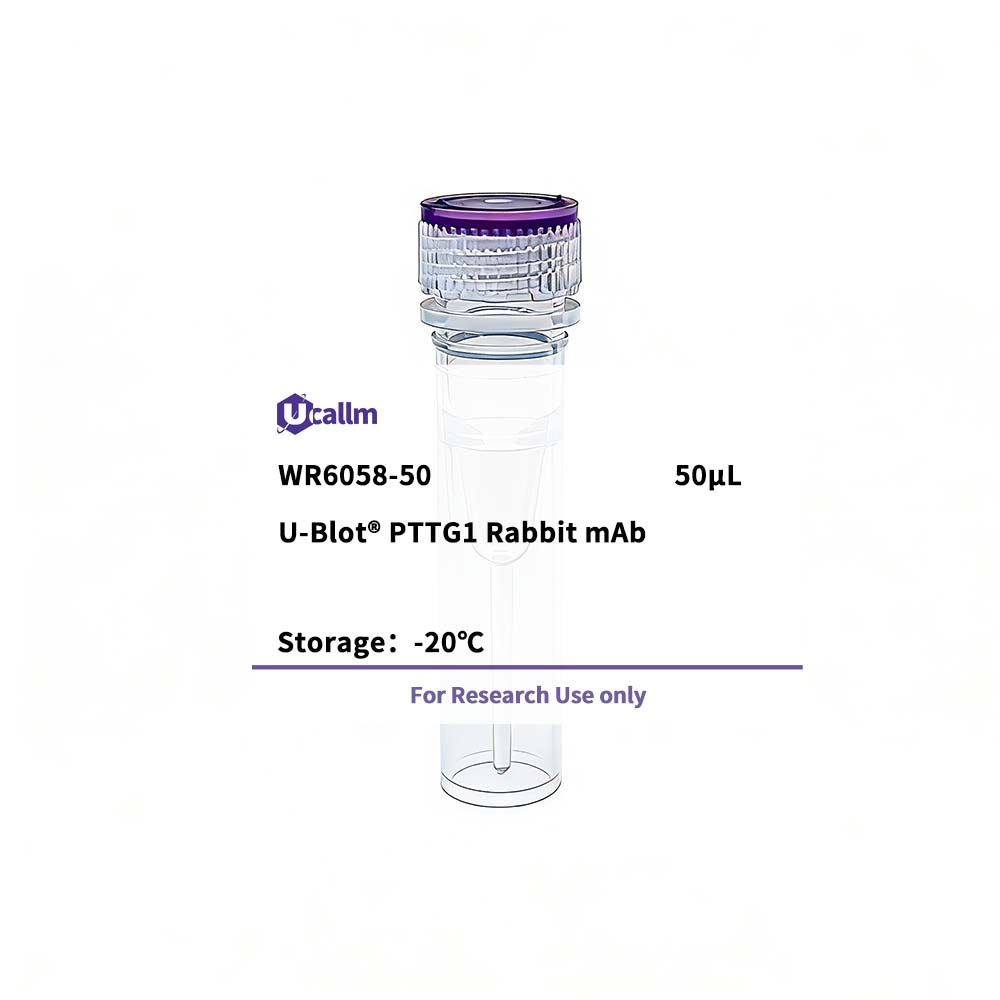
U-Blot® PTTG1 Rabbit mAb

Price range: $268.00 through $328.00

SKU: WR6058-50
Enter the quantity you would like, or drag the panel to find the quantity and price that best for you
Bulk QuoteAuthorize OEM & ODM

Product details

Background:
The encoded protein is a homolog of yeast securin proteins , which prevent separins from promoting sister chromatid separation. It is an anaphase-promoting complex (APC) substrate that associates with a separin until activation of the APC. The gene product has transforming activity in vitro and tumorigenic activity in vivo , and the gene is highly expressed in various tumors. The gene product contains 2 PXXP motifs , which are required for its transforming and tumorigenic activities , as well as for its stimulation of basic fibroblast growth factor expression. It also contains a destruction box (D box) that is required for its degradation by the APC. The acidic C-terminal region of the encoded protein can act as a transactivation domain. The gene product is mainly a cytosolic protein , although it partially localizes in the nucleus. Three transcript variants encoding the same protein have been fo

Specifications

Size50μL/100μL
TargetPTTG1
ReactivityHuman, Mouse, Rat
ApplicationsWB, IHC, IF, IP, ELISA
MW(Calculated)22kD
MW(Observed)25kD
Host SpeciesRabbit
IsotypeIgG, Kappa
Conjugate/ModificationUnmodified
Recommended Dilution RatioIHC 1:200-1:1000; WB 1:2000-1:10000; IF 1:200-1:1000; ELISA 1:5000-1:20000; IP 1:50-1:200 / Note: For IHC, we suggest antigen retrieval with TE buffer pH 9.0 (Cat#WT1004)
FormulationPBS, 50% glycerol, 0.05% Proclin 300, 0.05%BSA
PurificationRecombinant Antibody expressed in animal component-free (ACF) media, purified via Protein A affinity chromatography.
Storage-15°C to -25°C/1 year (Do not lower than -25°C)
Concentration
ClonalityMonoclonal
Clone NumberRM2012R
ImmunogenThe specific immunogen used to produce this antibody is proprietary information.
SpecificityEndogenous
Gene NamePTTG1
Protein NameSecurin
Other NamePTTG1; / EAP1; / PTTG; / TUTR1; / Securin; / Esp1-associated protein; / Pituitary tumor-transforming gene 1 protein; / Tumor-transforming protein 1; / hPTTG
SpeciesHuman
Gene ID9232
UniprotO95997,
Species.1Mouse
Gene ID.130939
Uniprot.1Q9CQJ7,
Species.2Rat
Gene ID.264193
Uniprot.2P97613
Cellular LocalizationCytoplasm. Nucleus.
Tissue ExpressionExpressed at low level in most tissues , except in adult testis , where it is highly expressed. Overexpressed in many patients suffering from pituitary adenomas , primary epithelial neoplasias , and esophageal cancer.
Signaling_pathwayCellular Processes >> Cell growth and death >> Cell cycle
Research Areas>>Cell cycle; / >>Oocyte meiosis; / >>Human T-cell leukemia virus 1 infection
Functiondevelopmental stage:Low level during G1 and S phases. Peaks at M phase. During anaphase , it is degraded. ,Disease:Has strong transforming capabilities on a variety of cell lines including NIH 3T3 fibroblasts and on athymic nude mice. Overexpressed in many patients suffering from pituitary adenomas , primary epithelial neoplasias , and esophageal cancer. No mutation in the coding sequence has been observed. The transforming capability may be due to its interaction and regulation of TP53 pathway. ,Domain:The N-terminal destruction box (D-box) acts as a recognition signal for degradation via the ubiquitin-proteasome pathway. ,Function:Regulatory protein , which plays a central role in chromosome stability , in the p53/TP53 pathway , and DNA repair. Probably acts by blocking the action of key proteins. During the mitosis , it blocks Separase/ESPL1 function , preventing the proteolysis of the cohesin complex and the subsequent segregation of the chromosomes. At the onset of anaphase , it is ubiquitinated , conducting to its destruction and to the liberation of ESPL1. Its function is however not limited to a blocking activity , since it is required to activate ESPL1. Negatively regulates the transcriptional activity and related apoptosis activity of TP53. The negative regulation of TP53 may explain the strong transforming capability of the protein when it is overexpressed. May also play a role in DNA repair via its interaction with Ku , possibly by connecting DNA damage-response pathways with sister chromatid separation. ,PTM:Phosphorylated at Ser-165 by CDC2 during mitosis. ,PTM:Phosphorylated in vitro by ds-DNA kinase. ,PTM:Ubiquitinated by the anaphase promoting complex (APC) at the onset of anaphase , conducting to its degradation. ,similarity:Belongs to the securin family. ,subunit:Interacts with RPS10 and DNAJA1 (By similarity) . Interacts with the caspase-like ESPL1 , and prevents its protease activity probably by covering its active site. Interacts with TP53 and blocks its activity probably by blocking its binding to DNA. Interacts with the Ku 70 kDa subunit of ds-DNA kinase. Interacts with PTTG1IP. ,tissue specificity:Expressed at low level in most tissues , except in adult testis , where it is highly expressed. ,tissue specificity:Expressed at low levels in the pituitary , liver , spleen , prostate , testis , ovary , small intestine and colon. Also expressed in various pituitary , testicular , liver and ovarian tumors. ,
Please login to post questions
Back to Top
Product has been added to your cart
