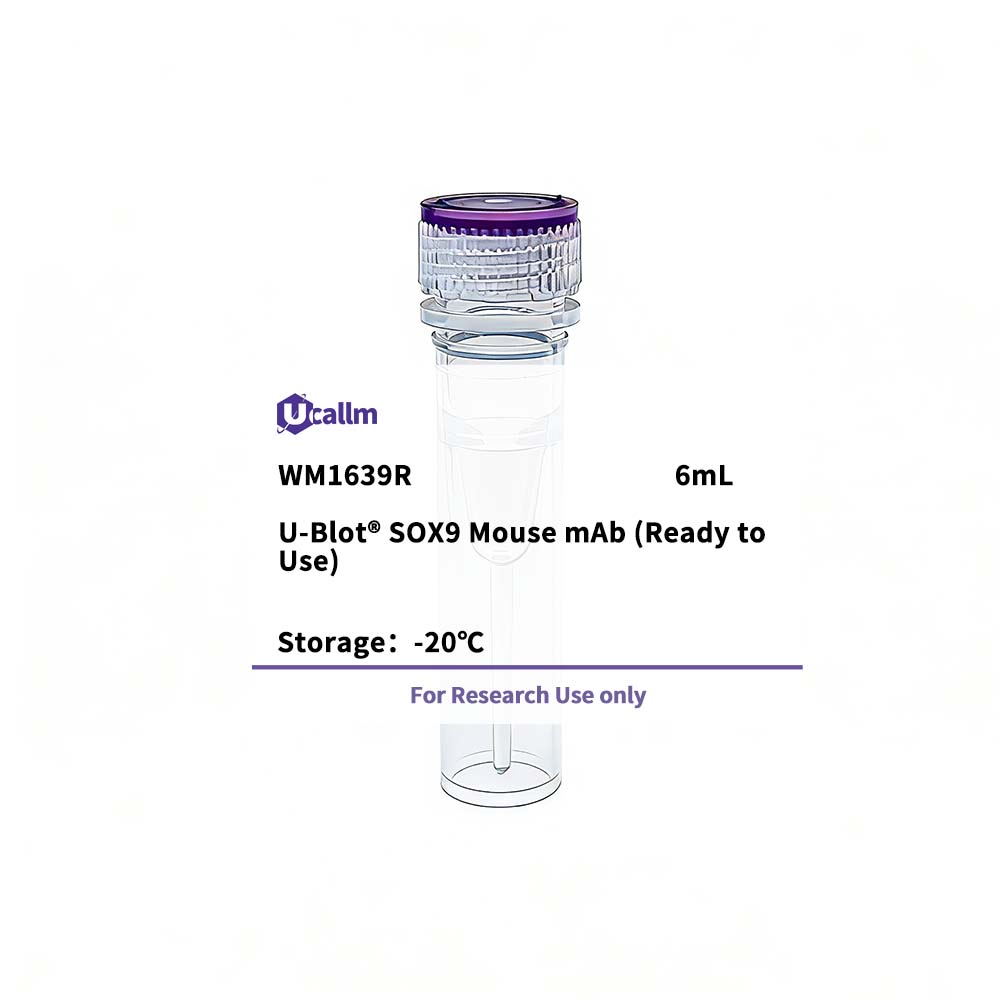
SKU: WM1639R Categories: ,

U-Blot® SOX9 Mouse mAb (Ready to Use)

$168.00

SKU: WM1639R
Enter the quantity you would like, or drag the panel to find the quantity and price that best for you
Bulk QuoteAuthorize OEM & ODM

Product details

Background:
SRY-box 9(SOX9) Homo sapiens The protein encoded by this gene recognizes the sequence CCTTGAG along with other members of the HMG-box class DNA-binding proteins. It acts during chondrocyte differentiation and, with steroidogenic factor 1, regulates transcription of the anti-Muellerian hormone (AMH) gene. Deficiencies lead to the skeletal malformation syndrome campomelic dysplasia, frequently with sex reversal. [provided by RefSeq, Jul 2008],

Specifications

TargetSox-9
ReactivityHuman, Mouse, Rat, Bovine
ApplicationsIHC
MW(Calculated)
MW(Observed)
Host SpeciesMouse
IsotypeIgG2b,Kappa
Conjugate/ModificationUnmodified
Modification
Recommended Dilution RatioReady to use for IHC / Note: For IHC, we suggest antigen retrieval with TE buffer pH 9.0 (Cat#YS0004)
FormulationThe prediluted ready-to-use antibody is diluted in phosphate buffer saline containing stabilizing protein and 0.05% Proclin 300
Source
PurificationThe antibody was affinity-purified from ascites by affinity-chromatography using specific immunogen.
Purity
Storage2°C to 8°C/1 year,Ship by ice bag
Concentration
ClonalityMonoclonal
Clone NumberABT-SOX9
ImmunogenSynthesized peptide derived from human SOX9 AA range: 1-100
Sequence
SpecificityThe antibody can specifically recognize human SOX9 protein.
Gene NameSOX9
Protein NameTranscription factor SOX-9
Other Name
SpeciesHuman
Gene ID-16662
UniprotP48436,
Species.1Mouse
Gene ID-220682
Uniprot.1Q04887
Species.2
Gene ID-3
Uniprot.2
Organism-4
Gene ID-4
SwissProt-4
BackgroundSRY-box 9(SOX9) Homo sapiens The protein encoded by this gene recognizes the sequence CCTTGAG along with other members of the HMG-box class DNA-binding proteins. It acts during chondrocyte differentiation and, with steroidogenic factor 1, regulates transcription of the anti-Muellerian hormone (AMH) gene. Deficiencies lead to the skeletal malformation syndrome campomelic dysplasia, frequently with sex reversal. [provided by RefSeq, Jul 2008],
Cellular LocalizationNuclear
Tissue ExpressionEye,PNS,Testis,
Signaling_pathwayEnvironmental Information Processing >> Signal transduction >> cAMP signaling pathway
Research Areas>>cAMP signaling pathway
FunctionDisease:Defects in SOX9 are the cause of campomelic dysplasia (CMD1) [MIM:114290]. CMD1 is a rare, often lethal, dominantly inherited, congenital osteochondrodysplasia, associated with male-to-female autosomal sex reversal in two-thirds of the affected karyotypic males. A disease of the newborn characterized by congenital bowing and angulation of long bones, unusually small scapulae, deformed pelvis and spine and a missing pair of ribs. Craniofacial defects such as cleft palate, micrognatia, flat face and hypertelorism are common. Various defects of the ear are often evident, affecting the cochlea, malleus incus, stapes and tympanum. Most patients die soon after birth due to respiratory distress which has been attributed to hypoplasia of the tracheobronchial cartilage and small thoracic cage.,Function:Plays an important role in the normal skeletal development. May regulate the expression of other genes involved in chondrogenesis by acting as a transcription factor for these genes.,similarity:Contains 1 HMG box DNA-binding domain.,
RRID
Please login to post questions
Back to Top
Product has been added to your cart