SKU: WP1911 Categories: ,

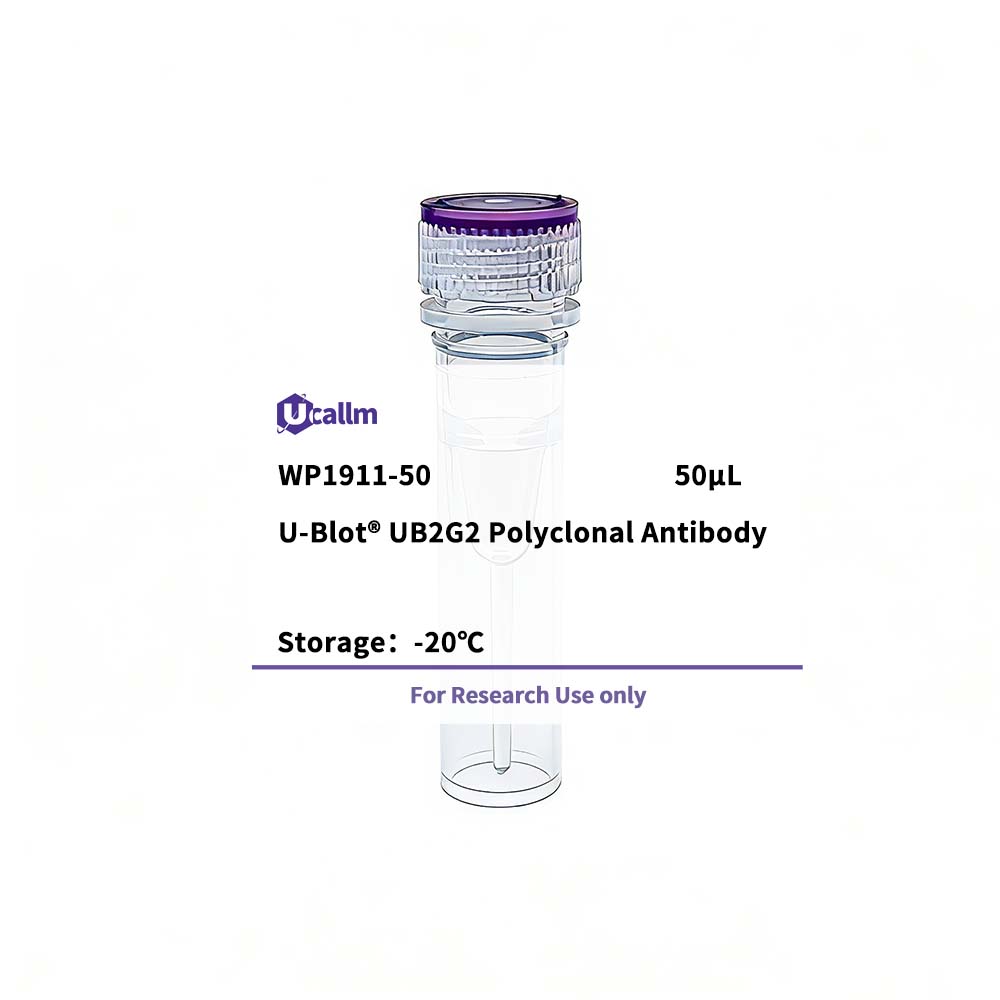
UB2G2 Polyclonal Antibody

Price range: $268.00 through $328.00

SKU: WP1911-100
Enter the quantity you would like, or drag the panel to find the quantity and price that best for you
Bulk QuoteAuthorize OEM & ODM

Product details

Background:

The modification of proteins with ubiquitin is an important cellular mechanism for targeting abnormal or short-lived proteins for degradation. Ubiquitination involves at least three classes of enzymes: ubiquitin-activating enzymes, or E1s, ubiquitin-conjugating enzymes, or E2s, and ubiquitin-protein ligases, or E3s. This gene encodes a member of the E2 ubiquitin-conjugating enzyme family. The encoded protein shares 100% sequence identity with the mouse counterpart. This gene is ubiquitously expressed, with high expression seen in adult muscle. Three alternatively spliced transcript variants encoding distinct isoforms have been found for this gene. [provided by RefSeq, Jan 2011],


Specifications

Size50μL/100μL
TargetUB2G2
ReactivityHuman, Mouse
ApplicationsWB, ELISA
MW(Calculated)
MW(Observed)18kD
Host SpeciesRabbit
IsotypeIgG
Conjugate/ModificationUnmodified
Recommended Dilution RatioWB 1:500-2000; ELISA 1:5000-20000
FormulationLiquid in PBS containing 50% glycerol,0.5% BSA and 0.02% sodium azide.
PurificationThe antibody was affinity-purified from rabbit antiserum by affinity-chromatography using epitope-specific immunogen.
Storage-15°C to -25°C/1 year(Do not lower than -25°C)
Concentration1 mg/ml
ClonalityPolyclonal
Clone Number
ImmunogenSynthesized peptide derived from part region of human protein
SpecificityUB2G2 Polyclonal Antibody detects endogenous levels of protein.
Gene NameUBE2G2
Protein NameUbiquitin-conjugating enzyme E2 G2 (Ubiquitin carrier protein G2) (Ubiquitin-protein ligase G2)
Other Name
SpeciesHuman
Gene ID7327
UniprotP60604,
Species.1Mouse
Gene ID.1
Uniprot.1P60605
Species.2
Gene ID.2
Uniprot.2
Cellular LocalizationEndoplasmic reticulum . Lipid droplet .
Tissue ExpressionHippocampus,Lung,Uterus,
Signaling_pathwayHuman Diseases >> Neurodegenerative disease >> Parkinson disease;Human Diseases >> Neurodegenerative disease >> Pathways of neurodegeneration - multiple diseases;Genetic Information Processing >> Folding, sorting and degradation >> Ubiquitin mediated proteolysis
Research Areas>>Ubiquitin mediated proteolysis; / >>Protein processing in endoplasmic reticulum; / >>Parkinson disease; / >>Pathways of neurodegeneration - multiple diseases
FunctionCatalytic activity:ATP + ubiquitin + protein lysine = AMP + diphosphate + protein N-ubiquityllysine.,Function:Catalyzes the covalent attachment of ubiquitin to other proteins. Involved in endoplasmic reticulum-associated degradation (ERAD).,pathway:Protein modification; protein ubiquitination.,similarity:Belongs to the ubiquitin-conjugating enzyme family.,
Please login to post questions
Back to Top
Product has been added to your cart
