SKU: WM1385 Categories: ,

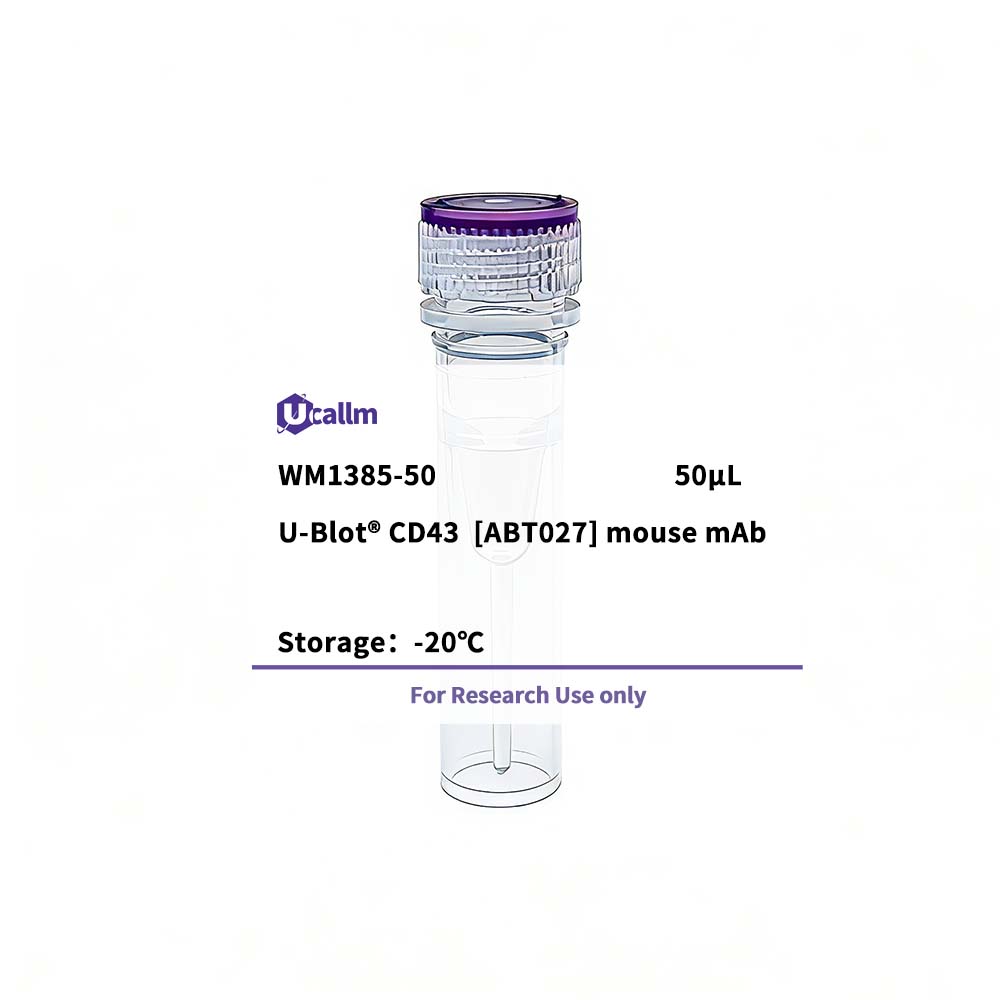
CD43 [ABT027] mouse mAb

Price range: $268.00 through $328.00

SKU: WM1385-50
Enter the quantity you would like, or drag the panel to find the quantity and price that best for you
Bulk QuoteAuthorize OEM & ODM

Product details

Background:
CD43 is a transmembrane protein related to T cell immune function. It mainly marks T cells and is expressed in normal T lymphocytes, macrophages, myelocytes and plasma cells, but not in normal B cells or reactive B cells. It is expressed in all of the extramedullary myeloma and granulocytic sarcoma, most of the T-lymphocytic lymphoma, acute T-lymphocytic leukemia and acute B-lymphocytic leukemia, some of the low-grade B-cell lymphoma and anaplastic large cell lymphoma.

Specifications

TargetCD43
ReactivityHuman
ApplicationsIHC, WB, IF, ELISA
MW(Calculated)40kD
MW(Observed)90kD
Host SpeciesMouse
IsotypeIgG2b,Kappa
Conjugate/ModificationUnmodified
Modification
Recommended Dilution RatioIHC 1:200-1000; WB 1:500-2000; IF 1:100-500; ELISA 1:1000-5000 / Note: For IHC, we suggest antigen retrieval with TE buffer pH 9.0 (Cat#YS0004)
FormulationPBS, 50% glycerol, 0.05% Proclin 300, 0.05%BSA
Source
PurificationRecombinant Antibody expressed in animal component-free (ACF) media, purified via Protein G affinity chromatography.
Purity
Storage-15°C to -25°C/1 year(Do not lower than -25°C)
Concentration
ClonalityMonoclonal
Clone NumberABT027
ImmunogenSynthesized peptide derived from human CD43 AA range: 300-400
Sequence
SpecificityThe antibody can specifically recognize human CD43 protein.
Gene NameSPN CD43
Protein NameLeukosialin (GPL115) (Galactoglycoprotein) (GALGP) (Leukocyte sialoglycoprotein) (Sialophorin) (CD antigen CD43) [Cleaved into: CD43 cytoplasmic tail (CD43-ct) (CD43ct)]
Other NameCD 43; / CD43; / CD43 antigen; / Galactoglycoprotein; / GALGP; / GPL 115; / GPL115; / Human gene for sialophorin; / Leucocyte sialoglycoprotein; / LEUK_HUMAN; / Leukocyte large sialoglycoprotein; / Leukocyte sialoglycoprotein; / Leukosialin; / LSN; / Ly-48; / sialophorin; / gpL115, leukosialin, CD43; / Sialophorin; / Spn
SpeciesHuman
Gene ID-16693
UniprotP16150
Species.1
Gene ID-2
Uniprot.1
Species.2
Gene ID-3
Uniprot.2
Organism-4
Gene ID-4
SwissProt-4
BackgroundCD43 is a transmembrane protein related to T cell immune function. It mainly marks T cells and is expressed in normal T lymphocytes, macrophages, myelocytes and plasma cells, but not in normal B cells or reactive B cells. It is expressed in all of the extramedullary myeloma and granulocytic sarcoma, most of the T-lymphocytic lymphoma, acute T-lymphocytic leukemia and acute B-lymphocytic leukemia, some of the low-grade B-cell lymphoma and anaplastic large cell lymphoma.
Cellular LocalizationMembranous
Tissue ExpressionCell surface of thymocytes, T-lymphocytes, neutrophils, plasma cells and myelomas.
Signaling_pathwayEnvironmental Information Processing >> Signaling molecules and interaction >> Cell adhesion molecules
Research Areas>>Cell adhesion molecules
FunctionDisease:CD43 expression is defective on the T-cells of males with the immunodeficiency Wiskott-Aldrich syndrome. Affected males are susceptible to opportunistic infections and do not respond to polysaccharide antigens, reflecting defects in cytotoxic and helper T-cell functions.,Function:One of the major glycoproteins of thymocytes and T lymphocytes. Plays a role in the physicochemical properties of the T-cell surface and in lectin binding. Presents carbohydrate ligands to selectins. Has an extended rodlike structure that could protrude above the glycocalyx of the cell and allow multiple glycan chains to be accessible for binding. Is a counter receptor for SN/Siglec-1 (By similarity). During T-cell activation is actively removed from the T-cell-APC (antigen-presenting cell) contact site thus suggesting a negative regulatory role in adaptive immune response.,PTM:Glycosylated; has a high content of sialic acid and O-linked carbohydrate structures.,subunit:Interacts with HIPK2 via the cytoplasmic domain.,tissue specificity:Cell surface of thymocytes, T-lymphocytes, neutrophils, plasma cells and myelomas.,
RRID
Please login to post questions
Back to Top
Product has been added to your cart