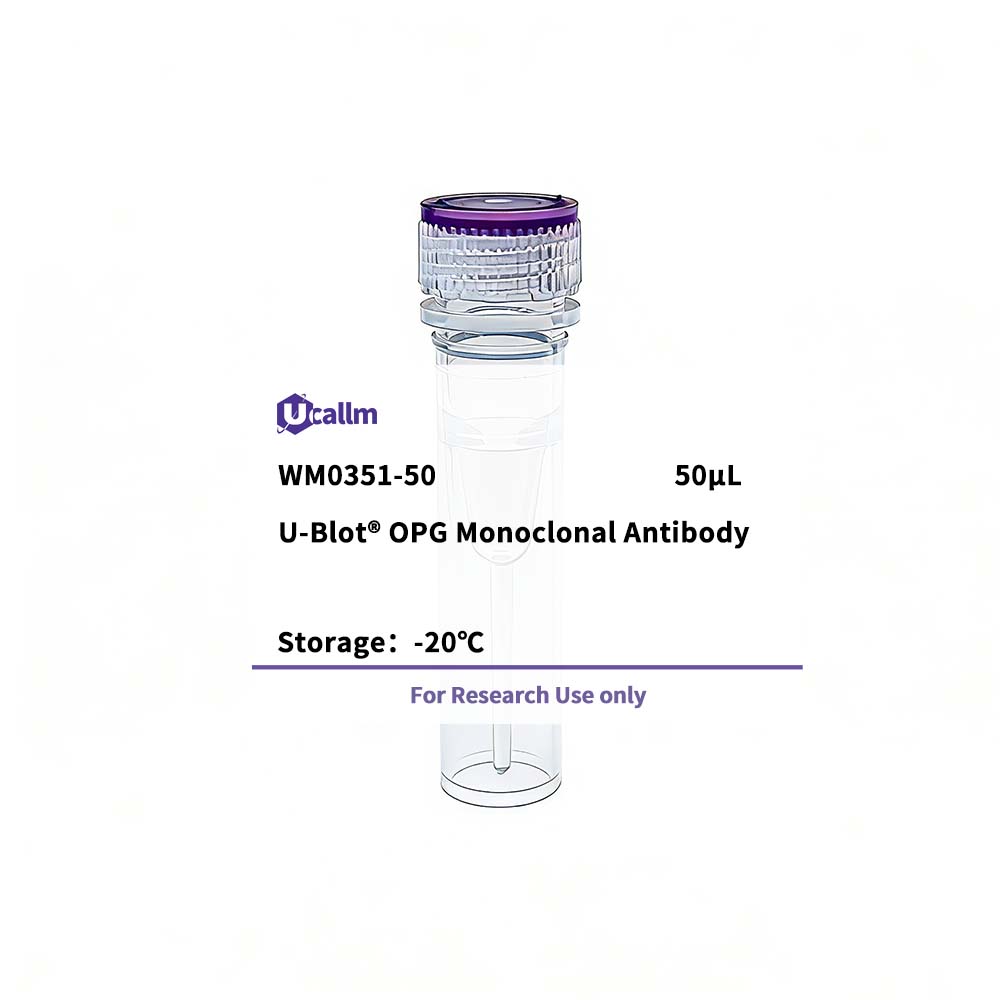
SKU: WM0351 Categories: ,

OPG Monoclonal Antibody

Price range: $268.00 through $328.00

SKU: WM0351-50
Enter the quantity you would like, or drag the panel to find the quantity and price that best for you
Bulk QuoteAuthorize OEM & ODM

Product details

Background:
The protein encoded by this gene is a member of the TNF-receptor superfamily. This protein is an osteoblast-secreted decoy receptor that functions as a negative regulator of bone resorption. This protein specifically binds to its ligand, osteoprotegerin ligand, both of which are key extracellular regulators of osteoclast development. Studies of the mouse counterpart also suggest that this protein and its ligand play a role in lymph-node organogenesis and vascular calcification. Alternatively spliced transcript variants of this gene have been reported, but their full length nature has not been determined. [provided by RefSeq, Jul 2008],


Specifications

Size50μL/100μL
TargetOPG
ReactivityHuman
ApplicationsWB, IF, FC, ELISA
MW(Calculated)46kD
MW(Observed)
Host SpeciesMouse
Isotype
Conjugate/ModificationUnmodified
Recommended Dilution RatioWB 1:500-1:2000; IF 1:200-1:1000; Flow Cyt 1:200-1:400; ELISA 1:10000; Not yet tested in other applications.
FormulationLiquid in PBS containing 50% glycerol, 0.5% BSA and 0.02% sodium azide.
PurificationAffinity purification
Storage-15°C to -25°C/1 year(Do not lower than -25°C)
Concentration
ClonalityMonoclonal
Clone Number3C8
ImmunogenPurified recombinant fragment of human OPG expressed in E. Coli.
SpecificityOPG Monoclonal Antibody detects endogenous levels of OPG protein.
Gene NameTNFRSF11B
Protein NameTumor necrosis factor receptor superfamily member 11B
Other NameTNFRSF11B; / OCIF; / OPG; / Tumor necrosis factor receptor superfamily member 11B; / Osteoclastogenesis inhibitory factor; / Osteoprotegerin
SpeciesHuman
Gene ID4982
UniprotO00300,
Species.1Mouse
Gene ID.1
Uniprot.1O08712
Species.2
Gene ID.2
Uniprot.2
Cellular LocalizationSecreted.
Tissue ExpressionHighly expressed in adult lung, heart, kidney, liver, spleen, thymus, prostate, ovary, small intestine, thyroid, lymph node, trachea, adrenal gland, testis, and bone marrow. Detected at very low levels in brain, placenta and skeletal muscle. Highly expressed in fetal kidney, liver and lung.
Signaling_pathwayOrganismal Systems >> Development and regeneration >> Osteoclast differentiation;Environmental Information Processing >> Signaling molecules and interaction >> Cytokine-cytokine receptor interaction
Research Areas>>Cytokine-cytokine receptor interaction; / >>Osteoclast differentiation
FunctionDisease:Defects in TNFRSF11B are the cause of juvenile Paget disease (JPD) [MIM:239000]; also called hyperostosis corticalis deformans juvenilis or hereditary hyperphosphatasia or chronic congenital idiopathic hyperphosphatasia. JPD is a rare autosomal recessive osteopathy that presents in infancy or early childhood. The disorder is characterized by rapidly remodeling woven bone, osteopenia, debilitating fractures, and deformities due to a markedly accelerated rate of bone remodeling throughout the skeleton. Approximately 40 cases of JPD have been reported worldwide. Unless it is treated with drugs that block osteoclast-mediated skeletal resorption, the disease can be fatal.,Function:Acts as decoy receptor for RANKL and thereby neutralizes its function in osteoclastogenesis. Inhibits the activation of osteoclasts and promotes osteoclast apoptosis in vitro. Bone homeostasis seems to depend on the local RANKL/OPG ratio. May also play a role in preventing arterial calcification. May act as decoy receptor for TRAIL and protect against apoptosis. TRAIL binding blocks the inhibition of osteoclastogenesis.,induction:Up-regulated by increasing calcium-concentration in the medium and estrogens. Down-regulated by glucocorticoids.,PTM:N-glycosylated. Contains sialic acid residues.,PTM:The N-terminus is blocked.,similarity:Contains 2 death domains.,similarity:Contains 4 TNFR-Cys repeats.,subunit:Homodimer.,tissue specificity:Highly expressed in adult lung, heart, kidney, liver, spleen, thymus, prostate, ovary, small intestine, thyroid, lymph node, trachea, adrenal gland, testis, and bone marrow. Detected at very low levels in brain, placenta and skeletal muscle. Highly expressed in fetal kidney, liver and lung.,
Please login to post questions
Back to Top
Product has been added to your cart
