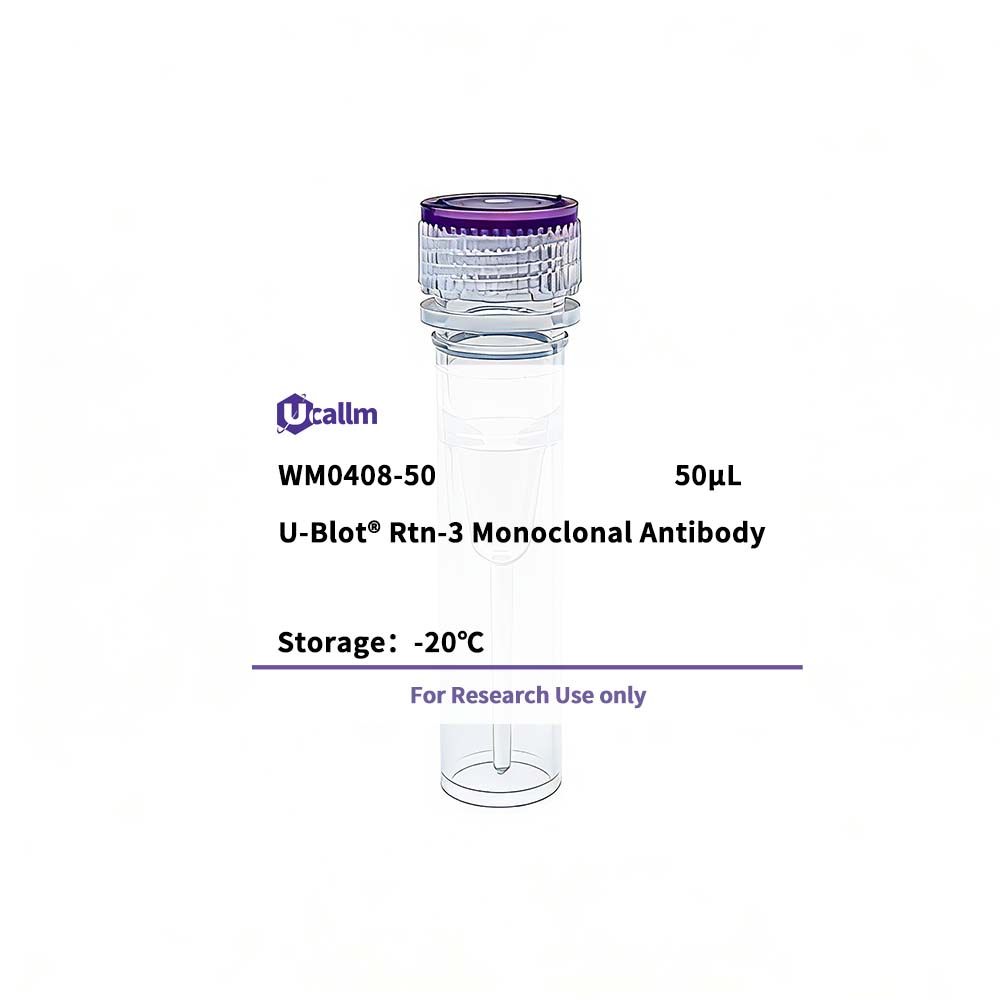
SKU: WM0408 Categories: ,

Rtn-3 Monoclonal Antibody

Price range: $268.00 through $328.00

SKU: WM0408-50
Enter the quantity you would like, or drag the panel to find the quantity and price that best for you
Bulk QuoteAuthorize OEM & ODM

Product details

Background:
This gene belongs to the reticulon family of highly conserved genes that are preferentially expressed in neuroendocrine tissues. This family of proteins interact with, and modulate the activity of beta-amyloid converting enzyme 1 (BACE1), and the production of amyloid-beta. An increase in the expression of any reticulon protein substantially reduces the production of amyloid-beta, suggesting that reticulon proteins are negative modulators of BACE1 in cells. Alternatively spliced transcript variants encoding different isoforms have been found for this gene, and pseudogenes of this gene are located on chromosomes 4 and 12. [provided by RefSeq, May 2012],

Specifications

Size50μL/100μL
TargetRtn-3
ReactivityHuman
ApplicationsIHC, IF, ELISA
MW(Calculated)
MW(Observed)
Host SpeciesMouse
Isotype
Conjugate/ModificationUnmodified
Recommended Dilution RatioIHC 1:200-1:1000; ELISA 1:10000; IF 1:50-200 / Note: For IHC, we suggest antigen retrieval with TE buffer pH 9.0 (Cat#WT1004)
FormulationLiquid in PBS containing 50% glycerol, 0.5% BSA and 0.02% sodium azide.
PurificationAffinity purification
Storage-15°C to -25°C/1 year(Do not lower than -25°C)
Concentration
ClonalityMonoclonal
Clone Number12E2
ImmunogenPurified recombinant fragment of Rtn-3 expressed in E. Coli.
SpecificityRtn-3 Monoclonal Antibody detects endogenous levels of Rtn-3 protein.
Gene NameRTN3
Protein NameReticulon-3
Other NameRTN3; / ASYIP; / NSPL2; / Reticulon-3; / Neuroendocrine-specific protein-like 2; / NSP-like protein 2; / Neuroendocrine-specific protein-like II; / NSP-like protein II; / NSPLII
SpeciesHuman
Gene ID10313
UniprotO95197,
Species.1Mouse
Gene ID.1
Uniprot.1Q9ES97
Species.2
Gene ID.2
Uniprot.2
Cellular LocalizationEndoplasmic reticulum membrane; Multi-pass membrane protein . Golgi apparatus membrane; Multi-pass membrane protein .
Tissue ExpressionIsoform 3 is widely expressed, with highest levels in brain, where it is enriched in neuronal cell bodies from gray matter (at protein level). Three times more abundant in macula than in peripheral retina. Isoform 1 is expressed at high levels in brain and at low levels in skeletal muscle. Isoform 2 is only found in melanoma.
Signaling_pathwayHuman Diseases >> Neurodegenerative disease >> Alzheimer disease
Research Areas>>Alzheimer disease
FunctionFunction:May be involved in membrane trafficking in the early secretory pathway. Inhibits BACE1 activity and amyloid precursor protein processing. May induce caspase-8 cascade and apoptosis. May favor BCL2 translocation to the mitochondria upon endoplasmic reticulum stress. In case of enteroviruses infection, RTN3 may be involved in the viral replication or pathogenesis.,induction:By endoplasmic reticulum stress (at protein level).,miscellaneous:The sequence shown here is derived from an EMBL/GenBank/DDBJ third party annotation (TPA) entry.,similarity:Contains 1 reticulon domain.,subunit:Homodimer. Interacts with RTN4. Isoform 3 interacts with BACE1, BACE2, BCL2 and FADD. Interacts with Coxsackievirus A16, enterovirus 71 and poliovirus P2C proteins.,tissue specificity:Isoform 3 is widely expressed, with highest levels in brain, where it is enriched in neuronal cell bodies from gray matter (at protein level). Three times more abundant in macula than in peripheral retina. Isoform 1 is expressed at high levels in brain and at low levels in skeletal muscle. Isoform 2 is only found in melanoma.,
Please login to post questions
Back to Top
Product has been added to your cart