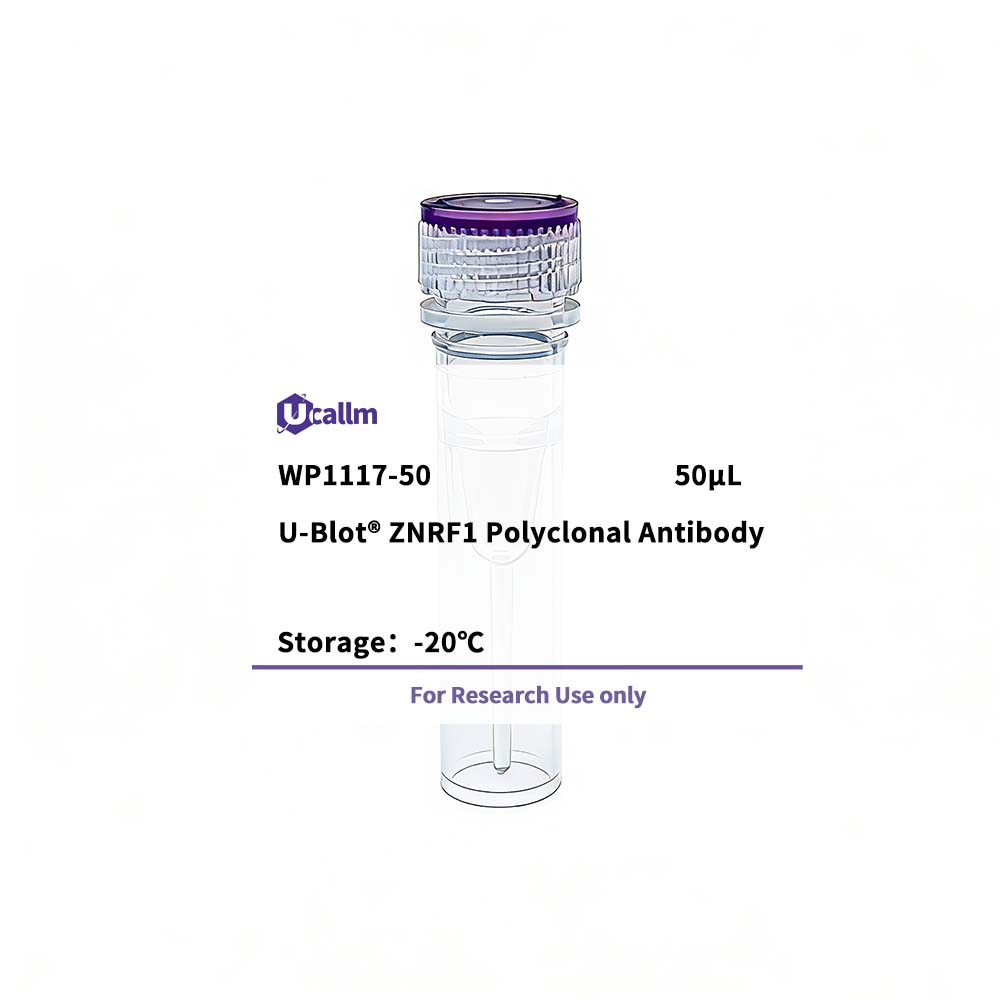
SKU: WP1117 Categories: ,

ZNRF1 Polyclonal Antibody

Price range: $268.00 through $328.00

SKU: WP1117-100
Enter the quantity you would like, or drag the panel to find the quantity and price that best for you
Bulk QuoteAuthorize OEM & ODM

Product details

Background:

This gene encodes an E3 ubiquitin-protein ligase that plays a role in neural-cell differentiation. Overexpression of this gene causes neurite-like elongation. The encoded protein contains both a zinc finger and a RING finger motif and is localized in the endosome/lysosome compartment, indicating that it may be involved in ubiquitin-mediated protein modification, and in synaptic vessicle membranes in neurons. [provided by RefSeq, Feb 2012],

Specifications

Size50μL/100μL
TargetZNRF1
ReactivityHuman, Mouse
ApplicationsWB, ELISA
MW(Calculated)
MW(Observed)24kD
Host SpeciesRabbit
IsotypeIgG
Conjugate/ModificationUnmodified
Recommended Dilution RatioWB 1:500-2000; ELISA 1:5000-20000
FormulationLiquid in PBS containing 50% glycerol,0.5% BSA and 0.02% sodium azide.
PurificationThe antibody was affinity-purified from rabbit antiserum by affinity-chromatography using epitope-specific immunogen.
Storage-15°C to -25°C/1 year(Do not lower than -25°C)
Concentration1 mg/ml
ClonalityPolyclonal
Clone Number
ImmunogenSynthesized peptide derived from part region of human protein
SpecificityZNRF1 Polyclonal Antibody detects endogenous levels of protein.
Gene NameZNRF1 NIN283
Protein NameE3 ubiquitin-protein ligase ZNRF1 (Nerve injury-induced gene 283 protein) (Zinc/RING finger protein 1)
Other Name
SpeciesHuman
Gene ID84937
UniprotQ8ND25,
Species.1Mouse
Gene ID.1
Uniprot.1Q91V17
Species.2
Gene ID.2
Uniprot.2
Cellular LocalizationEndosome. Lysosome. Membrane; Peripheral membrane protein. Cytoplasmic vesicle, secretory vesicle, synaptic vesicle membrane; Peripheral membrane protein . Associated with synaptic vesicle membranes in neurons.
Tissue ExpressionExpressed primarily in the nervous system, with expression higher in developing brain relative to adult. Expressed at low levels in testis and thymus.
Signaling_pathway
Research Areas
FunctionDomain:The RING-type zinc finger domain is required for E3 ligase activity.,Function:E3 ubiquitin-protein ligase which accepts ubiquitin from an E2 ubiquitin-conjugating enzyme in the form of a thioester and then directly transfers the ubiquitin to substrates. May play a role in the establisment and maintenance of neuronal transmission and plasticity via its ubiquitin-protein ligase activity.,pathway:Protein modification; protein ubiquitination.,similarity:Contains 1 RING-type zinc finger.,subcellular location:Associated with synaptic vesicle membranes in neurons.,tissue specificity:Expressed primarily in the nervous system, with expression higher in developing brain relative to adult. Expressed at low levels in testis and thymus.,
Please login to post questions
Back to Top
Product has been added to your cart