

Product details
Background:
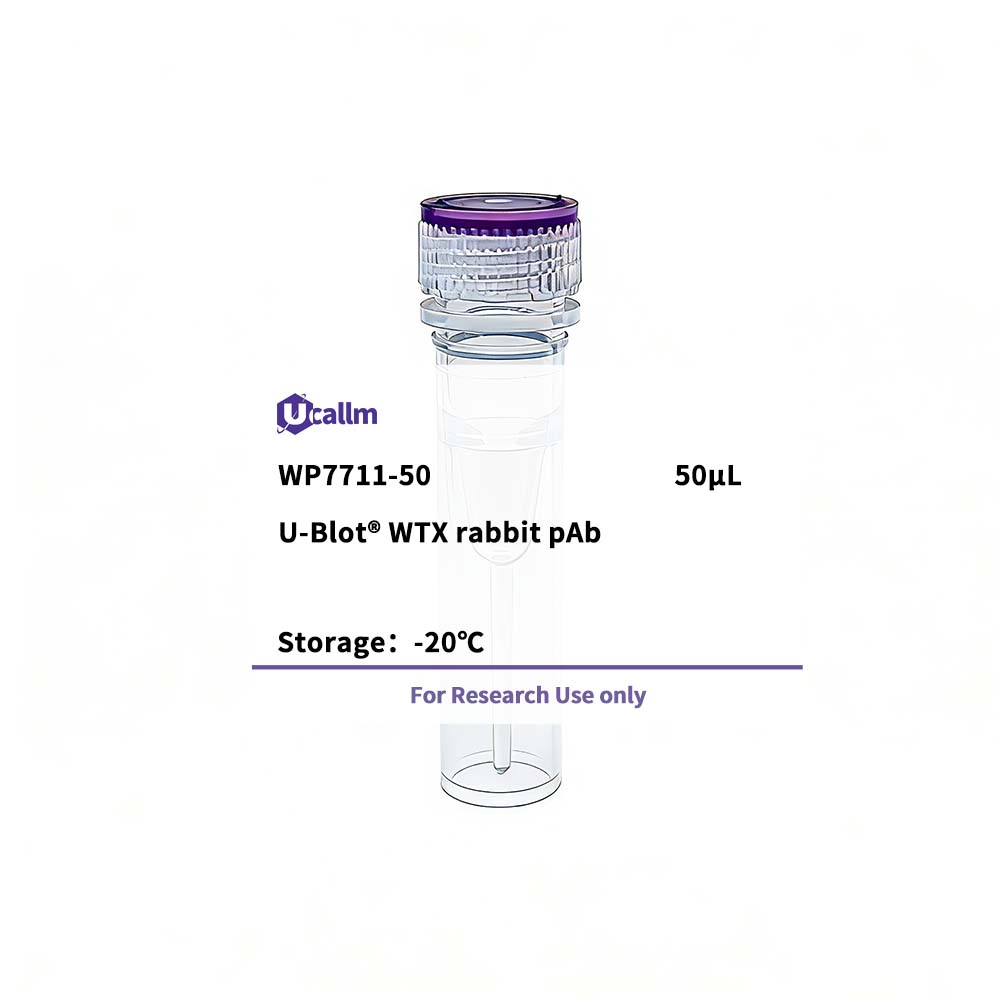
Price range: $268.00 through $328.00
Background:
| Size | 50μL/100μL |
| Target | AMER1 |
| Reactivity | Human, Mouse |
| Applications | WB |
| MW(Calculated) | 125kD |
| MW(Observed) | |
| Host Species | Rabbit |
| Isotype | IgG |
| Conjugate/Modification | Unmodified |
| Recommended Dilution Ratio | WB 1:500-2000 |
| Formulation | Liquid in PBS containing 50% glycerol, 0.5% BSA and 0.02% sodium azide. |
| Purification | The antibody was affinity-purified from rabbit antiserum by affinity-chromatography using epitope-specific immunogen. |
| Storage | -15°C to -25°C/1 year(Do not lower than -25°C) |
| Concentration | 1 mg/ml |
| Clonality | Polyclonal |
| Clone Number | |
| Immunogen | Synthesized peptide derived from human WTX |
| Specificity | This antibody detects endogenous levels of WTX at Human, Mouse |
| Gene Name | FAM123B WTX |
| Protein Name | APC membrane recruitment protein 1 (Amer1) (Protein FAM123B) (Wilms tumor gene on the X chromosome protein) |
| Other Name | |
| Species | Human |
| Gene ID | 139285 |
| Uniprot | Q5JTC6, |
| Species.1 | Mouse |
| Gene ID.1 | 72345 |
| Uniprot.1 | Q7TS75 |
| Species.2 | |
| Gene ID.2 | |
| Uniprot.2 | |
| Cellular Localization | Cytoplasm. Cell membrane; Peripheral membrane protein; Cytoplasmic side. Nucleus. Shuttles between nucleus and cytoplasm. Detected in nuclear paraspeckles that are found close to splicing speckles. Translocates to the cell membrane following binding to PtdIns(4,5)P2. |
| Tissue Expression | Detected in fetal and adult kidney, brain and spleen. |
| Signaling_pathway | |
| Research Areas | |
| Function | Regulator of the canonical Wnt signaling pathway. Acts by specifically binding phosphatidylinositol 4,5-bisphosphate (PtdIns(4,5)P2), translocating to the cell membrane and interacting with key regulators of the canonical Wnt signaling pathway, such as components of the beta-catenin destruction complex. Acts both as a positive and negative regulator of the Wnt signaling pathway, depending on the context: acts as a positive regulator by promoting LRP6 phosphorylation. Also acts as a negative regulator by acting as a scaffold protein for the beta-catenin destruction complex and promoting stabilization of Axin at the cell membrane. Promotes CTNNB1 ubiquitination and degradation. Involved in kidney development. |





