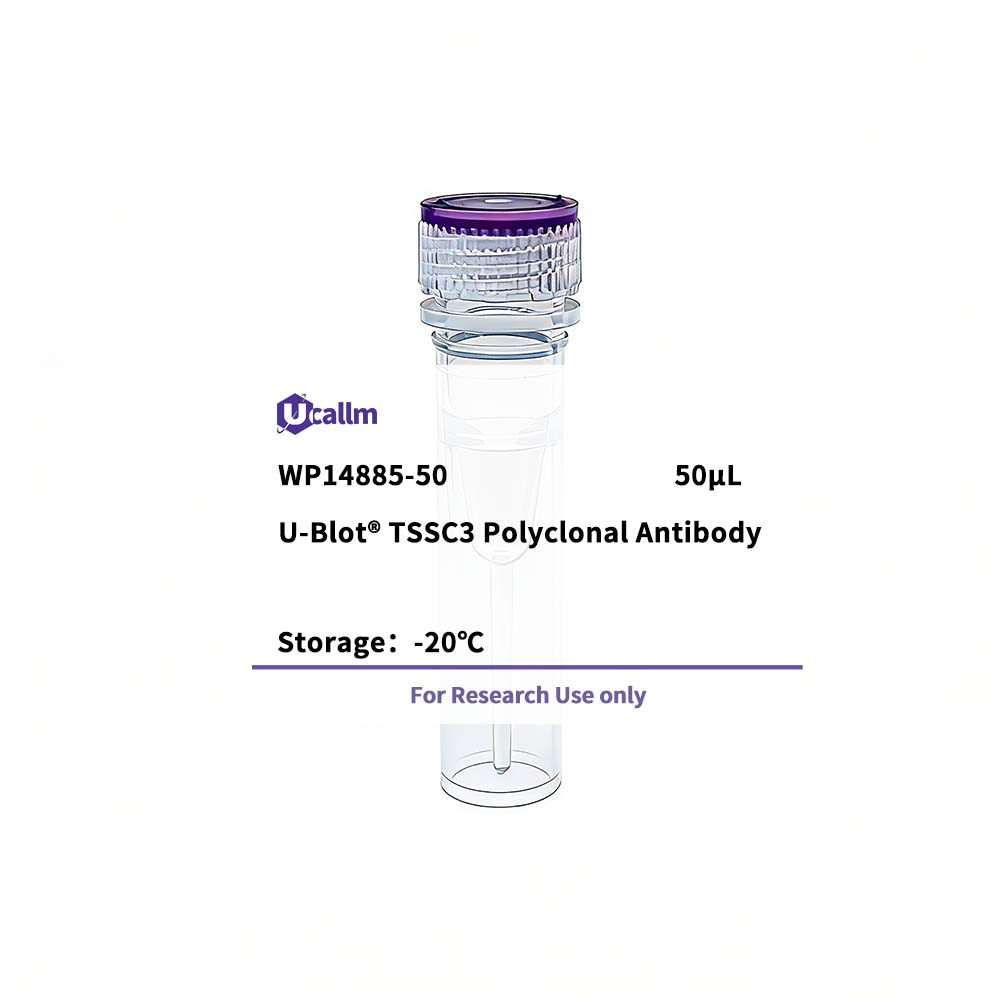
SKU: WP14885 Categories: ,

TSSC3 Polyclonal Antibody

Price range: $268.00 through $328.00

SKU: WP14885-100
Enter the quantity you would like, or drag the panel to find the quantity and price that best for you
Bulk QuoteAuthorize OEM & ODM

Product details

Background:

This gene is located in a cluster of imprinted genes on chromosome 11p15.5, which is considered to be an important tumor suppressor gene region. Alterations in this region may be associated with the Beckwith-Wiedemann syndrome, Wilms tumor, rhabdomyosarcoma, adrenocortical carcinoma, and lung, ovarian, and breast cancer. This gene has been shown to be imprinted, with preferential expression from the maternal allele in placenta and liver. [provided by RefSeq, Oct 2010],

Specifications

Size50μL/100μL
TargetTSSC3
ReactivityHuman, Mouse
ApplicationsIHC, IF, ELISA
MW(Calculated)17kD
MW(Observed)
Host SpeciesRabbit
IsotypeIgG
Conjugate/ModificationUnmodified
Recommended Dilution RatioIHC 1:100-1:300; ELISA 1:20000; IF 1:50-200 / Note: For IHC, we suggest antigen retrieval with TE buffer pH 9.0 (Cat#WT1004)
FormulationLiquid in PBS containing 50% glycerol, 0.5% BSA and 0.02% sodium azide.
PurificationThe antibody was affinity-purified from rabbit antiserum by affinity-chromatography using epitope-specific immunogen.
Storage-15°C to -25°C/1 year(Do not lower than -25°C)
Concentration1 mg/ml
ClonalityPolyclonal
Clone Number
ImmunogenThe antiserum was produced against synthesized peptide derived from human PHLDA2. AA range:81-130
SpecificityTSSC3 Polyclonal Antibody detects endogenous levels of TSSC3 protein.
Gene NamePHLDA2
Protein NamePleckstrin homology-like domain family A member 2
Other NamePHLDA2; / BWR1C; / HLDA2; / IPL; / TSSC3; / Pleckstrin homology-like domain family A member 2; / Beckwith-Wiedemann syndrome chromosomal region 1 candidate gene C protein; / Imprinted in placenta and liver protein; / Tumor-suppressing STF cDNA 3 protein; / T
SpeciesHuman
Gene ID7262
UniprotQ53GA4,
Species.1Mouse
Gene ID.1
Uniprot.1O08969
Species.2
Gene ID.2
Uniprot.2
Cellular LocalizationCytoplasm . Membrane; Peripheral membrane protein .
Tissue ExpressionExpressed in placenta and adult prostate gland. In placenta, it is present in all cells of the villous cytotrophoblast. The protein is absent in cells from hydatidiform moles. Hydatidiform mole is a gestation characterized by abnormal development of both fetus and trophoblast. The majority of hydatidiform moles are associated with an excess of paternal to maternal genomes and are likely to result from the abnormal expression of imprinted genes (at protein level). Expressed at low levels in adult liver and lung, and fetal liver. Expressed in adult brain and neuroblastoma, medullablastoma and glioblastoma cell lines.
Signaling_pathway
Research Areas
FunctionDomain:The PH domain binds phosphoinositides with a broad specificity. It may compete with the PH domain of some other proteins, thereby interfering with their binding to phosphatidylinositol 4,5-bisphosphate (PIP2) and phosphatidylinositol 3,4,5-triphosphate (PIP3).,Function:Plays a role in regulating placenta growth. May act via its PH domain that competes with other PH domain-containing proteins, thereby preventing their binding to membrane lipids.,induction:Maternal PHLDA2 allele is activated, while paternal Phlda2 is repressed due to genomic imprinting. Down-regulated by hypoxia. Although highly similar to PHLDA3 protein, it is not regulated by p53/TP53.,miscellaneous:The PHLDA2 locus is imprinted. Loss of imprinting results in overexpression. Imprinting is dependent on RNAi machinery.,similarity:Belongs to the PHLDA2 family.,similarity:Contains 1 PH domain.,tissue specificity:Expressed in placenta and adult prostate gland. In placenta, it is present in all cells of the villous cytotrophoblast. The protein is absent in cells from hydatidiform moles. Hydatidiform mole is a gestation characterized by abnormal development of both fetus and trophoblast. The majority of hydatidiform moles are associated with an excess of paternal to maternal genomes and are likely to result from the abnormal expression of imprinted genes (at protein level). Expressed at low levels in adult liver and lung, and fetal liver. Expressed in adult brain and neuroblastoma, medullablastoma and glioblastoma cell lines.,
Please login to post questions
Back to Top
Product has been added to your cart

