


Many researchers wonder if non-adherent cells can be used for Western blot analysis. The truth is, suspension cultures are absolutely suitable for this key protein detection method. This opens up big chances to study different cell types that grow in suspension.
Research often needs to analyze proteins from lymphocytes, blood cells, and other floating cells. For suspension cells Western blot, you need to adjust the protocol from the usual methods. The main thing is to get the harvesting and lysis right.
Getting proteins from floating cultures needs careful collection and timing. You’ll need to use gentle centrifugation, the right buffer, and special lysis methods. These steps help get good protein results while keeping the sample intact.
This detailed method tackles the special challenges of working with suspension cultures for protein analysis.
Key Takeaways
- Suspension cultures are fully compatible with protein detection techniques when proper protocols are followed
- Modified harvesting procedures using gentle centrifugation preserve sample quality and protein integrity
- Specialized lysis buffers and collection timing optimize protein extraction from floating cell populations
- Blood cells, lymphocytes, and other suspension cultures provide excellent samples for molecular analysis
- Protocol adaptations focus on collection methods rather than fundamental analytical principles
- Reliable results depend on careful attention to sample handling and processing techniques
Understanding Non-Adherent Cells
Non-adherent cells are a special group of cells that don’t need to stick to surfaces to live. They are key in research, especially for Western blot for non-adherent cells and other protein studies. Their role is vital in many scientific fields.
What Are Non-Adherent Cells?
Non-adherent cells live in a liquid culture without sticking to the sides of their container. Unlike cells that stick, these cells stay alive and work properly while floating. This makes them very useful for certain research tasks.
Examples of non-adherent cells include hematopoietic cell lines, some cancer cells, and special research models. Blood cells, lymphocytes, and tumor cells that move around in the blood are examples. They live like they do in our bodies.
Characteristics of Non-Adherent Cell Lines
Non-adherent cells have special traits that set them apart from cells that stick. Knowing these traits is crucial for non-adherent cells protein analysis and planning experiments.
- Modified surface adhesion molecules that prevent substrate attachment
- Altered cytoskeletal organization adapted for suspension growth
- Unique metabolic profiles optimized for floating culture conditions
- Specialized membrane properties that maintain cell integrity in suspension
- Enhanced resistance to mechanical stress from culture agitation
These special features mean researchers need to change how they work with these cells. Since they don’t stick, they need different ways to collect and prepare them compared to cells that do stick.
Importance of Non-Adherent Cells in Research
Non-adherent cells are vital for research in fields like immunology, oncology, and stem cell biology. Their unique traits are essential for studying certain biological processes that can’t be studied with cells that stick.
These cells are great for studying how cells work in real-life situations. They help scientists understand cell signaling, how drugs work, and disease mechanisms better. This is because they can mimic how cells act in our bodies more accurately.
Also, non-adherent cells are great for big studies and automated systems. They are easier to handle and process in large amounts. This makes them very useful for finding new medicines and in clinical settings.
The Basics of Western Blotting
Western blotting is a key method for finding proteins. It uses three main steps: separating proteins by size, moving them to a membrane, and finding them with antibodies. This method is crucial for studying proteins from different samples, including hard-to-handle non-adherent cells. We’ll guide you through the basics of Western blotting, essential for protein extraction from non-adherent cells.
The first step is using SDS-PAGE to separate proteins by size. Then, proteins move to a membrane through electrotransfer. Finally, antibodies pinpoint specific proteins with high accuracy.
Overview of the Western Blot Technique
Western blotting is a vital tool in molecular biology. It allows for semi-quantitative protein analysis in three stages. This method is great for detecting proteins from various sources.
It’s especially useful for cell lysis for non-adherent cells. Understanding these basics is key to successful protein analysis, no matter the cell type.
Key Steps in Western Blotting
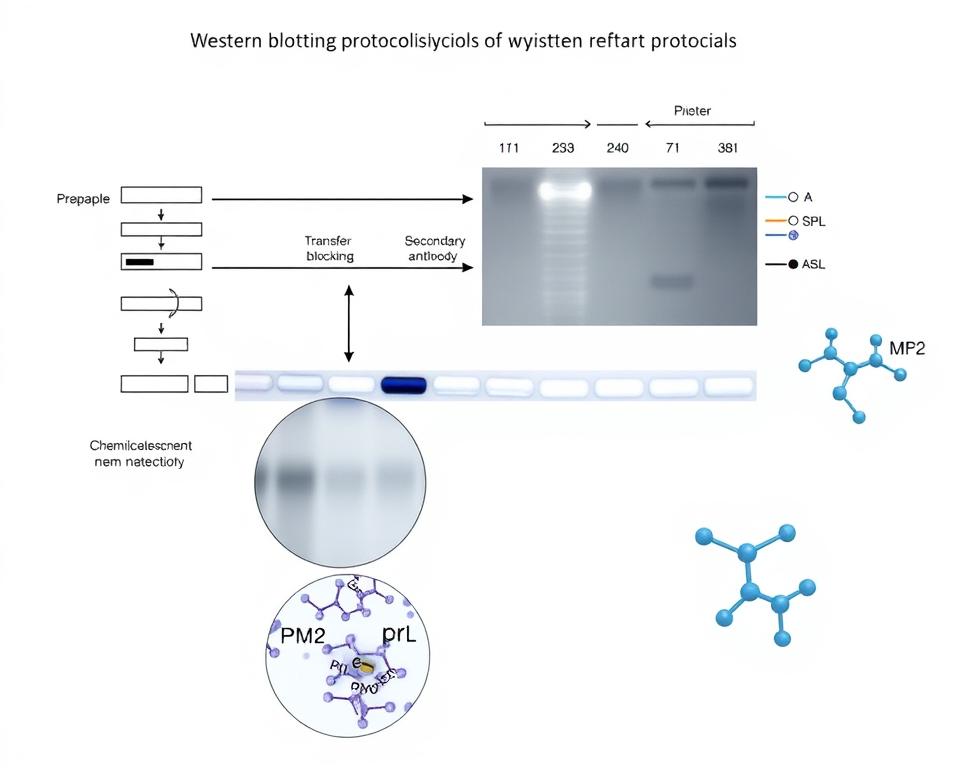
The Western blotting process has several important steps. The first is preparing the sample, which is crucial for protein extraction from non-adherent cells. This step needs careful attention.
Next, proteins are separated by size using SDS-PAGE. This method denatures proteins for consistent separation. Then, proteins are transferred to a membrane for antibody binding.
Blocking the membrane prevents non-specific antibody binding. Primary antibodies target specific proteins. Secondary antibodies enhance detection signals. Finally, detecting signals shows which proteins are present and in what amounts.
Common Applications of Western Blot
Western blotting has many uses in science. It’s often used for protein expression analysis. This helps researchers compare protein levels in different conditions. It’s especially useful for studying cell lysis for non-adherent cells and their proteins.
It’s also great for studying protein modifications. Researchers can find out about phosphorylation, glycosylation, and more. This method is also used to check protein interactions.
In clinical research, Western blotting helps validate biomarkers. It’s used to find new targets for treatments and diagnostic markers. It’s also useful in disease research to find protein changes linked to diseases.
Challenges with Non-Adherent Cells in Western Blot
Working with non-adherent cells in Western blot analysis comes with its own set of challenges. These cells, which don’t stick to surfaces, need special handling. You’ll need to follow modified protocols and pay close attention to every step. Knowing these challenges helps you get reliable results in your protein studies.
Handling non-adherent cells is different from adherent cells. We must tackle these differences head-on to get good protein extraction and analysis.
Cell Lysis and Protein Extraction Issues
Getting cells to pellet is the first big challenge with suspension cells. You need to spin them at 2,500 x g for 10 minutes to collect them all without damage. This step requires careful timing and keeping the temperature right to keep proteins intact.
Washing cells is also key. Ice-cold PBS helps remove culture media that could mess up protein extraction. This step stops contamination that could mess up your results later.
Choosing the right lysis buffer is another big challenge. Different types of suspension cells need different amounts and types of buffer. You have to adjust these based on the cell’s density and membrane type to get even lysis.
Cell clumping during processing can also cause problems. Use gentle mixing and the right amount of buffer to avoid clumps that lead to missing proteins.

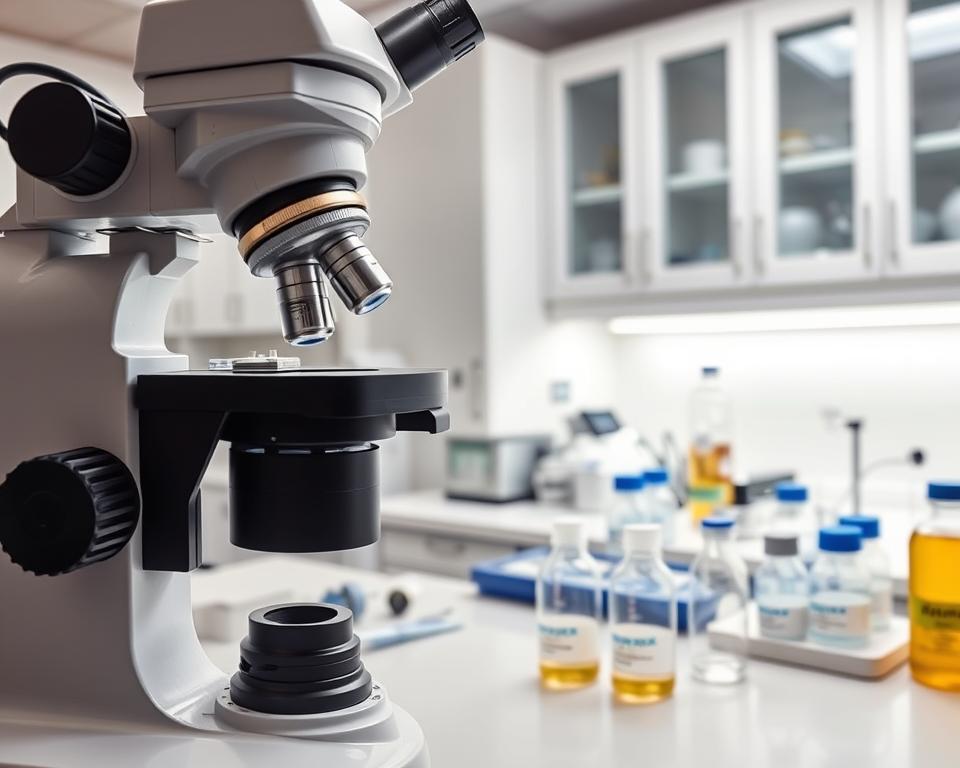
Bright field microscopic view of non – adherent cells
Validation of Protein Quality
Checking protein quality is harder with non-adherent cells because of their variable density and metabolic state. You need to set up baseline measurements for each cell line to make sure you’re getting consistent results.
Testing cell viability before lysis is important. Dead or damaged cells can release bad proteins that mess up your Western blot results.
When using Bradford or BCA protein assays with suspension cell lysates, you need to be careful. Culture media can affect the readings, leading to wrong protein concentration numbers.
Storing suspension cell lysates requires special care. Freeze-thaw cycles can hurt proteins from non-adherent cells more than those from adherent cells.
Comparison to Adherent Cell Lines in Blotting
The Western blot protocol for suspension cells avoids problems caused by trypsinization in adherent cells. This means cleaner protein profiles without worries about enzyme contamination.
But, suspension cells need more careful handling when you’re collecting them. Adherent cells stay put during washing, but non-adherent cells can get lost.
| Aspect | Adherent Cells | Non-Adherent Cells | Impact on Results |
|---|---|---|---|
| Cell Collection | Trypsinization required | Centrifugation only | Reduced enzyme artifacts |
| Washing Efficiency | Multiple rinses possible | Limited wash cycles | Potential media contamination |
| Lysis Uniformity | Consistent cell attachment | Variable cell aggregation | Inconsistent protein yield |
| Protocol Complexity | Standard procedures | Modified protocols needed | Increased technical demands |
Getting consistent protein yield is harder with non-adherent cells. Adherent cells give more predictable results, but suspension cells can vary a lot based on culture conditions and when you harvest them.
With non-adherent cells, you need to be extra careful about quality control. You’ll need more steps to make sure your results are the same across different batches.
Preparing Non-Adherent Cells for Western Blot
Getting proteins from suspension cells needs special care. Unlike cells that stick to surfaces, suspension cells Western blot needs special steps. These steps help keep the cells and proteins in good shape.
Keeping everything cold is key. All steps should be done at 4°C. This cold stop proteolytic breakdown and keeps proteins intact.
Optimal Conditions for Protein Isolation
For cell lysis for non-adherent cells, the environment and timing are crucial. Work fast but carefully. The cold chain must be kept from start to finish.
Add protease and phosphatase inhibitors right away. They stop protein breakdown and keep modifications intact. Make fresh solutions for each experiment.
Choosing the right buffer is important. RIPA buffer is good for most, while NP-40 buffer is gentler. Pick based on your proteins and needs.
Recommended Techniques for Cell Harvesting
Harvesting cells right is key. It must be both efficient and gentle. Use specific centrifugation settings for non-adherent cells.
Start by centrifuging at 2,500 x g for 10 minutes at 4°C. This speed is enough to collect cells without damage. Faster speeds can break cells and lose proteins.
After pelleting, wash with ice-cold PBS. This removes culture media that can mess with extraction. Be gentle to avoid clumping.
| Processing Step | Centrifugation Speed | Duration | Temperature | Purpose |
|---|---|---|---|---|
| Initial Cell Pelleting | 2,500 x g | 10 minutes | 4°C | Cell collection |
| PBS Washing | 2,500 x g | 5 minutes | 4°C | Media removal |
| Debris Removal | 14,000 x g | 15 minutes | 4°C | Lysate clarification |
| Final Clarification | 14,000 x g | 10 minutes | 4°C | Complete debris removal |
Tips for Ensuring Protein Stability
Keeping proteins stable during cell lysis for non-adherent cells is crucial. Add ice-cold lysis buffer right after washing. Use 1 mL per 100 mg of cells or 100 µL for small pellets.
Use gentle agitation during lysis. Shake for 10 minutes on ice. This helps break membranes and solubilize proteins. Avoid hard vortexing to prevent protein denaturation.
Remove debris by centrifugation at 14,000 x g for 15 minutes at 4°C. This separates proteins from debris. The clear liquid is your protein extract, ready for analysis.
Do protein quantification right after extraction. Use Bradford or BCA assays for accurate results. Store extracts at -80°C if not used immediately. Avoid freeze-thaw cycles to keep proteins stable.
Strategies for Successful Western Blotting with Non-Adherent Cells
Getting good results from protein extraction from non-adherent cells needs special tweaks to Western blotting steps. We’ve found ways to tackle the unique hurdles of working with suspension cells. These tweaks help keep protein quality high throughout the analysis.

Adjusting Protocols for Non-Adherent Cells
First, we focus on better cell collection to avoid protein damage. Use 300-500 x g for 5 minutes when spinning cells. This gentle spin helps keep cells intact better than faster speeds.
When loading samples, start with 20-30 μg of total protein per lane. This is more than what’s needed for cells stuck to surfaces. It helps make up for protein lost during extraction.
Antibody amounts also need tweaking for non-adherent cells protein analysis. You might need to dilute primary antibodies by 1:2 to 1:4. This is because proteins are harder to reach and the lysate is different.
Using Different Lysis Buffers
The right lysis buffer depends on where your protein is in the cell. RIPA buffer is best for membrane-bound proteins. It breaks down cells well and gets proteins out.
M-PER buffer is great for keeping protein interactions intact. It’s a gentle way to break cells open. Use it when you’re studying how proteins work together.
NP-40 buffer is the top choice for getting proteins from the cell’s inside. It’s a mild detergent that keeps proteins in good shape. It’s especially good for immune cells and stem cells.
Importance of Controls and Standards
Using positive controls is key when working with suspension cells. Choose known protein sources that match your experiment. These controls check if your extraction and antibodies are working right.
Negative controls help make sure your antibodies are specific. Use samples without primary antibodies and ones that don’t have your target protein. This stops false positives.
Creating a standard curve is crucial for accurate protein counting in samples with detergent. BCA protein assays are better than Bradford for this. BCA works well with detergents and gives consistent results.
Case Studies: Successful Use of Non-Adherent Cells in Western Blot
Research in cancer, stem cells, and immunology shows Western blot for non-adherent cells works well. These studies prove that scientists can get reliable protein analysis from cells grown in suspension. We look at methods that have worked in real-world research.
Studies show success when the right methods are used. Teams have found ways to handle floating cells effectively. This has opened up new areas for studying proteins.
Research on Cancer Cell Lines
K562 leukemia cells are a great example of suspension cells Western blot success. Scientists use these cells to study cancer proteins and find new treatments. The cells stay healthy and give consistent protein samples.
Research on drug resistance has also benefited from K562 cells. Scientists can see how proteins change when treated without the issues of cell sticking. This has given important insights into how cancer cells survive.
Many labs have shared their methods for working with leukemia and lymphoma cells. They focus on how to break cells open and handle samples right.
Studies Involving Stem Cells
Stem cell research benefits from non-adherent systems. These conditions keep stem cells in a good state for studying. Scientists can look at important proteins and genes without losing their natural state.
Scientists studying embryonic stem cells have used Western blot for non-adherent cells to follow their development. This research helps understand how proteins change during early growth. It keeps the cells’ natural traits that stuck cells might lose.
Studies have shown how to check key stem cell markers like Oct4, Sox2, and Nanog. The results are high-quality and the same in different labs.
Insights from Immune Cell Research
Immune cell studies are a big win for suspension cells Western blot. Cells like lymphocytes and immune cell lines give accurate protein data. Since they naturally float, this method fits them perfectly.
Studies on T-cell activation have made big discoveries. Scientists can see how cytokines work and how the immune system remembers threats. This helps in making new treatments.
Research on immune cells shows success in many labs. These studies confirm the right antibodies for floating cells and ensure results are the same everywhere.
Alternative Techniques for Protein Analysis
Researchers have many ways to study proteins, not just Western blotting. The right method depends on your goals, resources, and data needs. Each technique has its own strengths for non-adherent cells protein analysis.
Today’s labs use many tools for protein study. These tools vary in what they can do, how hard they are to use, and what kind of data they give. Knowing these differences helps you choose the best method for your research.
Comparing Western Blot to Other Methods
Western blot is great for protein size and specificity. It’s especially useful for Western blot protocol for suspension cells. It lets researchers confirm protein identity and check molecular weight changes.
Other methods like ELISA and mass spectrometry have different uses. ELISA is good for quick, many-sample tests. Mass spectrometry gives detailed protein info and modification details.
Western blot can spot nanogram amounts of proteins. ELISA can find picogram amounts, useful for rare proteins. Mass spectrometry can find femtomole amounts, the most sensitive.
Pros and Cons of ELISA vs. Western Blot
ELISA is better for exact protein amounts. It’s precise and easy to repeat. But, it needs specific antibodies and can’t show protein size.
Western blot is better for protein size and identity. It’s also cheaper for everyday use. ELISA is better for big batches or quick tests.
Utilizing Mass Spectrometry for Protein Analysis
Mass spectrometry is the most detailed protein study tool. It can find and measure many proteins at once. Advanced mass spectrometry platforms reveal protein changes and interactions.
But, mass spectrometry needs special tools and skills. It’s complex and requires careful sample prep. Data analysis also needs advanced software and knowledge.
Mass spectrometry is worth it for big protein studies. It’s great for finding new proteins and biomarkers. But, for specific protein checks, Western blot or ELISA might be better.
| Analysis Method | Sensitivity Level | Quantification Type | Technical Complexity | Cost per Sample |
|---|---|---|---|---|
| Western Blot | Nanogram | Semi-quantitative | Moderate | Low |
| ELISA | Picogram | Quantitative | Low | Moderate |
| Mass Spectrometry | Femtomole | Quantitative | High | High |
| Flow Cytometry | Single cell | Quantitative | Moderate | Moderate |
Choosing a method depends on your goals and what you have available. Western blot is best for protein studies in non-adherent cells. ELISA is great for exact protein amounts. Mass spectrometry is the top choice for detailed protein studies.
Selection Criteria for Cell Lines in Western Blot
Choosing the right non-adherent cell line for Western blot analysis is crucial. You need to evaluate many factors before starting your project. This careful approach helps get the best results and reduces mistakes.
The right cell line is key for protein extraction from non-adherent cells and Western blot success. You must think about the cell line’s relevance to your research and if it works well with standard methods.
Considerations for Choosing Non-Adherent Cells
First, look at how well the cell line expresses your target protein and if it’s relevant to your research. Check published data on protein expression. This helps predict if the cell line will give you enough protein.
How fast the cells grow is also important. Faster-growing cells are good for quick studies. But, make sure they keep expressing protein well over time.
It’s also important to find established methods for cell lysis for non-adherent cells in your chosen cell line. Good protocols save time and make your results more reliable. Look at recent studies that have used your target cell line for Western blot.
Evaluating Cell Line Suitability
How much protein you can get from each cell is a big factor. More protein means you need fewer cells, which saves money and time. This is especially true for primary cells or expensive media.
How well cells lyse can vary a lot. Do some test runs to see how well your lysis buffer works. Make sure it works well over time to get consistent results.
Knowing if your antibodies work with your cell line is crucial. Make sure your antibodies have been tested in your chosen cell line. This avoids wasting time and ensures your results are reliable.
Functional Relevance in Specific Research Contexts
The most important thing is if the cell line fits your research question. Choose models that closely match the conditions or diseases you’re studying.
Having the right positive and negative control cell lines is also key. These controls help confirm your Western blot results. Find lines that show high, moderate, and low levels of your target proteins.
Think about how long your project will take. Some cells need more time to reach the best protein levels. Match your cell line with your project’s timeline and resources.
Future Directions in Non-Adherent Cell Research
Advances in protein analysis are changing how we study suspension cells Western blot. Scientists are finding new ways to solve old problems and open up new research areas. These new technologies will make our work more accurate, efficient, and reliable.
We’re looking forward to better detection and data quality. New imaging systems will help us measure proteins with great precision.
Emerging Technologies in Protein Analysis
New detection systems are changing Western blot protocol for suspension cells. Better chemiluminescence platforms give us clearer signals and wider ranges. This means we can measure proteins more accurately from smaller samples.
Fluorescent methods let us study many proteins at once. Digital imaging uses AI to automatically find and measure protein bands. This cuts down on mistakes and speeds up big studies.
Automation is making sample processing easier. Robots handle everything from cell harvesting to gel loading. This makes our work more consistent and lets us analyze more samples.
Potential Advances in Cell Culture Techniques
New cell culture methods aim to improve growth for non-adherent cells. Better media and supplements help cells grow and produce proteins well. This is key for studying different cell types.
Bioreactors let us grow cells on a large scale. They control the environment perfectly. This means we can get more cells for detailed protein studies.
Microfluidic devices let us analyze single cells. They show how different cells express proteins. Real-time monitoring systems track protein changes as they happen.
Implications for Clinical Research
Non-adherent cell models are being used more in medicine. They help tailor treatments to individual patients. This gives us insights into how treatments work for each person.
Searching for biomarkers is another big area. Suspension cells Western blot helps find new targets for treatments. This speeds up the development of personalized medicine.
Drug discovery also benefits from these advances. Better protein detection means we can see how drugs work more clearly. This should help us find treatments faster and make clinical trials more successful.
Expert Tips for Improved Results
To get consistent results with non-adherent cells Western blot, you need expert techniques. Use standardized protocols to tackle the challenges these cells pose. Labs worldwide rely on these methods for success.
Your research success depends on good sample prep and quality control. Consistency is key for reliable data.
Best Practices for Optimizing Western Blots
Sample prep is crucial for Western blot for non-adherent cells. Use automated counters or hemocytometers for accurate cell counts. Standardize lysis procedures for better protein yields.
Optimizing antibodies means doing titration studies. Start with the manufacturer’s suggestions, then test different dilutions. Primary antibody incubation times might need adjusting for non-adherent cells.
Washing steps are important to avoid losing signal and to reduce background. Use gentle agitation and longer wash times. Keep temperatures steady to preserve protein and antibody binding.
Importance of Reproducibility in Experiments
Keeping detailed records is essential for non-adherent cells Western blot experiments. Note all variables, including culture conditions and processing times. Your lab notebook should also track reagent lots and environmental conditions.
Use multiple biological replicates for statistical validation. Aim for at least three independent cell culture preparations. Technical replicates help spot procedural issues, while biological replicates confirm the experiment’s validity.
Regularly use positive and negative controls for quality assurance. Establish baseline protein levels for your cell lines. Consistent control performance shows reliable conditions.
Seeking Collaboration for Specialized Techniques
Professional networks are great for troubleshooting Western blot for non-adherent cells. Build relationships with labs that specialize in your cell types or proteins. Collaborative partnerships can offer access to specialized equipment and protocols.
Antibody manufacturers often provide technical support. Their application specialists can offer valuable advice for optimizing your experiments. These consultations can lead to significant improvements in your results.
Stay updated with workshops and research consortiums focused on protein analysis. These events help you learn about new methods and technologies.
| Optimization Parameter | Standard Approach | Non-Adherent Cell Modification | Expected Improvement |
|---|---|---|---|
| Cell Harvesting | Trypsin treatment | Gentle centrifugation only | Reduced protein degradation |
| Lysis Buffer Volume | 100μL per 10⁶ cells | 150μL per 10⁶ cells | Complete cell disruption |
| Protein Loading | 20-30μg per lane | 40-50μg per lane | Enhanced signal detection |
| Primary Antibody | 1:1000 dilution | 1:500 dilution | Improved sensitivity |
Conclusion
Western blotting on non-adherent cells is a solid research method. It gives reliable protein data for many studies. This is true when you follow the right steps.
Key Research Findings
Three key things make Western blotting on suspension cells work well. First, getting cells right is crucial for good protein samples. Second, picking the right lysis buffer keeps proteins intact. Third, strict quality checks lead to consistent results.
Suspension cells are great for studying real-life protein patterns. They’re especially useful in blood cell, cancer, and immune system studies. This is because they mimic natural conditions better than stuck cells.
Research Applications and Future Prospects
Use non-adherent cells for accurate protein studies. This method is good for many cell types, like stem and immune cells, and cancer lines.
New tech will make non-adherent cell analysis even better. Better extraction and detection tools will improve sensitivity. This will keep the benefits of these cells for protein research.
References and further readings:
1.Kohnken R, Porcu P, Mishra A. Overview of the use of murine models in leukemia and lymphoma research. Front Oncol. 2017;7:22.
https://www.frontiersin.org/journals/oncology/articles/10.3389/fonc.2017.00022/full2.Kurien BT, Dorri Y, Dillon SP, Dsouza A, Scofield RH. An overview of Western blotting for determining antibody specificities for immunohistochemistry. Methods Mol Biol. 2011;717:55-67.
https://link.springer.com/protocol/10.1007/978-1-61779-024-9_43.Towbin H, Staehelin T, Gordon J. Electrophoretic transfer of proteins from polyacrylamide gels to nitrocellulose sheets: procedure and some applications. Proc Natl Acad Sci U S A. 1979;76(9):4350-4354.
https://www.pnas.org/doi/abs/10.1073/pnas.76.9.43504.Kurien BT, Scofield RH. Commonly used in vitro and in vivo models for rheumatoid arthritis. Methods Mol Biol. 2010;602:177-189.
https://link.springer.com/protocol/10.1007/978-1-60761-058-8_12
FAQ
Can non-adherent cells be successfully used for Western blot analysis?
Yes, non-adherent cells can work well for Western blot with the right steps. We’ve shown that suspension cells give reliable results. This is with the right cell harvesting, lysis, and keeping proteins stable.
What are the main challenges when performing Western blot with suspension cells?
The big hurdles are collecting cells efficiently, keeping proteins intact, and getting consistent lysis. You need to tweak centrifugation and lysis buffer. Also, watch out for contamination from culture media.
How should I harvest non-adherent cells for protein extraction?
First, spin at 2,500 x g for 10 minutes at 4°C. Then, wash with cold PBS to remove media. Do all steps at 4°C and add inhibitors right away to keep proteins stable.
Which lysis buffer should I use for non-adherent cells in Western blot?
Choose a lysis buffer based on your protein’s location. Use RIPA for membrane proteins, M-PER for interactions, and NP-40 for cytoplasmic proteins.
How do I ensure protein stability when working with non-adherent cells?
Keep everything cold at 4°C. Add inhibitors quickly and move fast through lysis steps. Adjust lysis buffer amounts and times to avoid protein breakdown.
What controls should I include when performing Western blot for non-adherent cells?
Use positive and negative controls for antibody specificity. Also, make standard curves for protein quantification, especially with BCA assays on detergent samples.
Are there specific cell lines that work better for Western blot analysis?
Look for cell lines with high protein expression, relevance, and established protocols. Consider growth rates, protein stability, and published Western blot uses.
How does Western blot with non-adherent cells compare to adherent cells?
Non-adherent cells avoid trypsinization issues but need careful handling to avoid clumping. Use special centrifugation and focus on lysis efficiency.
What are the advantages of using suspension cells for protein analysis?
Suspension cells are great for studying blood cells, lymphocytes, and tumor cells. They offer insights into cell signaling and disease mechanisms in their natural state.
Can I use standard Western blot protocols for non-adherent cells?
No, you need to modify protocols for non-adherent cells. Adjust cell collection, lysis buffer, and quantification methods. Optimize sample and antibody amounts for suspension cells.
What protein quantification method works best for suspension cell lysates?
BCA assays are best for detergent samples from non-adherent cells. Make standard curves for accurate quantification and ensure consistent results.
How do I troubleshoot poor protein yield from non-adherent cells?
Improve centrifugation to get all cells, adjust lysis buffer amounts, and check cell viability. Try different lysis buffers and keep temperatures at 4°C.
Leo Bios
Hello, I’m Leo Bios. As an assistant lecturer, I teach cellular and
molecular biology to undergraduates at a regional US Midwest university. I started as a research tech in
a biotech startup over a decade ago, working on molecular diagnostic tools. This practical experience
fuels my teaching and writing, keeping me engaged in biology’s evolution.
Leave a Comment
Your email address will not be published. Required fields are marked *