SKU: WP15567 Categories: ,

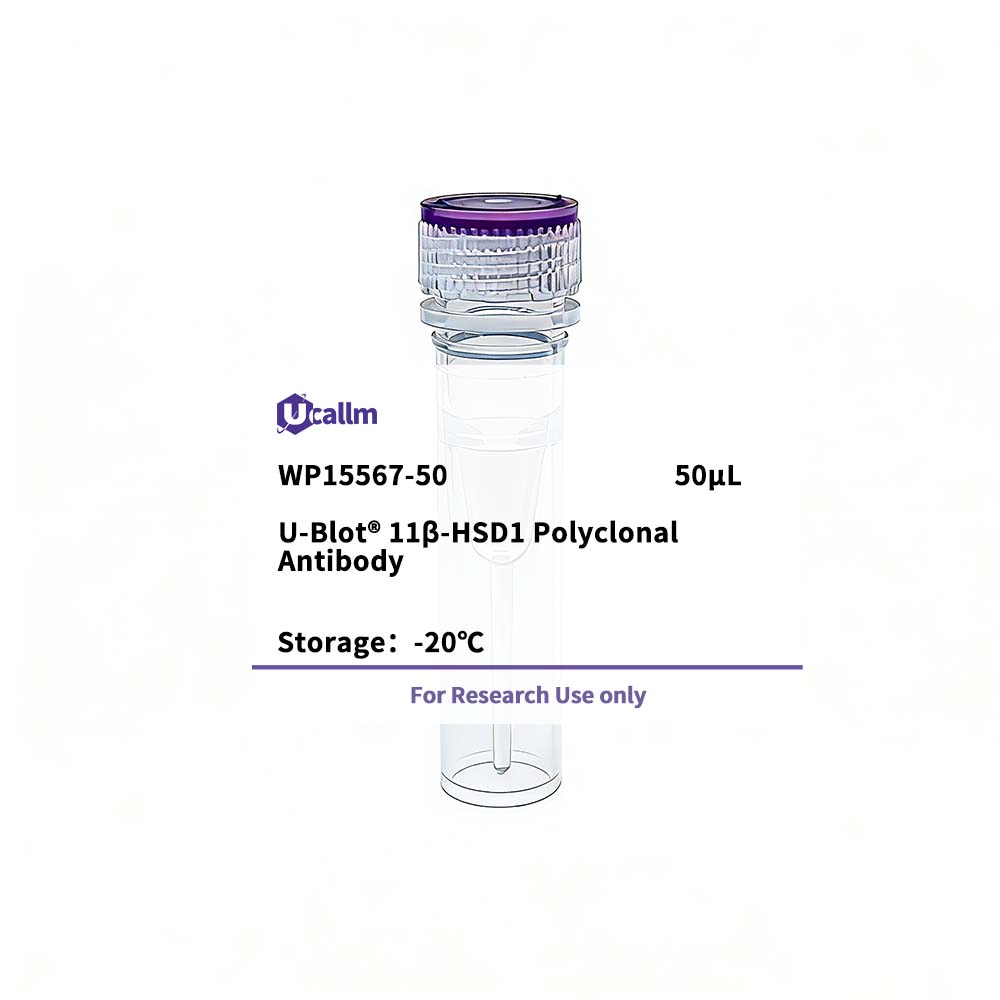
11β-HSD1 Polyclonal Antibody

Price range: $268.00 through $328.00

SKU: WP15567-100
Enter the quantity you would like, or drag the panel to find the quantity and price that best for you
Bulk QuoteAuthorize OEM & ODM

Product details

Background:

hydroxysteroid 11-beta dehydrogenase 1(HSD11B1) Homo sapiens The protein encoded by this gene is a microsomal enzyme that catalyzes the conversion of the stress hormone cortisol to the inactive metabolite cortisone. In addition, the encoded protein can catalyze the reverse reaction, the conversion of cortisone to cortisol. Too much cortisol can lead to central obesity, and a particular variation in this gene has been associated with obesity and insulin resistance in children. Mutations in this gene and H6PD (hexose-6-phosphate dehydrogenase (glucose 1-dehydrogenase)) are the cause of cortisone reductase deficiency. Alternate splicing results in multiple transcript variants encoding the same protein.[provided by RefSeq, May 2011],

Specifications

Size50μL/100μL
Target11β-HSD1
ReactivityHuman, Mouse, Rat
ApplicationsWB, IHC, IF, ELISA
MW(Calculated)
MW(Observed)35kD
Host SpeciesRabbit
IsotypeIgG
Conjugate/ModificationUnmodified
Recommended Dilution RatioWB 1:500-1:2000; IHC: 1:100-1:300; ELISA 1:10000; IF 1:50-200 / Note: For IHC, we suggest antigen retrieval with TE buffer pH 9.0 (Cat#WT1004)
FormulationLiquid in PBS containing 50% glycerol, 0.5% BSA and 0.02% sodium azide.
PurificationThe antibody was affinity-purified from rabbit antiserum by affinity-chromatography using epitope-specific immunogen.
Storage-15°C to -25°C/1 year(Do not lower than -25°C)
Concentration1 mg/ml
ClonalityPolyclonal
Clone Number
ImmunogenSynthesized peptide derived from 11β-HSD1 . at AA range: 20-50
Specificity11β-HSD1 Polyclonal Antibody detects endogenous levels of 11β-HSD1 protein.
Gene NameHSD11B1
Protein NameCorticosteroid 11-beta-dehydrogenase isozyme 1
Other NameHSD11B1; / HSD11; / HSD11L; / Corticosteroid 11-beta-dehydrogenase isozyme 1; / 11-beta-hydroxysteroid dehydrogenase 1; / 11-DH; / 11-beta-HSD1
SpeciesHuman
Gene ID3290
UniprotP28845,
Species.1Mouse
Gene ID.115483
Uniprot.1P50172,
Species.2Rat
Gene ID.225116
Uniprot.2P16232
Cellular LocalizationEndoplasmic reticulum membrane; Single-pass type II membrane protein .
Tissue ExpressionWidely expressed, highest expression in liver, lower in testis, ovary, lung, foreskin fibroblasts, and much lower in kidney (PubMed:1885595). Expressed in liver (at protein level) (PubMed:21453287). Expressed in the basal cells of the corneal epithelium and in the ciliary nonpigmented epithelium (both at mRNA and at protein level) (PubMed:11481269).
Signaling_pathway
Research Areas>>Steroid hormone biosynthesis; / >>Metabolism of xenobiotics by cytochrome P450; / >>Metabolic pathways; / >>Chemical carcinogenesis - DNA adducts
FunctionCatalytic activity:An 11-beta-hydroxysteroid + NADP(+) = an 11-oxosteroid + NADPH.,Disease:Defects in HSD11B1 are a cause of cortisone reductase deficiency (CRD) [MIM:604931]. In CRD, activation of cortisone to cortisol does not occur, resulting in adrenocorticotropin-mediated androgen excess and a phenotype resembling polycystic ovary syndrome (PCOS).,Function:Catalyzes reversibly the conversion of cortisol to the inactive metabolite cortisone. Catalyzes reversibly the conversion of 7-ketocholesterol to 7-beta-hydroxycholesterol. In intact cells, the reaction runs only in one direction, from 7-ketocholesterol to 7-beta-hydroxycholesterol.,PTM:Glycosylated.,similarity:Belongs to the short-chain dehydrogenases/reductases (SDR) family.,subunit:Homodimer.,tissue specificity:Widely expressed. Highest expression in liver.,
Please login to post questions
Back to Top
Product has been added to your cart