SKU: WP1699 Categories: ,

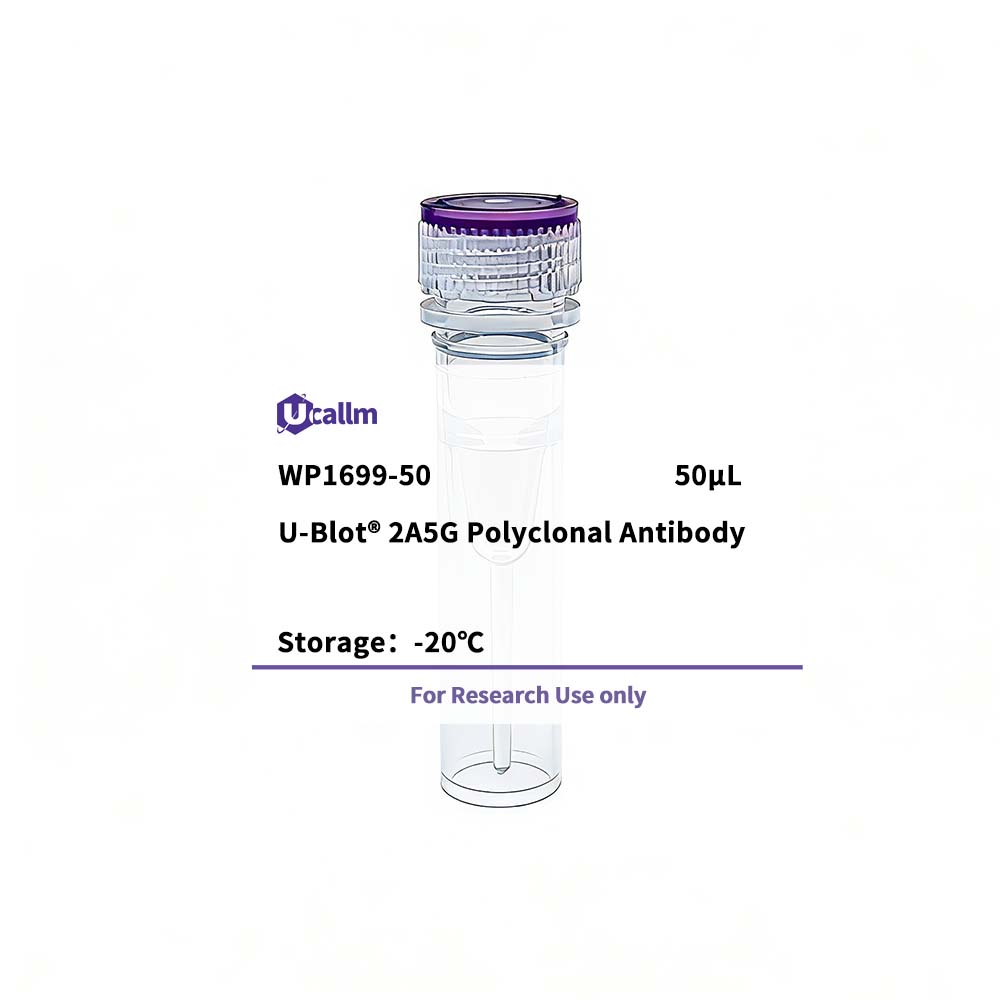
2A5G Polyclonal Antibody

Price range: $268.00 through $328.00

SKU: WP1699-100
Enter the quantity you would like, or drag the panel to find the quantity and price that best for you
Bulk QuoteAuthorize OEM & ODM

Product details

Background:

The product of this gene belongs to the phosphatase 2A regulatory subunit B family. Protein phosphatase 2A is one of the four major Ser/Thr phosphatases, and it is implicated in the negative control of cell growth and division. It consists of a common heteromeric core enzyme, which is composed of a catalytic subunit and a constant regulatory subunit, that associates with a variety of regulatory subunits. The B regulatory subunit might modulate substrate selectivity and catalytic activity. This gene encodes a gamma isoform of the regulatory subunit B56 subfamily. Alternatively spliced transcript variants encoding different isoforms have been identified. [provided by RefSeq, Jul 2008],


Specifications

Size50μL/100μL
Target2A5G
ReactivityHuman, Mouse
ApplicationsWB, ELISA
MW(Calculated)
MW(Observed)57kD
Host SpeciesRabbit
IsotypeIgG
Conjugate/ModificationUnmodified
Recommended Dilution RatioWB 1:500-2000; ELISA 1:5000-20000
FormulationLiquid in PBS containing 50% glycerol,0.5% BSA and 0.02% sodium azide.
PurificationThe antibody was affinity-purified from rabbit antiserum by affinity-chromatography using epitope-specific immunogen.
Storage-15°C to -25°C/1 year(Do not lower than -25°C)
Concentration1 mg/ml
ClonalityPolyclonal
Clone Number
ImmunogenSynthesized peptide derived from human protein . at AA range: 360-440
Specificity2A5G Polyclonal Antibody detects endogenous levels of protein.
Gene NamePPP2R5C KIAA0044
Protein NameSerine/threonine-protein phosphatase 2A 56 kDa regulatory subunit gamma isoform (PP2A B subunit isoform B'-gamma) (PP2A B subunit isoform B56-gamma) (PP2A B subunit isoform PR61-gamma) (PP2A B subunit isoform R5-gamma) (Renal carcinoma antigen NY-REN-29)
Other Name
SpeciesHuman
Gene ID5527
UniprotQ13362,
Species.1Mouse
Gene ID.1
Uniprot.1Q60996
Species.2
Gene ID.2
Uniprot.2
Cellular LocalizationNucleus. Chromosome, centromere.
Tissue ExpressionHighest levels in heart, skeletal muscle and brain. Lower levels in pancreas, kidney, lung and placenta. Very low levels in liver.
Signaling_pathwayCellular Processes >> Cell growth and death >> Cell cycle;Organismal Systems >> Immune system >> T cell receptor signaling pathway;Organismal Systems >> Circulatory system >> Adrenergic signaling in cardiomyocytes;Organismal Systems >> Nervous system >> Dopaminergic synapse;Environmental Information Processing >> Signal transduction >> Sphingolipid signaling pathway;Environmental Information Processing >> Signal transduction >> PI3K-Akt signaling pathway;Environmental Information Processing >> Signal transduction >> AMPK signaling pathway
Research Areas>>mRNA surveillance pathway; / >>Sphingolipid signaling pathway; / >>Oocyte meiosis; / >>PI3K-Akt signaling pathway; / >>AMPK signaling pathway; / >>Adrenergic signaling in cardiomyocytes; / >>Dopaminergic synapse; / >>Human papillomavirus infection
FunctionFunction:The B regulatory subunit might modulate substrate selectivity and catalytic activity, and also might direct the localization of the catalytic enzyme to a particular subcellular compartment.,PTM:Isoform Gamma-3 is phosphorylated on serine residues while isoform Gamma-1 is not.,similarity:Belongs to the phosphatase 2A regulatory subunit B56 family.,subunit:PP2A consists of a common heterodimeric core enzyme, composed of a 36 kDa catalytic subunit (subunit C) and a 65 kDa constant regulatory subunit (PR65 or subunit A), that associates with a variety of regulatory subunits. Proteins that associate with the core dimer include three families of regulatory subunits B (the R2/B/PR55/B55, R3/B''/PR72/PR130/PR59 and R5/B'/B56 families), the 48 kDa variable regulatory subunit, viral proteins, and cell signaling molecules. Interacts with SGOL1.,tissue specificity:Highest levels in heart, skeletal muscle and brain. Lower levels in pancreas, kidney, lung and placenta. Very low levels in liver.,
Please login to post questions
Back to Top
Product has been added to your cart
