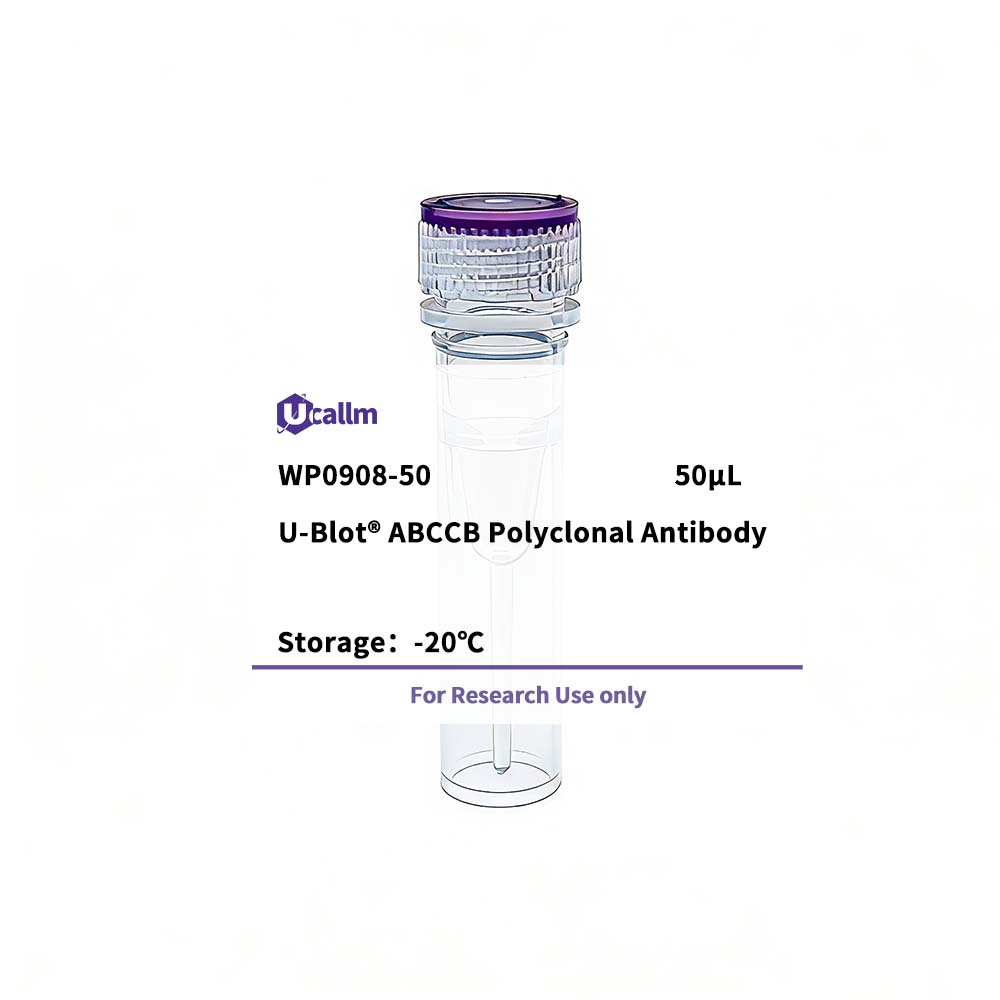
SKU: WP0908 Categories: ,

ABCCB Polyclonal Antibody

Price range: $268.00 through $328.00

SKU: WP0908-100
Enter the quantity you would like, or drag the panel to find the quantity and price that best for you
Bulk QuoteAuthorize OEM & ODM

Product details

Background:

The protein encoded by this gene is a member of the superfamily of ATP-binding cassette (ABC) transporters. ABC proteins transport various molecules across extra- and intra-cellular membranes. ABC genes are divided into seven distinct subfamilies (ABC1, MDR/TAP, MRP, ALD, OABP, GCN20, White). This ABC full transporter is a member of the MRP subfamily which is involved in multi-drug resistance. The product of this gene participates in physiological processes involving bile acids, conjugated steroids, and cyclic nucleotides. In addition, a SNP in this gene is responsible for determination of human earwax type. This gene and family member ABCC12 are determined to be derived by duplication and are both localized to chromosome 16q12.1. Multiple alternatively spliced transcript variants have been described for this gene. [provided by RefSeq, Jul 2008],


Specifications

Size50μL/100μL
TargetABCCB
ReactivityHuman
ApplicationsWB, ELISA
MW(Calculated)
MW(Observed)152kD
Host SpeciesRabbit
IsotypeIgG
Conjugate/ModificationUnmodified
Recommended Dilution RatioWB 1:500-2000; ELISA 1:5000-20000
FormulationLiquid in PBS containing 50% glycerol,0.5% BSA and 0.02% sodium azide.
PurificationThe antibody was affinity-purified from rabbit antiserum by affinity-chromatography using epitope-specific immunogen.
Storage-15°C to -25°C/1 year(Do not lower than -25°C)
Concentration1 mg/ml
ClonalityPolyclonal
Clone Number
ImmunogenSynthesized peptide derived from human protein . at AA range: 50-130
SpecificityABCCB Polyclonal Antibody detects endogenous levels of protein.
Gene NameABCC11 MRP8
Protein NameATP-binding cassette sub-family C member 11 (Multidrug resistance-associated protein 8)
Other Name
SpeciesHuman
Gene ID85320
UniprotQ96J66
Species.1
Gene ID.1
Uniprot.1
Species.2
Gene ID.2
Uniprot.2
Cellular LocalizationCell membrane; Multi-pass membrane protein . Vacuole membrane . Cytoplasmic vesicle membrane . Apical cell membrane; Multi-pass membrane protein.
Tissue ExpressionExpressed in ceruminous apocrine gland (at protein level) (PubMed:19383836, PubMed:19710689). Expressed in many tissues. Not expressed in kidney, spleen and colon. Highly expressed in breast cancer. Expressed at moderate levels in normal breast and testis and at very low levels in liver, brain and placenta (PubMed:11483364, PubMed:11591886, PubMed:19383836, PubMed:19710689). Localizes to axons of the CNS and peripheral nervous system (at protein level) (PubMed:16359813).
Signaling_pathway
Research Areas>>ABC transporters
FunctionFunction:Participates in physiological processes involving bile acids, conjugated steroids and cyclic nucleotides. Enhances the cellular extrusion of cAMP and cGMP. Stimulates the ATP-dependent uptake of a range of physiological and synthetic lipophilic anions, including the glutathione S-conjugates leukotriene C4 and dinitrophenyl S-glutathione, steroid sulfates such as dehydroepiandrosterone 3-sulfate (DHEAS) and estrone 3-sulfate, glucuronides such as estradiol 17-beta-D-glucuronide (E(2)17betaG), the monoanionic bile acids glycocholate and taurocholate, and methotrexate. Probably functions to secrete earwax.,online information:Of earwax and migration - Issue 67 of February 2006,polymorphism:The allele with Arg-184 is responsible for the dry earwax phenotype [MIM:117800]. Human earwax is a mendelian trait consisting of wet and dry types. The wet earwax is brownish and sticky, whereas the dry type lacks cerumen. The wet cerumen phenotype is completely dominant. The dry type is seen frequently (80-95%) among East Asians, but uncommon (0-3%) in populations of European and African origins. Intermediate frequencies (30-50%) of the dry type are seen in populations of Southern Asia, the Pacific Islands, Central Asia and Asia Minor, as well as among the Native North American and Inuit of Asian ancestry.,similarity:Belongs to the ABC transporter family. Conjugate transporter (TC 3.A.1.208) subfamily.,similarity:Contains 2 ABC transmembrane type-1 domains.,similarity:Contains 2 ABC transporter domains.,tissue specificity:Expressed in many tissues. Not expressed in kidney, spleen and colon. Highly expressed in breast cancer. Expressed at moderate levels in normal breast and testis and at very low levels in liver, brain and placenta.,
Please login to post questions
Back to Top
Product has been added to your cart

