SKU: WP10917 Categories: ,

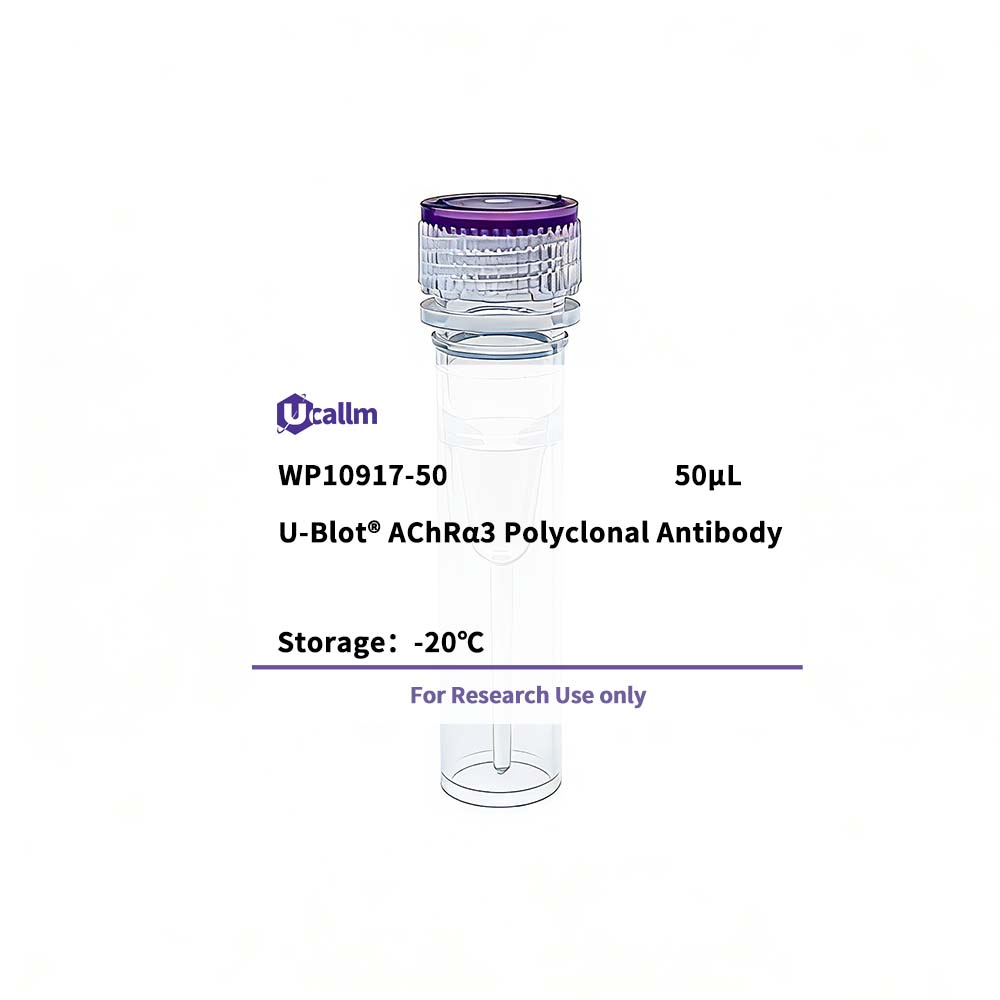
AChRα3 Polyclonal Antibody

Price range: $268.00 through $328.00

SKU: WP10917-100
Enter the quantity you would like, or drag the panel to find the quantity and price that best for you
Bulk QuoteAuthorize OEM & ODM

Product details

Background:

This locus encodes a member of the nicotinic acetylcholine receptor family of proteins. Members of this family of proteins form pentameric complexes comprised of both alpha and beta subunits. This locus encodes an alpha-type subunit, as it contains characteristic adjacent cysteine residues. The encoded protein is a ligand-gated ion channel that likely plays a role in neurotransmission. Polymorphisms in this gene have been associated with an increased risk of smoking initiation and an increased susceptibility to lung cancer. Alternatively spliced transcript variants have been described. [provided by RefSeq, Nov 2009],

Specifications

Size50μL/100μL
TargetAChRα3
ReactivityHuman, Mouse, Rat
ApplicationsWB, ELISA
MW(Calculated)
MW(Observed)57kD
Host SpeciesRabbit
IsotypeIgG
Conjugate/ModificationUnmodified
Recommended Dilution RatioWB 1:500-1:2000; ELISA 1:10000; Not yet tested in other applications.
FormulationLiquid in PBS containing 50% glycerol, 0.5% BSA and 0.02% sodium azide.
PurificationThe antibody was affinity-purified from rabbit antiserum by affinity-chromatography using epitope-specific immunogen.
Storage-15°C to -25°C/1 year(Do not lower than -25°C)
Concentration1 mg/ml
ClonalityPolyclonal
Clone Number
ImmunogenThe antiserum was produced against synthesized peptide derived from human AChRalpha3. AA range:90-139
SpecificityAChRα3 Polyclonal Antibody detects endogenous levels of AChRα3 protein.
Gene NameCHRNA3
Protein NameNeuronal acetylcholine receptor subunit alpha-3
Other NameCHRNA3; / NACHRA3; / Neuronal acetylcholine receptor subunit alpha-3
SpeciesHuman
Gene ID1136
UniprotP32297,
Species.1Mouse
Gene ID.1110834
Uniprot.1Q8R4G9,
Species.2Rat
Gene ID.2
Uniprot.2P04757
Cellular LocalizationCell junction, synapse, postsynaptic cell membrane; Multi-pass membrane protein. Cell membrane; Multi-pass membrane protein.
Tissue ExpressionBrain,Keratinocyte,Lung,Thymus,
Signaling_pathwayOrganismal Systems >> Nervous system >> Cholinergic synapse
Research Areas>>Neuroactive ligand-receptor interaction; / >>Cholinergic synapse; / >>Chemical carcinogenesis - receptor activation
FunctionDisease:Genetic variations in CHRNA3 may be associated with susceptibility to lung cancer type 2 (LNCR2) [MIM:612052].,Disease:Genetic variations in CHRNA3 may be associated with susceptibility to peripheral arterial occlusive disease type 2 (PAOD2) [MIM:612052]. PAOD results from atherosclerosis of large and medium peripheral arteries, as well as the aorta. Many risk factors contribute to PAOD, including smoking, diabetes, hypertension, and hyperlipidemia. PAOD often coexists with coronary artery disease and cerebrovascular disease.,Function:After binding acetylcholine, the AChR responds by an extensive change in conformation that affects all subunits and leads to opening of an ion-conducting channel across the plasma membrane.,similarity:Belongs to the ligand-gated ionic channel (TC 1.A.9) family.,subunit:Neuronal AChR is composed of two different types of subunits: alpha and beta. Alpha-3 subunit can be combined to beta-2 or beta-4 to give rise to functional receptors. Interacts with RIC3; which is required for proper folding and assembly.,
Please login to post questions
Back to Top
Product has been added to your cart

