SKU: WP4291 Categories: ,

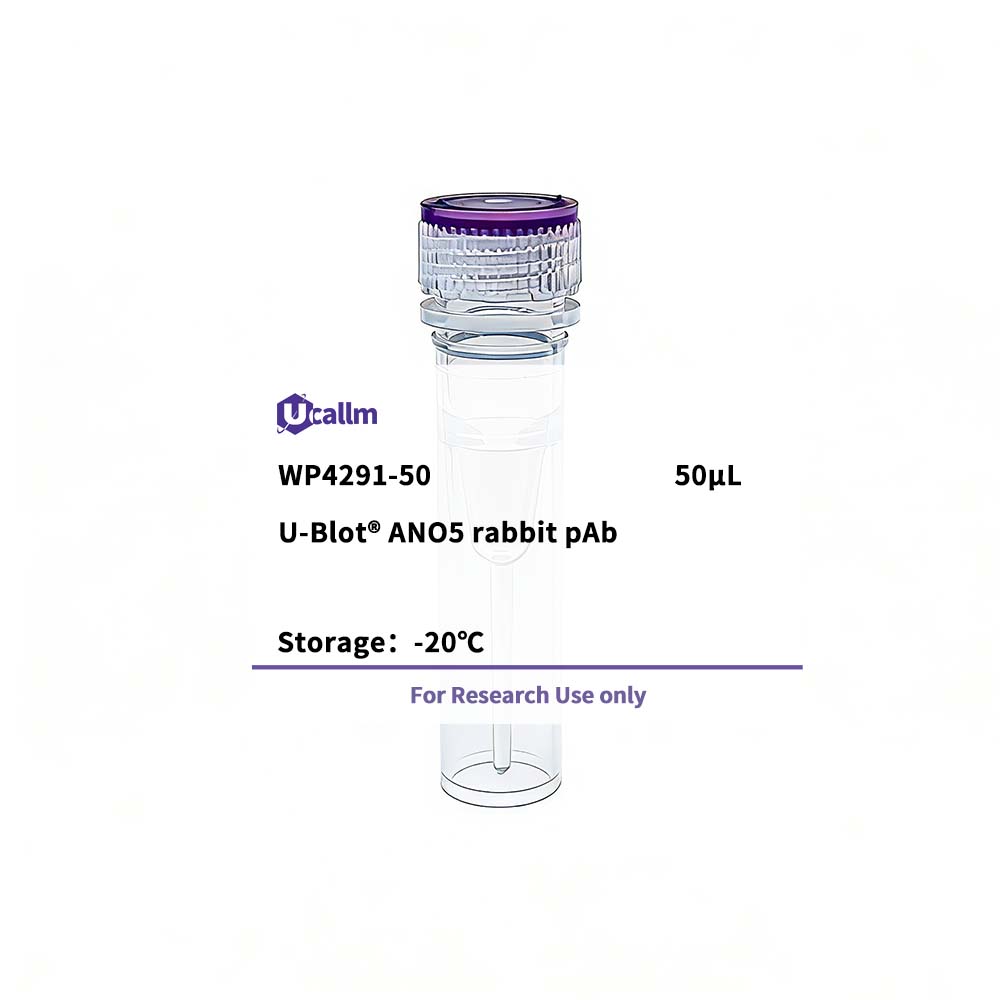
ANO5 rabbit pAb

Price range: $268.00 through $328.00

SKU: WP4291-100
Enter the quantity you would like, or drag the panel to find the quantity and price that best for you
Bulk QuoteAuthorize OEM & ODM

Product details

Background:

This gene encodes a member of the anoctamin family of transmembrane proteins. The encoded protein is likely a calcium activated chloride channel. Mutations in this gene have been associated with gnathodiaphyseal dysplasia. Alternatively spliced transcript variants have been described. [provided by RefSeq, Nov 2009],


Specifications

Size50μL/100μL
TargetANO5
ReactivityHuman, Mouse
ApplicationsWB
MW(Calculated)100kD
MW(Observed)
Host SpeciesRabbit
IsotypeIgG
Conjugate/ModificationUnmodified
Recommended Dilution RatioWB 1:500-2000
FormulationLiquid in PBS containing 50% glycerol, 0.5% BSA and 0.02% sodium azide.
PurificationThe antibody was affinity-purified from rabbit antiserum by affinity-chromatography using epitope-specific immunogen.
Storage-15°C to -25°C/1 year(Do not lower than -25°C)
Concentration1 mg/ml
ClonalityPolyclonal
Clone Number
ImmunogenSynthesized peptide derived from human ANO5 AA range: 276-326
SpecificityThis antibody detects endogenous levels of ANO5 at Human/Mouse
Gene NameANO5 GDD1 TMEM16E
Protein NameANO5
Other Name
SpeciesHuman
Gene ID203859
UniprotQ75V66,
Species.1Mouse
Gene ID.1233246
Uniprot.1Q75UR0
Species.2
Gene ID.2
Uniprot.2
Cellular LocalizationEndoplasmic reticulum membrane; Multi-pass membrane protein . Cell membrane; Multi-pass membrane protein . Colocalized with CALR/calreticulin (PubMed:15124103). Shows an intracellular localization according to PubMed:22075693. .
Tissue ExpressionHighly expressed in brain, heart, kidney, lung, and skeletal muscle. Weakly expressed in bone marrow, fetal liver, placenta, spleen, thymus, osteoblasts and periodontal ligament cells.
Signaling_pathway
Research Areas
FunctionDisease:Defects in ANO5 are the cause of gnathodiaphyseal dysplasia (GDD) [MIM:166260]; also called osteogenesis imperfecta with unusual skeletal lesions or gnathodiaphyseal sclerosis. GDD is a rare skeletal syndrome characterized by bone fragility, sclerosis of tubular bones, and cemento-osseous lesions of the jawbone. Patients experience frequent bone fractures caused by trivial accidents in childhood; however the fractures heal normally without bone deformity. The jaw lesions replace the tooth-bearing segments of the maxilla and mandible with fibrous connective tissues, including various amounts of cementum-like calcified mass, sometimes causing facial deformities. Patients also have a propensity for jaw infection and often suffer from purulent osteomyelitis-like symptoms, such as swelling of and pus discharge from the gums, mobility of the teeth, insufficient healing after tooth extraction and exposure of the lesions into the oral cavity.,Function:May act as a calcium-activated chloride channel.,similarity:Belongs to the anoctamin family.,subcellular location:Co-localized with CALR/calreticulin.,tissue specificity:Highly expressed in brain, heart, kidney, lung, and skeletal muscle. Weakly expressed in bone marrow, fetal liver, placenta, spleen, thymus, osteoblasts and periodontal ligament cells.,
Please login to post questions
Back to Top
Product has been added to your cart

