

AP2D Polyclonal Antibody
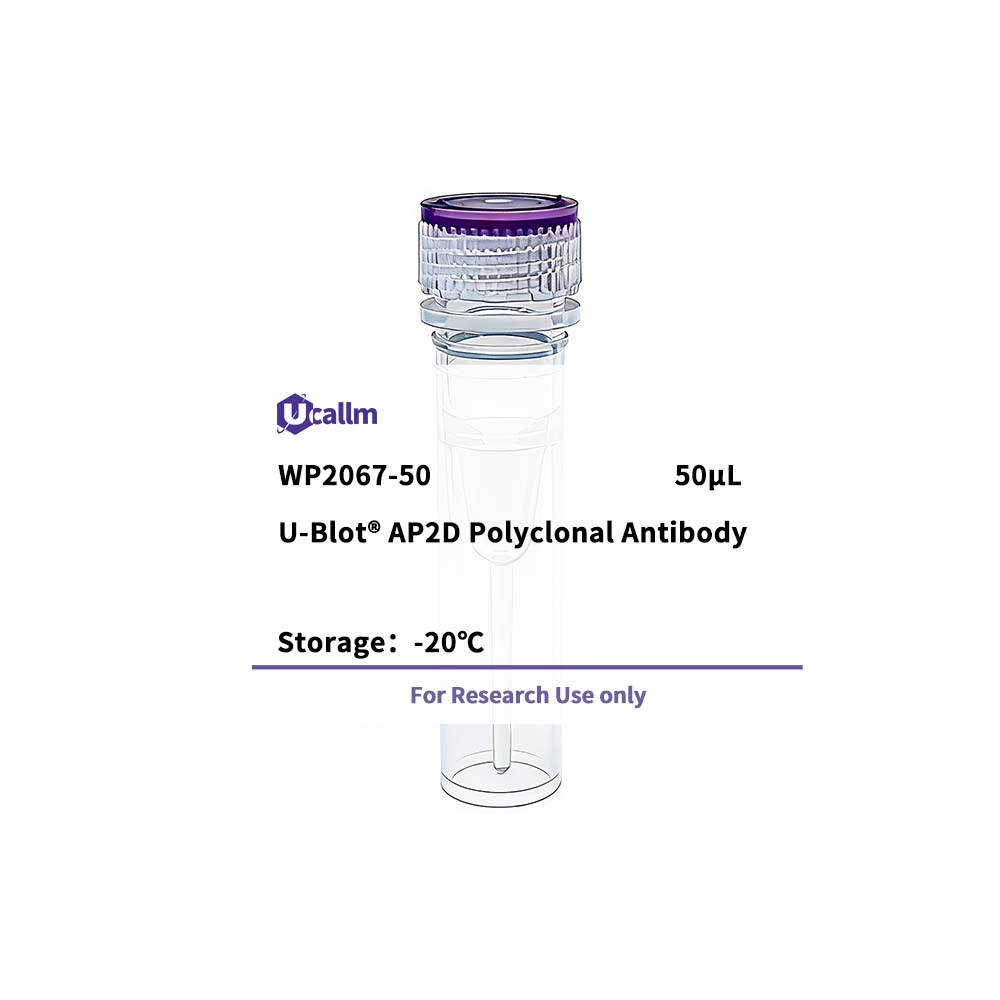
Ucallm_WP2067-50
Price range: $268.00 through $328.00
Product details
Background:
function:Sequence-specific DNA-binding protein that interacts with inducible viral and cellular enhancer elements to regulate transcription of selected genes. AP-2 factors bind to the consensus sequence 5′-GCCNNNGGC-3′ and activate genes involved in a large spectrum of important biological functions including proper eye, face, body wall, limb and neural tube development. They also suppress a number of genes including MCAM/MUC18, C/EBP alpha and MYC., online information:Activatin protein 2 entry, similarity:Belongs to the AP-2 family., subunit:Binds DNA as a dimer. Can form homodimers or heterodimers with other AP-2 family members., tissue specificity:Highly expressed in brain, placenta, skeletal muscle, thymus, small intestine, and prostate, and expressed at lower levels in leukocyte, spleen, testis, ovary and colon. Barely detectable in heart, kidney, liver, lung or pancreas.,
Specifications
| Size | 50μL/100μL |
| Target | AP2D |
| Reactivity | Human, Mouse |
| Applications | WB, ELISA |
| MW(Calculated) | |
| MW(Observed) | 49kD |
| Host Species | Rabbit |
| Isotype | IgG |
| Conjugate/Modification | Unmodified |
| Recommended Dilution Ratio | WB 1:500-2000; ELISA 1:5000-20000 |
| Formulation | Liquid in PBS containing 50% glycerol,0.5% BSA and 0.02% sodium azide. |
| Purification | The antibody was affinity-purified from rabbit antiserum by affinity-chromatography using epitope-specific immunogen. |
| Storage | -15°C to -25°C/1 year(Do not lower than -25°C) |
| Concentration | 1 mg/ml |
| Clonality | Polyclonal |
| Clone Number | |
| Immunogen | Synthesized peptide derived from human protein . at AA range: 280-360 |
| Specificity | AP2D Polyclonal Antibody detects endogenous levels of protein. |
| Gene Name | TFAP2D TFAP2BL1 |
| Protein Name | Transcription factor AP-2-delta (AP2-delta) (Activating enhancer-binding protein 2-delta) (Transcription factor AP-2-beta-like 1) |
| Other Name | |
| Species | Human |
| Gene ID | 83741 |
| Uniprot | Q7Z6R9, |
| Species.1 | Mouse |
| Gene ID.1 | |
| Uniprot.1 | Q91ZK0 |
| Species.2 | |
| Gene ID.2 | |
| Uniprot.2 | |
| Cellular Localization | Nucleus . |
| Tissue Expression | Highly expressed in brain, placenta, skeletal muscle, thymus, small intestine, and prostate, and expressed at lower levels in leukocyte, spleen, testis, ovary and colon. Barely detectable in heart, kidney, liver, lung or pancreas. |
| Signaling_pathway | |
| Research Areas | |
| Function | Function:Sequence-specific DNA-binding protein that interacts with inducible viral and cellular enhancer elements to regulate transcription of selected genes. AP-2 factors bind to the consensus sequence 5'-GCCNNNGGC-3' and activate genes involved in a large spectrum of important biological functions including proper eye, face, body wall, limb and neural tube development. They also suppress a number of genes including MCAM/MUC18, C/EBP alpha and MYC.,online information:Activatin protein 2 entry,similarity:Belongs to the AP-2 family.,subunit:Binds DNA as a dimer. Can form homodimers or heterodimers with other AP-2 family members.,tissue specificity:Highly expressed in brain, placenta, skeletal muscle, thymus, small intestine, and prostate, and expressed at lower levels in leukocyte, spleen, testis, ovary and colon. Barely detectable in heart, kidney, liver, lung or pancreas., |
Please login to post questions
Related products




