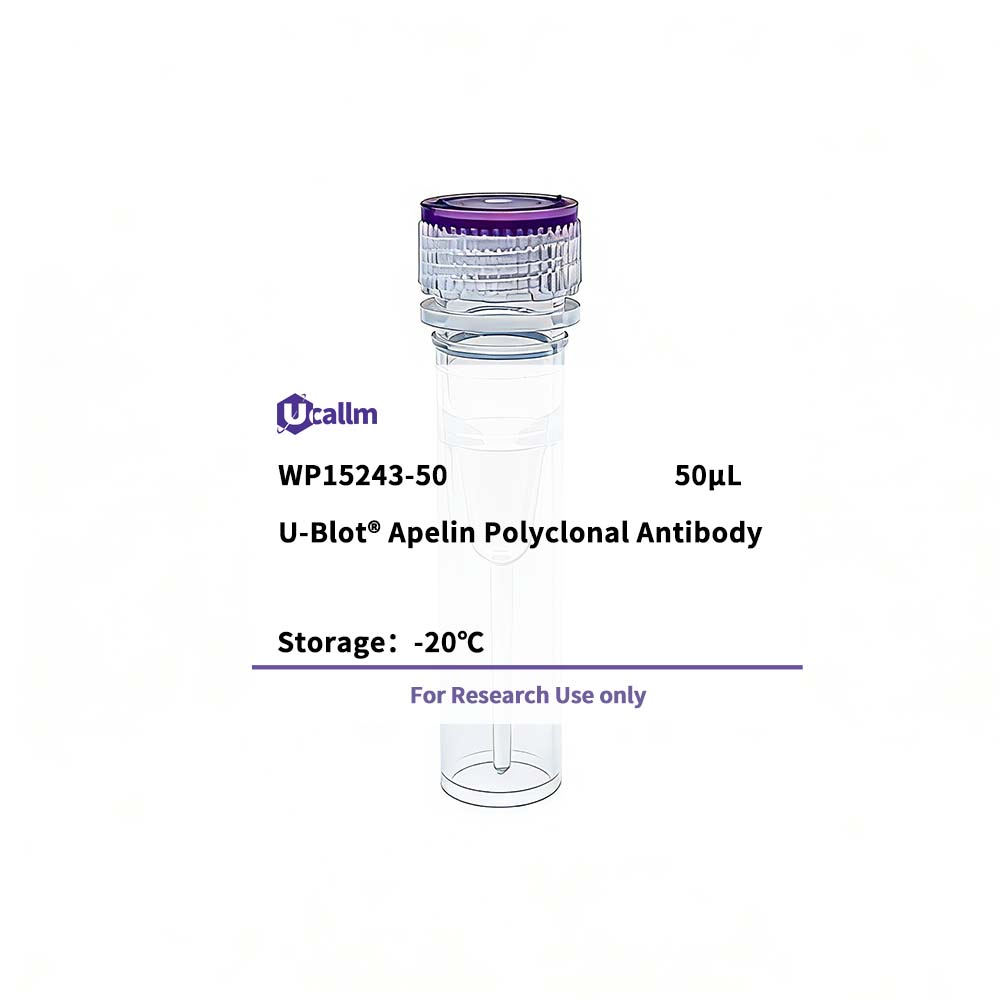
SKU: WP15243 Categories: ,

Apelin Polyclonal Antibody

Price range: $268.00 through $328.00

SKU: WP15243-100
Enter the quantity you would like, or drag the panel to find the quantity and price that best for you
Bulk QuoteAuthorize OEM & ODM

Product details

Background:

This gene encodes a peptide that functions as an endogenous ligand for the G-protein coupled apelin receptor. The encoded preproprotein is proteolytically processed into biologically active C-terminal peptide fragments. These peptide fragments activate different tissue specific signaling pathways that regulate diverse biological functions including fluid homeostasis, cardiovascular function and insulin secretion. This protein also functions as a coreceptor for the human immunodeficiency virus 1. [provided by RefSeq, Feb 2016],


Specifications

Size50μL/100μL
TargetApelin
ReactivityHuman, Mouse, Rat
ApplicationsWB, IHC, IF, ELISA
MW(Calculated)
MW(Observed)16kD
Host SpeciesRabbit
IsotypeIgG
Conjugate/ModificationUnmodified
Recommended Dilution RatioWB 1:500-1:2000; IHC: 1:100-300; ELISA 1:20000; IF 1:100-300; Not yet tested in other applications. / Note: For IHC, we suggest antigen retrieval with TE buffer pH 9.0 (Cat#WT1004)
FormulationLiquid in PBS containing 50% glycerol, 0.5% BSA and 0.02% sodium azide.
PurificationThe antibody was affinity-purified from rabbit antiserum by affinity-chromatography using epitope-specific immunogen.
Storage-15°C to -25°C/1 year(Do not lower than -25°C)
Concentration1 mg/ml
ClonalityPolyclonal
Clone Number
ImmunogenThe antiserum was produced against synthesized peptide derived from the C-terminal region of human APLN. AA range:28-77
SpecificityApelin Polyclonal Antibody detects endogenous levels of Apelin protein.
Gene NameAPLN
Protein NameApelin
Other NameAPLN; / APEL; / Apelin; / APJ endogenous ligand
SpeciesHuman
Gene ID8862
UniprotQ9ULZ1,
Species.1Mouse
Gene ID.130878
Uniprot.1Q9R0R4,
Species.2Rat
Gene ID.258812
Uniprot.2Q9R0R3
Cellular LocalizationSecreted . Secreted, extracellular space . Abundantly secreted in the colostrum. Lower level in milk. Decreases rapidly within several days after parturition in milk, but is still detectable even in commercial milk. .
Tissue ExpressionExpressed in the brain with highest levels in the frontal cortex, thalamus, hypothalamus and midbrain (PubMed:10617103). Secreted by the mammary gland into the colostrum and the milk.
Signaling_pathwayEnvironmental Information Processing >> Signal transduction >> Apelin signaling pathway
Research Areas>>Neuroactive ligand-receptor interaction; / >>Apelin signaling pathway
FunctionFunction:Endogenous ligand for APJ, an alternative coreceptor with CD4 for HIV-1 infection. Inhibits HIV-1 entry in cells coexpressing CD4 and APJ. Apelin-36 has a greater inhibitory activity on HIV infection than other synthetic apelin derivatives. The oral intake in the colostrum and the milk could have a role in the modulation of the immune responses in neonates. May also have a role in the central control of body fluid homeostasis by influencing AVP release and drinking behavior.,PTM:Several active peptides may be produced by proteolytic processing of the peptide precursor.,similarity:Belongs to the apelin family.,tissue specificity:Expressed in the brain with highest levels in the frontal cortex, thalamus, hypothalamus and midbrain. Secreted by the mammary gland into the colostrum and the milk.,
Please login to post questions
Back to Top
Product has been added to your cart

