SKU: WM0025 Categories: ,

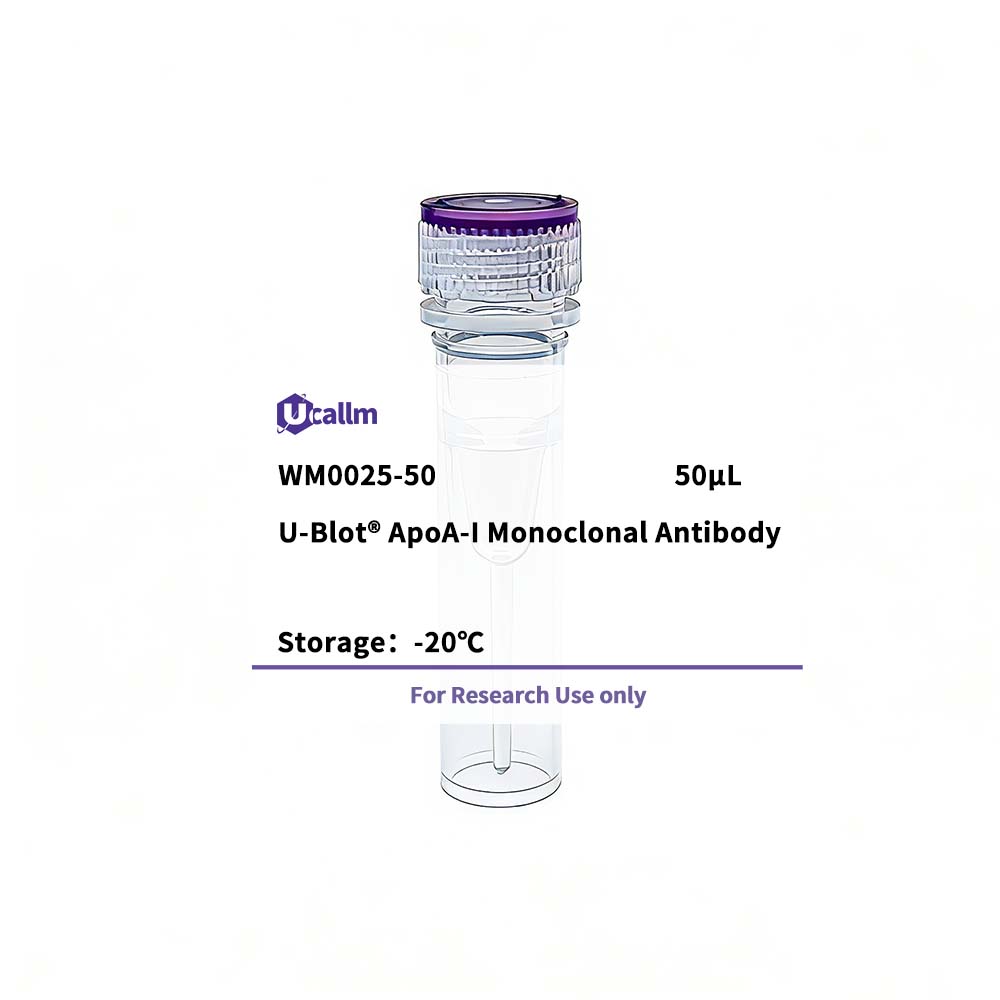
ApoA-I Monoclonal Antibody

Price range: $268.00 through $328.00

SKU: WM0025-50
Enter the quantity you would like, or drag the panel to find the quantity and price that best for you
Bulk QuoteAuthorize OEM & ODM

Product details

Background:
This gene encodes apolipoprotein A-I, which is the major protein component of high density lipoprotein (HDL) in plasma. The encoded preproprotein is proteolytically processed to generate the mature protein, which promotes cholesterol efflux from tissues to the liver for excretion, and is a cofactor for lecithin cholesterolacyltransferase (LCAT), an enzyme responsible for the formation of most plasma cholesteryl esters. This gene is closely linked with two other apolipoprotein genes on chromosome 11. Defects in this gene are associated with HDL deficiencies, including Tangier disease, and with systemic non-neuropathic amyloidosis. Alternative splicing results in multiple transcript variants, at least one of which encodes a preproprotein. [provided by RefSeq, Dec 2015],

Specifications

Size50μL/100μL
TargetApoA-I
ReactivityHuman
ApplicationsWB, ELISA
MW(Calculated)31kD
MW(Observed)
Host SpeciesMouse
Isotype
Conjugate/ModificationUnmodified
Recommended Dilution RatioWB 1:500-1:2000; ELISA 1:10000; Not yet tested in other applications.
FormulationLiquid in PBS containing 50% glycerol, 0.5% BSA and 0.02% sodium azide.
PurificationAffinity purification
Storage-15°C to -25°C/1 year(Do not lower than -25°C)
Concentration
ClonalityMonoclonal
Clone Number14C3
ImmunogenPurified recombinant fragment of human ApoA-I expressed in E. Coli.
SpecificityApoA-I Monoclonal Antibody detects endogenous levels of ApoA-I protein.
Gene NameAPOA1
Protein NameApolipoprotein A-I
Other NameAPOA1; / Apolipoprotein A-I; / Apo-AI; / ApoA-I; / Apolipoprotein A1
SpeciesHuman
Gene ID335
UniprotP02647,
Species.1Mouse
Gene ID.1
Uniprot.1Q00623
Species.2
Gene ID.2
Uniprot.2
Cellular LocalizationSecreted.
Tissue ExpressionMajor protein of plasma HDL, also found in chylomicrons. Synthesized in the liver and small intestine. The oxidized form at Met-110 and Met-136 is increased in individuals with increased risk for coronary artery disease, such as in carrier of the eNOSa/b genotype and exposure to cigarette smoking. It is also present in increased levels in aortic lesions relative to native ApoA-I and increased levels are seen with increasing severity of disease.
Signaling_pathwayOrganismal Systems >> Endocrine system >> PPAR signaling pathway
Research Areas>>PPAR signaling pathway; / >>Fat digestion and absorption; / >>Vitamin digestion and absorption; / >>Cholesterol metabolism; / >>African trypanosomiasis; / >>Lipid and atherosclerosis
FunctionDisease:Defects in APOA1 are a cause of amyloidosis type 8 (AMYL8) [MIM:105200]; also known as systemic non-neuropathic amyloidosis or Ostertag-type amyloidosis. AMYL8 is a hereditary generalized amyloidosis due to deposition of apolipoprotein A1, fibrinogen and lysozyme amyloids. Viscera are particularly affected. There is no involvement of the nervous system. Clinical features include renal amyloidosis resulting in nephrotic syndrome, arterial hypertension, hepatosplenomegaly, cholestasis, petechial skin rash.,Disease:Defects in APOA1 are a cause of high density lipoprotein deficiency type 2 (HDLD2) [MIM:604091]; also known as familial hypoalphalipoproteinemia (FHA). Inheritance is autosomal dominant.,Disease:Defects in APOA1 are a cause of the low HDL levels observed in high density lipoprotein deficiency type 1 (HDLD1) [MIM:205400]; also known as analphalipoproteinemia or Tangier disease (TGD). HDLD1 is a recessive disorder characterized by the absence of plasma HDL, accumulation of cholesteryl esters, premature coronary artery disease, hepatosplenomegaly, recurrent peripheral neuropathy and progressive muscle wasting and weakness. In HDLD1 patients, ApoA-I fails to associate with HDL probably because of the faulty conversion of pro-ApoA-I molecules into mature chains, either due to a defect in the converting enzyme activity or a specific structural defect in Tangier ApoA-I.,Disease:Defects in APOA1 are the cause of amyloid polyneuropathy-nephropathy Iowa type (AMYLIOWA) [MIM:107680]; also known as amyloidosis van Allen type or familial amyloid polyneuropathy type III. AMYLIOWA is a hereditary generalized amyloidosis due to deposition of amyloid mainly constituted by apolipoprotein A1. The clinical picture is dominated by neuropathy in the early stages of the disease and nephropathy late in the course. Death is due in most cases to renal amyloidosis. Severe peptic ulcer disease can occurr in some and hearing loss is frequent. Cataracts is present in several, but vitreous opacities are not observed.,Function:Participates in the reverse transport of cholesterol from tissues to the liver for excretion by promoting cholesterol efflux from tissues and by acting as a cofactor for the lecithin cholesterol acyltransferase (LCAT). As part of the SPAP complex, activates spermatozoa motility.,online information:The Singapore human mutation and polymorphism database,PTM:Palmitoylated.,similarity:Belongs to the apolipoprotein A1/A4/E family.,subunit:Interacts with APOA1BP and CLU. Component of a sperm activating protein complex (SPAP), consisting of APOA1, an immunoglobulin heavy chain, an immunoglobulin light chain and albumin.,tissue specificity:Major protein of plasma HDL, also found in chylomicrons. Synthesized in the liver and small intestine.,
Please login to post questions
Back to Top
Product has been added to your cart
