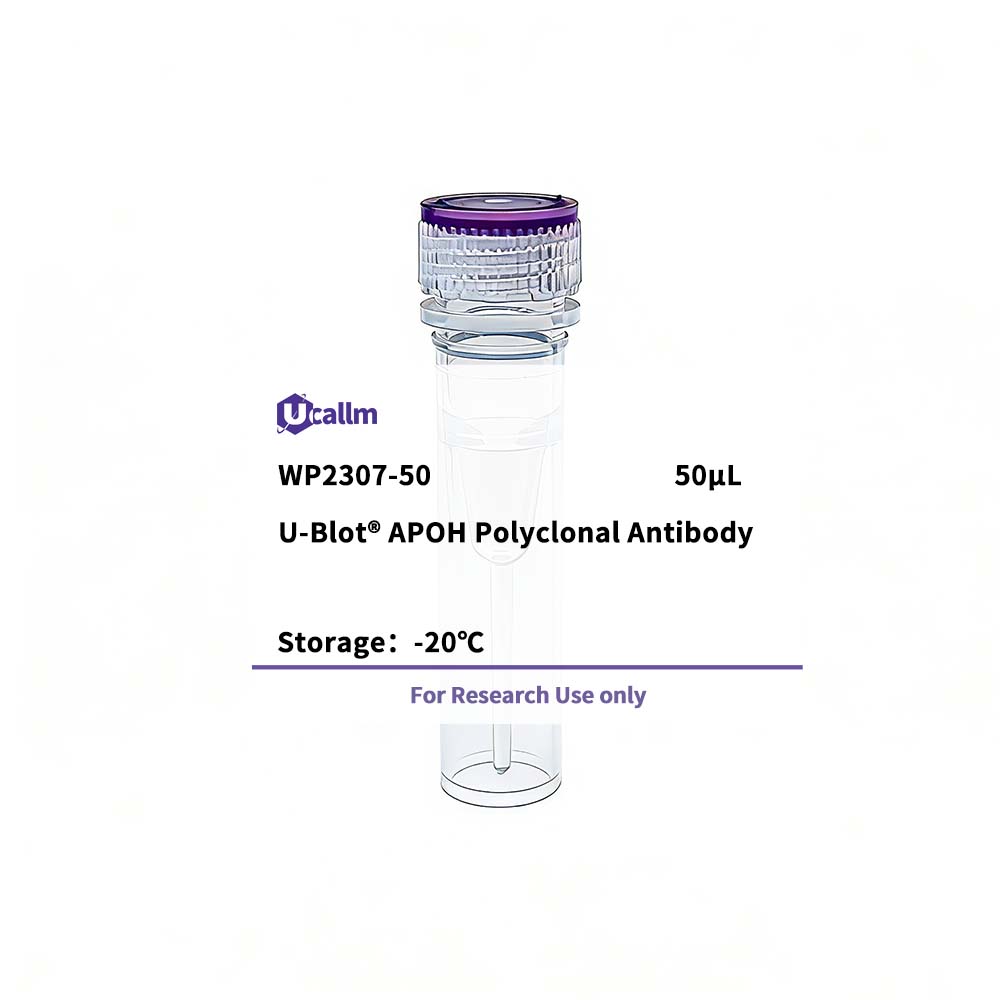
SKU: WP2307 Categories: ,

APOH Polyclonal Antibody

Price range: $268.00 through $328.00

SKU: WP2307-100
Enter the quantity you would like, or drag the panel to find the quantity and price that best for you
Bulk QuoteAuthorize OEM & ODM

Product details

Background:

Apolipoprotein H has been implicated in a variety of physiologic pathways including lipoprotein metabolism, coagulation, and the production of antiphospholipid autoantibodies. APOH may be a required cofactor for anionic phospholipid binding by the antiphospholipid autoantibodies found in sera of many patients with lupus and primary antiphospholipid syndrome, but it does not seem to be required for the reactivity of antiphospholipid autoantibodies associated with infections. [provided by RefSeq, Jul 2008],

Specifications

Size50μL/100μL
TargetAPOH
ReactivityHuman, Mouse, Rat
ApplicationsWB, ELISA
MW(Calculated)
MW(Observed)37kD
Host SpeciesRabbit
IsotypeIgG
Conjugate/ModificationUnmodified
Recommended Dilution RatioWB 1:500-2000; ELISA 1:5000-20000
FormulationLiquid in PBS containing 50% glycerol,0.5% BSA and 0.02% sodium azide.
PurificationThe antibody was affinity-purified from rabbit antiserum by affinity-chromatography using epitope-specific immunogen.
Storage-15°C to -25°C/1 year(Do not lower than -25°C)
Concentration1 mg/ml
ClonalityPolyclonal
Clone Number
ImmunogenSynthesized peptide derived from part region of human protein
SpecificityAPOH Polyclonal Antibody detects endogenous levels of protein.
Gene NameAPOH B2G1
Protein NameBeta-2-glycoprotein 1 (APC inhibitor) (Activated protein C-binding protein) (Anticardiolipin cofactor) (Apolipoprotein H) (Apo-H) (Beta-2-glycoprotein I) (B2GPI) (Beta(2)GPI)
Other Name
SpeciesHuman
Gene ID350
UniprotP02749,
Species.1Mouse
Gene ID.1
Uniprot.1Q01339,
Species.2Rat
Gene ID.2
Uniprot.2P26644
Cellular LocalizationSecreted.
Tissue ExpressionExpressed by the liver and secreted in plasma.
Signaling_pathway
Research Areas>>Cholesterol metabolism
FunctionFunction:Binds to various kinds of negatively charged substances such as heparin, phospholipids, and dextran sulfate. May prevent activation of the intrinsic blood coagulation cascade by binding to phospholipids on the surface of damaged cells.,miscellaneous:In addition to the conflicts shown in the feature table, PubMed:6587378 reports an N-glycosylation site at Asn-188.,online information:The Singapore human mutation and polymorphism database,similarity:Contains 4 Sushi (CCP/SCR) domains.,tissue specificity:Expressed by the liver and secreted in plasma.,
Please login to post questions
Back to Top
Product has been added to your cart
