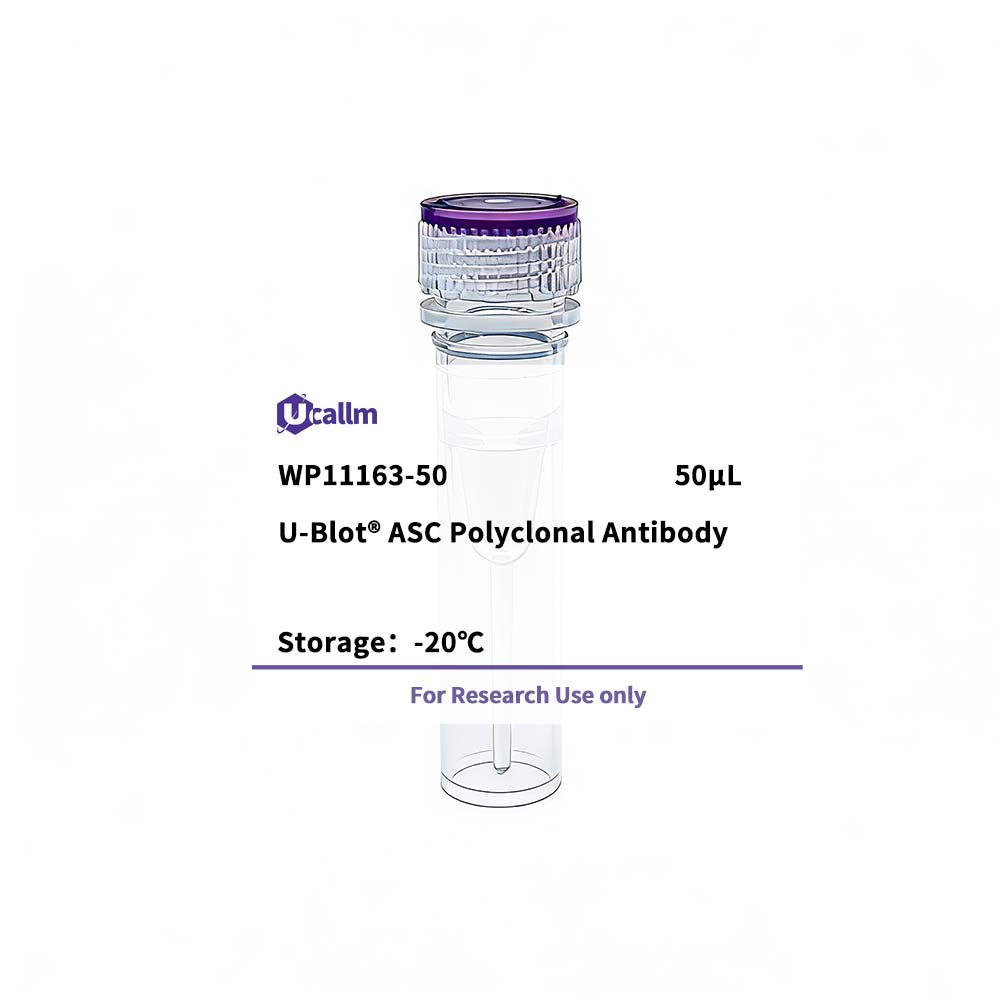
SKU: WP11163 Categories: ,

ASC Polyclonal Antibody

Price range: $268.00 through $328.00

SKU: WP11163-100
Enter the quantity you would like, or drag the panel to find the quantity and price that best for you
Bulk QuoteAuthorize OEM & ODM

Product details

Background:

This gene encodes an adaptor protein that is composed of two protein-protein interaction domains: a N-terminal PYRIN-PAAD-DAPIN domain (PYD) and a C-terminal caspase-recruitment domain (CARD). The PYD and CARD domains are members of the six-helix bundle death domain-fold superfamily that mediates assembly of large signaling complexes in the inflammatory and apoptotic signaling pathways via the activation of caspase. In normal cells, this protein is localized to the cytoplasm; however, in cells undergoing apoptosis, it forms ball-like aggregates near the nuclear periphery. Two transcript variants encoding different isoforms have been found for this gene. [provided by RefSeq, Jul 2008],

Specifications

Size50μL/100μL
TargetASC
ReactivityHuman, Mouse, Rat
ApplicationsWB, IHC, IF, ELISA
MW(Calculated)
MW(Observed)21kD
Host SpeciesRabbit
IsotypeIgG
Conjugate/ModificationUnmodified
Recommended Dilution RatioWB 1:500-1:2000; IHC 1:100-1:300; IF 1:200-1:1000; ELISA 1:40000; Not yet tested in other applications. / Note: For IHC, we suggest antigen retrieval with TE buffer pH 9.0 (Cat#WT1004)
FormulationLiquid in PBS containing 50% glycerol, 0.5% BSA and 0.02% sodium azide.
PurificationThe antibody was affinity-purified from rabbit antiserum by affinity-chromatography using epitope-specific immunogen.
Storage-15°C to -25°C/1 year(Do not lower than -25°C)
Concentration1 mg/ml
ClonalityPolyclonal
Clone Number
ImmunogenThe antiserum was produced against synthesized peptide derived from human ASC. AA range:10-59
SpecificityASC Polyclonal Antibody detects endogenous levels of ASC protein.
Gene NamePYCARD
Protein NameApoptosis-associated speck-like protein containing a CARD
Other NamePYCARD; / ASC; / CARD5; / TMS1; / Apoptosis-associated speck-like protein containing a CARD; / hASC; / Caspase recruitment domain-containing protein 5; / PYD and CARD domain-containing protein; / Target of methylation-induced silencing 1
SpeciesHuman
Gene ID29108
UniprotQ9ULZ3,
Species.1Mouse
Gene ID.166824
Uniprot.1Q9EPB4
Species.2
Gene ID.2
Uniprot.2
Cellular LocalizationCytoplasm . Inflammasome . Endoplasmic reticulum . Mitochondrion . Nucleus . Upstream of caspase activation, a redistribution from the cytoplasm to the aggregates occurs. These appear as hollow, perinuclear spherical, ball-like structures (PubMed:11103777, PubMed:12191486, PubMed:15030775). Upon NLRP3 inflammasome activation redistributes to the perinuclear space localizing to endoplasmic reticulum and mitochondria (PubMed:12191486, PubMed:15030775). Localized primarily to the nucleus in resting monocytes/macrophages and rapidly redistributed to the cytoplasm upon pathogen infection (PubMed:19234215). Localized to large cytoplasmic aggregate appearing as a speck containing AIM2, PYCARD, CASP8 and bacterial DNA after infection with Francisella tularensis (By similarity). .; Golgi apparatus membrane . (Microbial infection) Upon HRSV infection, the protein is mainly located in lipid rafts in the Golgi membrane. .
Tissue ExpressionWidely expressed at low levels. Detected in peripheral blood leukocytes, lung, small intestine, spleen, thymus, colon and at lower levels in placenta, liver and kidney. Very low expression in skeletal muscle, heart and brain. Expressed in lung epithelial cells (at protein level) (PubMed:23229815). Detected in the leukemia cell lines HL-60 and U-937, but not in Jurkat T-cell lymphoma and Daudi Burkitt's lymphoma. Detected in the melanoma cell line WM35, but not in WM793. Not detected in HeLa cervical carcinoma cells and MOLT-4 lymphocytic leukemia cells.
Signaling_pathwayCellular Processes >> Cell growth and death >> Necroptosis;Organismal Systems >> Immune system >> NOD-like receptor signaling pathway;Organismal Systems >> Immune system >> Cytosolic DNA-sensing pathway
Research Areas>>Necroptosis; / >>NOD-like receptor signaling pathway; / >>Cytosolic DNA-sensing pathway; / >>C-type lectin receptor signaling pathway; / >>Pathogenic Escherichia coli infection; / >>Shigellosis; / >>Salmonella infection; / >>Pertussis; / >>Legionellosis; / >>Yersinia infection; / >>Influenza A; / >>Lipid and atherosclerosis
FunctionDomain:Interacts with CIAS1/PYPAF1 and PYDC1 via the DAPIN domain.,Function:Promotes caspase-mediated apoptosis. This proapoptotic activity is mediated predominantly through the activation of caspase 9. May be a component of the inflammasome, a protein complex which also includes NALP2, CARD8 and CASP1 and whose function would be the activation of proinflammatory caspases.,miscellaneous:In breast tumorigenesis, methylation-mediated silencing may affect genes and proteins that act as positive mediators of cell death.,PTM:Phosphorylated.,similarity:Contains 1 CARD domain.,similarity:Contains 1 DAPIN domain.,subcellular location:Upstream of caspase activation, a redistribution from the cytoplasm to the aggregates occurs. These appear as hollow, perinuclear spherical, ball-like structures.,subunit:Forms complexes with other DAPIN domain-containing proteins. Interacts with CIAS1/PYPAF1 and PYDC1.,tissue specificity:Widely expressed at low levels. Detected in peripheral blood leukocytes, lung, small intestine, spleen, thymus, colon and at lower levels in placenta, liver and kidney. Very low expression in skeletal muscle, heart and brain. Detected in the leukemia cell lines HL-60 and U937, but not in Jurkat T-cell lymphoma and Daudi Burkitt's lymphoma. Detected in the melanoma cell line WM35, but not in WM793. Not detected in HeLa cervical carcinoma cells and Molt 4 lymphocytic leukemia cells.,
Please login to post questions
Back to Top
Product has been added to your cart

