SKU: WP11244 Categories: ,

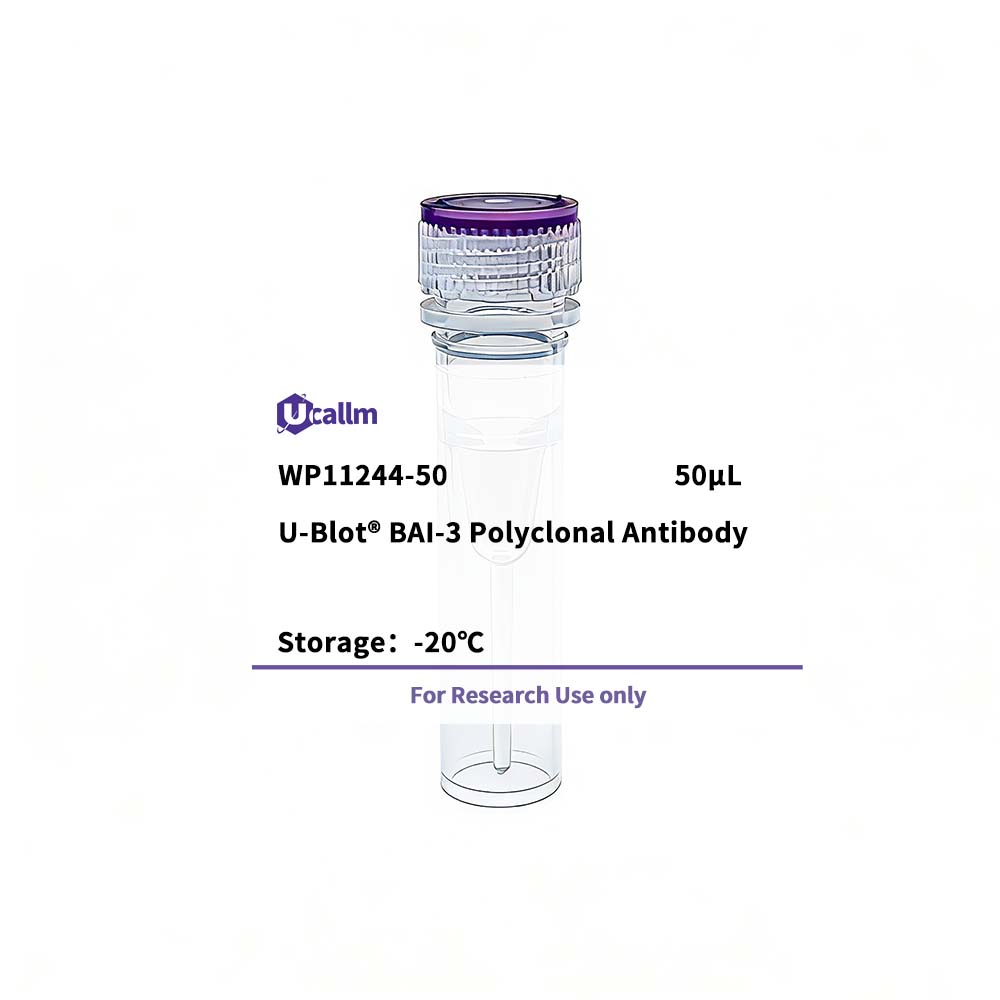
BAI-3 Polyclonal Antibody

Price range: $268.00 through $328.00

SKU: WP11244-100
Enter the quantity you would like, or drag the panel to find the quantity and price that best for you
Bulk QuoteAuthorize OEM & ODM

Product details

Background:

This p53-target gene encodes a brain-specific angiogenesis inhibitor, a seven-span transmembrane protein, and is thought to be a member of the secretin receptor family. Brain-specific angiogenesis proteins BAI2 and BAI3 are similar to BAI1 in structure, have similar tissue specificities, and may also play a role in angiogenesis. [provided by RefSeq, Jul 2008],

Specifications

Size50μL/100μL
TargetBAI-3
ReactivityHuman, Mouse
ApplicationsIHC, IF, ELISA
MW(Calculated)171kD
MW(Observed)
Host SpeciesRabbit
IsotypeIgG
Conjugate/ModificationUnmodified
Recommended Dilution RatioIHC 1:100-1:300; IF 1:200-1:1000; ELISA 1:10000; Not yet tested in other applications. / Note: For IHC, we suggest antigen retrieval with TE buffer pH 9.0 (Cat#WT1004)
FormulationLiquid in PBS containing 50% glycerol, 0.5% BSA and 0.02% sodium azide.
PurificationThe antibody was affinity-purified from rabbit antiserum by affinity-chromatography using epitope-specific immunogen.
Storage-15°C to -25°C/1 year(Do not lower than -25°C)
Concentration1 mg/ml
ClonalityPolyclonal
Clone Number
ImmunogenThe antiserum was produced against synthesized peptide derived from human BAI3. AA range:211-260
SpecificityBAI-3 Polyclonal Antibody detects endogenous levels of BAI-3 protein.
Gene NameBAI3
Protein NameBrain-specific angiogenesis inhibitor 3
Other NameBAI3; / KIAA0550; / Brain-specific angiogenesis inhibitor 3
SpeciesHuman
Gene ID577
UniprotO60242,
Species.1Mouse
Gene ID.1210933
Uniprot.1Q80ZF8
Species.2
Gene ID.2
Uniprot.2
Cellular LocalizationCell membrane; Multi-pass membrane protein .
Tissue ExpressionStrongly expressed in brain. Also detected in heart. Reduced expression in some glioblastoma cell lines.
Signaling_pathway
Research Areas
FunctionFunction:Might be involved in angiogenesis inhibition and suppression of glioblastoma.,similarity:Belongs to the G-protein coupled receptor 2 family. LN-TM7 subfamily.,similarity:Contains 1 CUB domain.,similarity:Contains 1 GPS domain.,similarity:Contains 4 TSP type-1 domains.,tissue specificity:Strongly expressed in brain. Also detected in heart. Reduced expression is observed in some glioblastoma cell lines.,
Please login to post questions
Back to Top
Product has been added to your cart

