SKU: WR4004 Categories: ,

U-Blot® Cleaved PARP1 Rabbit mAb

Price range: $268.00 through $328.00

SKU: WR4004-50
Enter the quantity you would like, or drag the panel to find the quantity and price that best for you
Bulk QuoteAuthorize OEM & ODM

Product details

Background:This gene encodes a chromatin-associated enzyme, poly(ADP-ribosyl)transferase, which modifies various nuclear proteins by poly(ADP-ribosyl)ation. The modification is dependent on DNA and is involved in the regulation of various important cellular processes such as differentiation, proliferation, and tumor transformation and also in the regulation of the molecular events involved in the recovery of cell from DNA damage. In addition, this enzyme may be the site of mutation in Fanconi anemia, and may participate in the pathophysiology of type I diabetes. [provided by RefSeq, Jul 2008],

Specifications

Size50μL/100μL
TargetPARP
ReactivityHuman, Mouse, Rat
ApplicationsWB, IHC, IF, ELISA
MW(Calculated)113kD
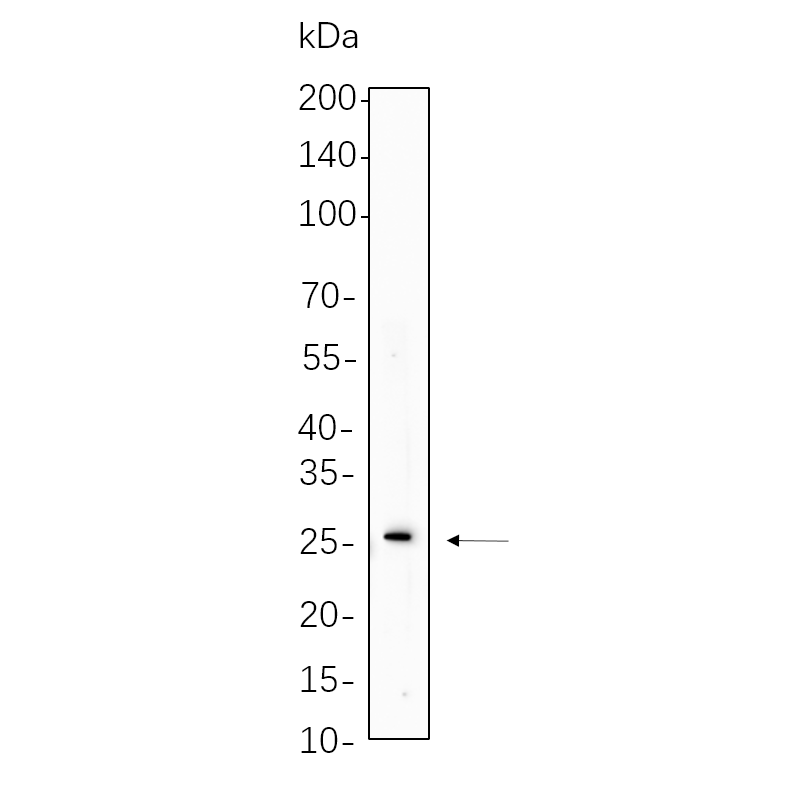
MW(Observed)25kD
Host SpeciesRabbit
IsotypeIgG,Kappa
Conjugate/ModificationUnmodified
Recommended Dilution RatioIHC 1:200-1000; WB 1:500-5000; IF 1:200-1000; ELISA 1:5000-20000; / Note: For IHC, we suggest antigen retrieval with TE buffer pH 9.0 (Cat#WT1004)
FormulationPBS, 50% glycerol, 0.05% Proclin 300, 0.05%BSA
PurificationRecombinant Antibody expressed in animal component-free (ACF) media, purified via Protein A affinity chromatography.
Storage-15°C to -25°C/1 year(Do not lower than -25°C)
Concentration
ClonalityMonoclonal
Clone NumberRM0046R
ImmunogenThe specific immunogen used to produce this antibody is proprietary information.
SpecificityThis antibody detects endogenous levels of Cleaved PARP1.
Gene NamePARP1
Protein NamePoly [ADP-ribose] polymerase 1
Other NamePARP1; / ADPRT; / PPOL; / Poly [ADP-ribose] polymerase 1; / PARP-1; / ADP-ribosyltransferase diphtheria toxin-like 1; / ARTD1; / NAD; / +; / ADP-ribosyltransferase 1; / ADPRT 1; / Poly[ADP-ribose] synthase 1
SpeciesHuman
Gene ID142
UniprotP09874,
Species.1Mouse
Gene ID.1
Uniprot.1P11103
Species.2
Gene ID.2
Uniprot.2
Cellular LocalizationCytoplasmic, Nuclear
Tissue ExpressionBrain,Colon carcinoma,Fibroblast,Lung,Ovarian carcinoma,Skin,
Signaling_pathwayCellular Processes >> Cell growth and death >> Apoptosis;Cellular Processes >> Cell growth and death >> Necroptosis;Environmental Information Processing >> Signal transduction >> NF-kappa B signaling pathway
Research Areas>>Base excision repair; / >>NF-kappa B signaling pathway; / >>Apoptosis; / >>Necroptosis; / >>Diabetic cardiomyopathy
FunctionCatalytic activity:NAD(+) + (ADP-D-ribosyl)(n)-acceptor = nicotinamide + (ADP-D-ribosyl)(n+1)-acceptor.,Function:Involved in the base excision repair (BER) pathway, by catalyzing the poly(ADP-ribosyl)ation of a limited number of acceptor proteins involved in chromatin architecture and in DNA metabolism. This modification follows DNA damages and appears as an obligatory step in a detection/signaling pathway leading to the reparation of DNA strand breaks.,miscellaneous:The ADP-D-ribosyl group of NAD(+) is transferred to an acceptor carboxyl group on a histone or the enzyme itself, and further ADP-ribosyl groups are transferred to the 2'-position of the terminal adenosine moiety, building up a polymer with an average chain length of 20-30 units.,PTM:Phosphorylated by PRKDC. Phosphorylated upon DNA damage, probably by ATM or ATR.,PTM:Poly-ADP-ribosylated by PARP2.,similarity:Contains 1 BRCT domain.,similarity:Contains 1 PARP alpha-helical domain.,similarity:Contains 1 PARP catalytic domain.,similarity:Contains 2 PARP-type zinc fingers.,subunit:Component of a base excision repair (BER) complex, containing at least XRCC1, PARP2, POLB and LIG3. Homo- and heterodimer with PARP2. Interacts with PARP3, APTX and SRY. The SWAP complex consists of NPM1, NCL, PARP1 and SWAP70. Interacts with TIAM2 and ZNF423.,
Please login to post questions

Back to Top
Product has been added to your cart

