SKU: WR4132 Categories: ,

U-Blot® Bcl-XL Rabbit mAb

Price range: $268.00 through $328.00

SKU: WR4132-50
Enter the quantity you would like, or drag the panel to find the quantity and price that best for you
Bulk QuoteAuthorize OEM & ODM

Product details

Background:The protein encoded by this gene belongs to the BCL-2 protein family. BCL-2 family members form hetero- or homodimers and act as anti- or pro-apoptotic regulators that are involved in a wide variety of cellular activities. The proteins encoded by this gene are located at the outer mitochondrial membrane, and have been shown to regulate outer mitochondrial membrane channel (VDAC) opening. VDAC regulates mitochondrial membrane potential, and thus controls the production of reactive oxygen species and release of cytochrome C by mitochondria, both of which are the potent inducers of cell apoptosis. Alternative splicing results in multiple transcript variants encoding two different isoforms. The longer isoform acts as an apoptotic inhibitor and the shorter isoform acts as an apoptotic activator. [provided by RefSeq, Dec 2015],

Specifications

Size50μL/100μL
TargetBcl-x
ReactivityHuman, Mouse, Rat
ApplicationsWB, IHC, IF, IP, ELISA
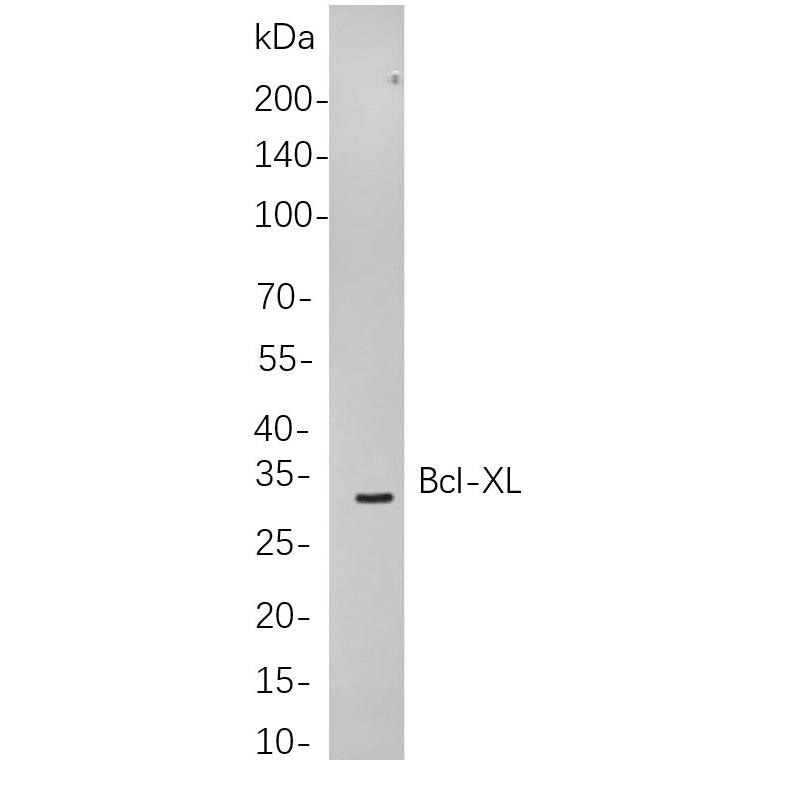
MW(Calculated)26kD
MW(Observed)30kD
Host SpeciesRabbit
IsotypeIgG,Kappa
Conjugate/ModificationUnmodified
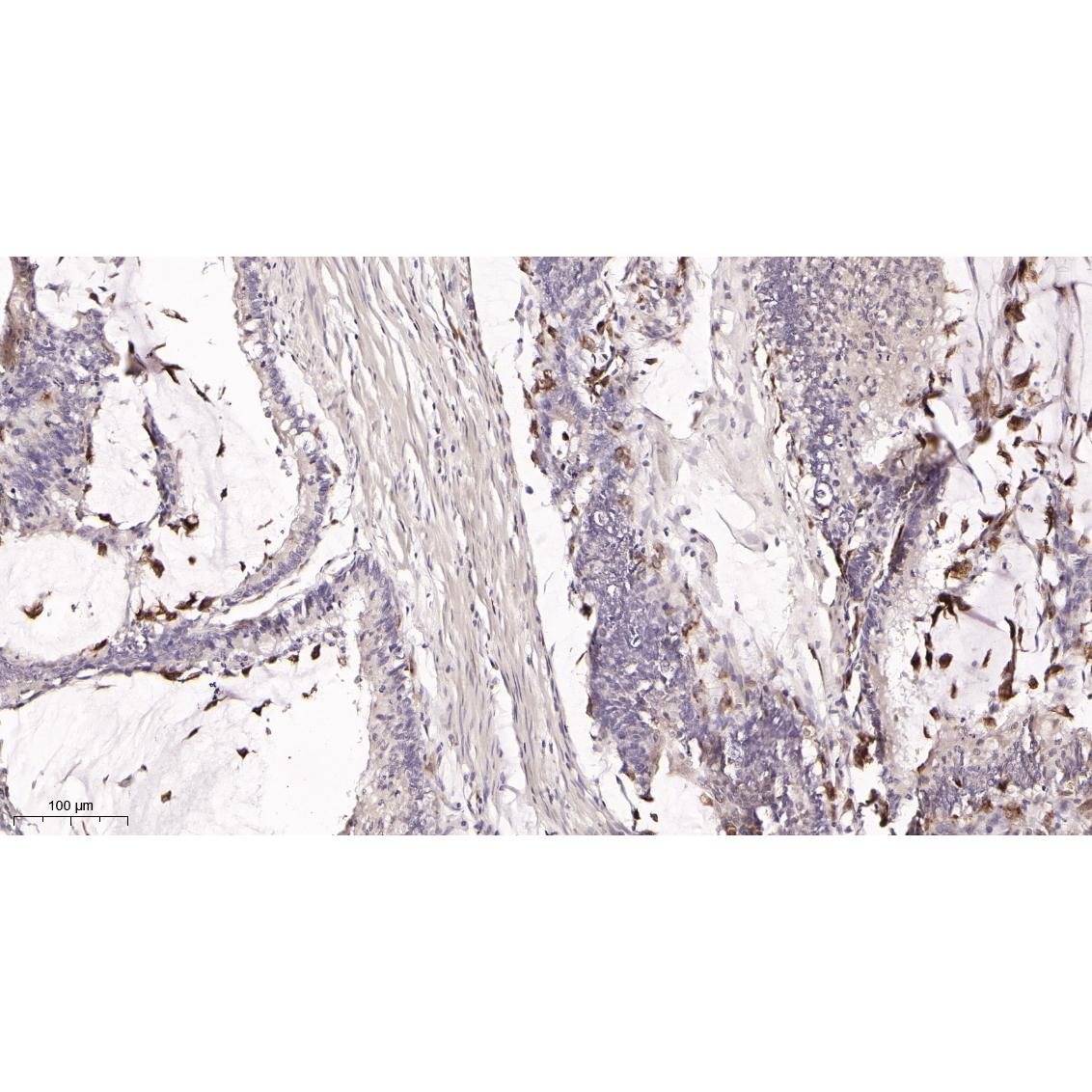
Recommended Dilution RatioIHC 1:200-1:1000; WB 1:1000-1:5000; IF 1:200-1:1000; ELISA 1:5000-1:20000; IP 1:50-1:200, / Note: For IHC, we suggest antigen retrieval with TE buffer pH 9.0 (Cat#WT1004)
FormulationPBS, 50% glycerol, 0.05% Proclin 300, 0.05%BSA
PurificationRecombinant Antibody expressed in animal component-free (ACF) media, purified via Protein A affinity chromatography.
Storage-15°C to -25°C/1 year(Do not lower than -25°C)
Concentration
ClonalityMonoclonal
Clone NumberRM0244R
ImmunogenThe specific immunogen used to produce this antibody is proprietary information.
SpecificityEndogenous
Gene NameBCL2L1 BCL2L BCLX
Protein NameBcl-2-like protein 1
Other NameBCL2L1; / BCL2L; / BCLX; / Bcl-2-like protein 1; / Bcl2-L-1; / Apoptosis regulator Bcl-X
SpeciesHuman
Gene ID598
UniprotQ07817,
Species.1Mouse
Gene ID.112048
Uniprot.1Q64373,
Species.2Rat
Gene ID.224888
Uniprot.2P53563
Cellular LocalizationCytoplasm
Tissue ExpressionBcl-X(S) is expressed at high levels in cells that undergo a high rate of turnover, such as developing lymphocytes. In contrast, Bcl-X(L) is found in tissues containing long-lived postmitotic cells, such as adult brain.
Signaling_pathwayCellular Processes >> Transport and catabolism >> Autophagy - animal;Cellular Processes >> Transport and catabolism >> Mitophagy - animal;Cellular Processes >> Cell growth and death >> Apoptosis;Cellular Processes >> Cell growth and death >> Apoptosis - multiple species;Cellular Processes >> Cell growth and death >> p53 signaling pathway;Organismal Systems >> Immune system >> NOD-like receptor signaling pathway;Human Diseases >> Cancer: overview >> Pathways in cancer;Human Diseases >> Cancer: overview >> Transcriptional misregulation in cancer;Human Diseases >> Cancer: specific types >> Pancreatic cancer;Human Diseases >> Cancer: specific types >> Hepatocellular carcinoma;Human Diseases >> Cancer: specific types >> Chronic myeloid leukemia;Human Diseases >> Cancer: specific types >> Small cell lung cancer;Human Diseases >> Neurodegenerative disease >> Parkinson disease;Human Diseases >> Neurodegenerative disease >> Amyotrophic lateral sclerosis;Human Diseases >> Neurodegenerative disease >> Pathways of neurodegeneration - multiple diseases;Environmental Information Processing >> Signal transduction >> Ras signaling pathway;Environmental Information Processing >> Signal transduction >> JAK-STAT signaling pathway;Environmental Information Processing >> Signal transduction >> NF-kappa B signaling pathway;Environmental Information Processing >> Signal transduction >> PI3K-Akt signaling pathway
Research Areas>>EGFR tyrosine kinase inhibitor resistance; / >>Platinum drug resistance; / >>Ras signaling pathway; / >>NF-kappa B signaling pathway; / >>p53 signaling pathway; / >>Mitophagy - animal; / >>Autophagy - animal; / >>PI3K-Akt signaling pathway; / >>Apoptosis; / >>Apoptosis - multiple species; / >>NOD-like receptor signaling pathway; / >>JAK-STAT signaling pathway; / >>Parkinson disease; / >>Amyotrophic lateral sclerosis; / >>Pathways of neurodegeneration - multiple diseases; / >>Shigellosis; / >>Toxoplasmosis; / >>Measles; / >>Human T-cell leukemia virus 1 infection; / >>Herpes simplex virus 1 infection; / >>Human immunodeficiency virus 1 infection; / >>Pathways in cancer; / >>Transcriptional misregulation in cancer; / >>Pancreatic cancer; / >>Chronic myeloid leukemia; / >>Small cell lung cancer; / >>Hepatocellular carcinoma; / >>Lipid and atherosclerosis
FunctionDomain:The BH4 motif is required for anti-apoptotic activity. The BH1 and BH2 motifs are required for both heterodimerization with other Bcl-2 family members and for repression of cell death.,Function:Potent inhibitor of cell death. Isoform Bcl-X(L) anti-apoptotic activity is inhibited by association with SIVA isoform 1. Inhibits activation of caspases (By similarity). Appears to regulate cell death by blocking the voltage-dependent anion channnel (VDAC) by binding to it and preventing the release of the caspase activator, cytochrome c, from the mitochondrial membrane. The Bcl-X(S) isoform promotes apoptosis.,PTM:Proteolytically cleaved by caspases during apoptosis. The cleaved protein, lacking the BH4 motif, has pro-apoptotic activity.,similarity:Belongs to the Bcl-2 family.,subcellular location:Mitochondrial membranes and perinuclear envelope.,subunit:Bcl-X(L) forms homodimers, and heterodimers with BAX, BAK and BCL2. Heterodimerization with BAX does not seem to be required for anti-apoptotic activity. Also interacts with BAD and BBC3. Isoform Bcl-X(L) binds to Siva isoform 1. Interacts with BCL2L11 (By similarity). Interacts with BECN1 and PGAM5. Isoform Bcl-X(L) interacts with BAX isoform Sigma.,tissue specificity:Bcl-X(S) is expressed at high levels in cells that undergo a high rate of turnover, such as developing lymphocytes. In contrast, Bcl-X(L) is found in tissues containing long-lived postmitotic cells, such as adult brain.,
Please login to post questions

Back to Top
Product has been added to your cart
