

Product details
Background:
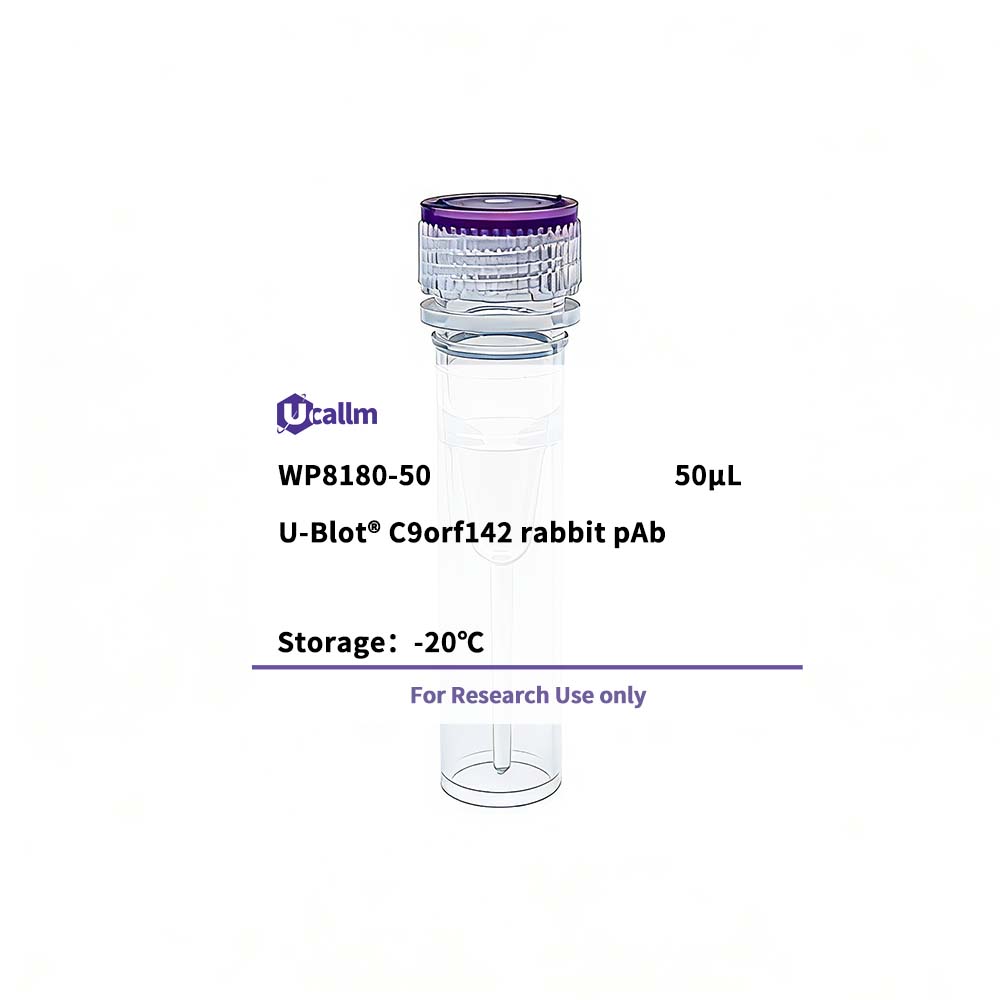
Price range: $268.00 through $328.00
Background:
| Size | 50μL/100μL |
| Target | PAXX |
| Reactivity | Human, Mouse |
| Applications | WB |
| MW(Calculated) | 22kD |
| MW(Observed) | |
| Host Species | Rabbit |
| Isotype | IgG |
| Conjugate/Modification | Unmodified |
| Recommended Dilution Ratio | WB 1:500-2000 |
| Formulation | Liquid in PBS containing 50% glycerol, 0.5% BSA and 0.02% sodium azide. |
| Purification | The antibody was affinity-purified from rabbit antiserum by affinity-chromatography using epitope-specific immunogen. |
| Storage | -15°C to -25°C/1 year(Do not lower than -25°C) |
| Concentration | 1 mg/ml |
| Clonality | Polyclonal |
| Clone Number | |
| Immunogen | Synthesized peptide derived from human C9orf142 |
| Specificity | This antibody detects endogenous levels of C9orf142 at Human, Mouse |
| Gene Name | C9orf142 |
| Protein Name | Uncharacterized protein C9orf142 |
| Other Name | |
| Species | Human |
| Gene ID | 286257 |
| Uniprot | Q9BUH6, |
| Species.1 | Mouse |
| Gene ID.1 | 227622 |
| Uniprot.1 | Q8K0Y7 |
| Species.2 | |
| Gene ID.2 | |
| Uniprot.2 | |
| Cellular Localization | Nucleus . Chromosome . Predominantly localizes to the nucleus. Accumulates at sites of DNA damage generated by laser microirradiation. .; Cytoplasm . (Microbial infection) Upon infection by herpesvirus 1 (HSV-1), it is partially translocated into the cytoplasm in an HSV-1-dependent manner. . |
| Tissue Expression | |
| Signaling_pathway | |
| Research Areas | |
| Function | Non-essential DNA repair protein involved in DNA non-homologous end joining (NHEJ); participates in double-strand break (DSB) repair and V(D)J recombination . May act as a scaffold required for accumulation of the Ku heterodimer, composed of XRCC5/Ku80 and XRCC6/Ku70, at double-strand break sites and promote the assembly and/or stability of the NHEJ machinery . Involved in NHEJ by promoting the ligation of blunt-ended DNA ends . Together with NHEJ1/XLF, collaborates with DNA polymerase lambda (POLL) to promote joining of non-cohesive DNA ends . Constitutes a non-essential component of classical NHEJ: has a complementary but distinct function with NHEJ1/XLF in DNA repair . Able to restrict infection by herpesvirus 1 (HSV-1) via an unknown mechanism . |



