

CD19 Monoclonal Antibody
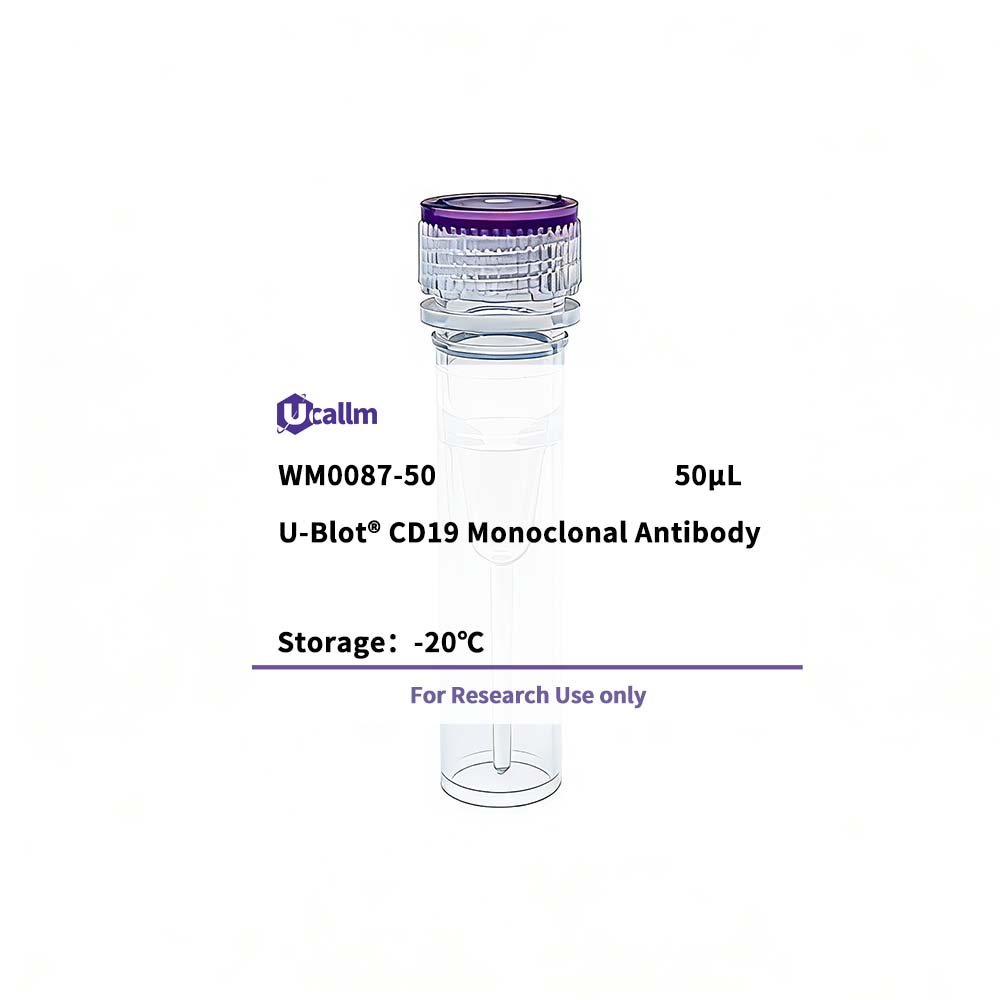
Ucallm_WM0087-50
Price range: $268.00 through $328.00
Product details
Background:
Lymphocytes proliferate and differentiate in response to various concentrations of different antigens. The ability of the B cell to respond in a specific, yet sensitive manner to the various antigens is achieved with the use of low-affinity antigen receptors. This gene encodes a cell surface molecule which assembles with the antigen receptor of B lymphocytes in order to decrease the threshold for antigen receptor-dependent stimulation. [provided by RefSeq, Jul 2008],
Specifications
| Size | 50μL/100μL |
| Target | CD19 |
| Reactivity | Human |
| Applications | IF, FC, ELISA |
| MW(Calculated) | |
| MW(Observed) | |
| Host Species | Mouse |
| Isotype | |
| Conjugate/Modification | Unmodified |
| Recommended Dilution Ratio | IF 1:200-1:1000; Flow Cyt 1:200-1:400; ELISA 1:10000; Not yet tested in other applications; |
| Formulation | Liquid in PBS containing 50% glycerol, 0.5% BSA and 0.02% sodium azide. |
| Purification | Affinity purification |
| Storage | -15°C to -25°C/1 year(Do not lower than -25°C) |
| Concentration | |
| Clonality | Monoclonal |
| Clone Number | 17E7 |
| Immunogen | Purified recombinant fragment of human CD19 expressed in E. Coli. |
| Specificity | CD19 Monoclonal Antibody detects endogenous levels of CD19 protein. |
| Gene Name | CD19 |
| Protein Name | B-lymphocyte antigen CD19 |
| Other Name | CD19; / B-lymphocyte antigen CD19; / B-lymphocyte surface antigen B4; / Differentiation antigen CD19; / T-cell surface antigen Leu-12; / CD antigen CD19 |
| Species | Human |
| Gene ID | 930 |
| Uniprot | P15391, |
| Species.1 | Mouse |
| Gene ID.1 | |
| Uniprot.1 | P25918 |
| Species.2 | |
| Gene ID.2 | |
| Uniprot.2 | |
| Cellular Localization | Cell membrane; Single-pass type I membrane protein . Membrane raft; Single-pass type I membrane protein . |
| Tissue Expression | Detected on marginal zone and germinal center B cells in lymph nodes (PubMed:2463100). Detected on blood B cells (at protein level) (PubMed:2463100, PubMed:16672701). |
| Signaling_pathway | Organismal Systems >> Immune system >> Hematopoietic cell lineage;Organismal Systems >> Immune system >> B cell receptor signaling pathway;Human Diseases >> Immune disease >> Primary immunodeficiency;Environmental Information Processing >> Signal transduction >> PI3K-Akt signaling pathway |
| Research Areas | >>PI3K-Akt signaling pathway; / >>Hematopoietic cell lineage; / >>B cell receptor signaling pathway; / >>Epstein-Barr virus infection; / >>Primary immunodeficiency |
| Function | Disease:Defects in CD19 are a cause of hypogammaglobulinemia [MIM:107265].,Function:Assembles with the antigen receptor of B lymphocytes in order to decrease the threshold for antigen receptor-dependent stimulation.,online information:CD19 mutation db,PTM:Phosphorylated on serine and threonine upon DNA damage, probably by ATM or ATR. Phosphorylated on tyrosine following B-cell activation.,similarity:Contains 2 Ig-like C2-type (immunoglobulin-like) domains.,subunit:Forms a complex with CD21, CD81 and CD225 in the membrane of mature B cells. Interacts with VAV. Interacts with GRB2 and SOS when phosphorylated on Tyr-348 and/or Tyr-378. Interacts with PLCG2 when phosphorylated on Tyr-409., |
Please login to post questions
Related products




