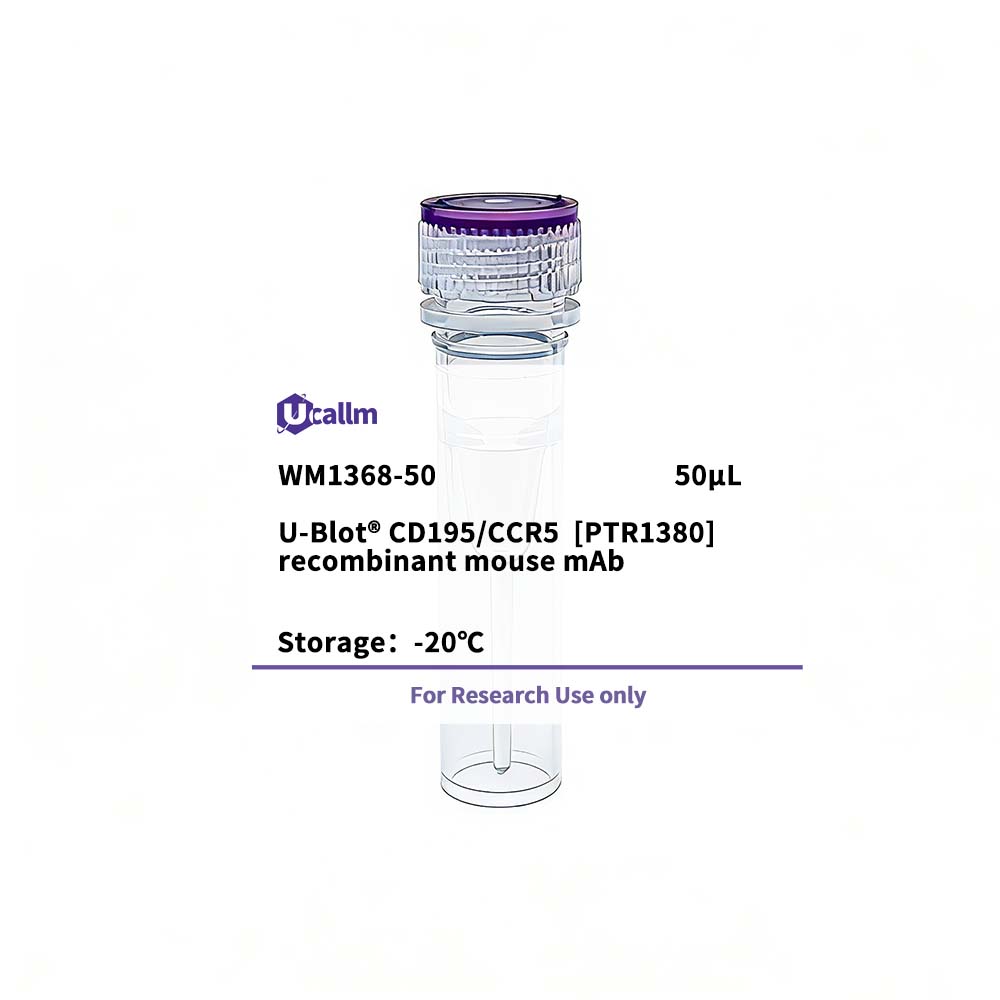
SKU: WM1368 Categories: ,

CD195/CCR5 [PTR1380] recombinant mouse mAb

Price range: $268.00 through $328.00

SKU: WM1368-50
Enter the quantity you would like, or drag the panel to find the quantity and price that best for you
Bulk QuoteAuthorize OEM & ODM

Product details

Background:
This gene encodes a member of the beta chemokine receptor family, which is predicted to be a seven transmembrane protein similar to G protein-coupled receptors. This protein is expressed by T cells and macrophages, and is known to be an important co-receptor for macrophage-tropic virus, including HIV, to enter host cells. Defective alleles of this gene have been associated with the HIV infection resistance. The ligands of this receptor include monocyte chemoattractant protein 2 (MCP-2), macrophage inflammatory protein 1 alpha (MIP-1 alpha), macrophage inflammatory protein 1 beta (MIP-1 beta) and regulated on activation normal T expressed and secreted protein (RANTES). Expression of this gene was also detected in a promyeloblastic cell line, suggesting that this protein may play a role in granulocyte lineage proliferation and differentiation. This gene is located at the chemok

Specifications

Size50μL/100μL
TargetCD284
ReactivityHuman
ApplicationsFC, ELISA
MW(Calculated)
MW(Observed)40kD
Host SpeciesMouse
IsotypeIgG2a,Kappa
Conjugate/ModificationUnmodified
Recommended Dilution RatioELISA 1:5000-100000; Flow Cyt 1-2μg/Test
FormulationPhosphate-buffered solution
PurificationRecombinant Expression and Affinity purified
Storage-15°C to -25°C/1 year(Do not lower than -25°C)
ConcentrationPlease check the information on the tube
ClonalityMonoclonal
Clone NumberRMMR1383
ImmunogenPurified recombinant human CCR5
SpecificityThis recombinant monoclonal antibody can detects endogenous levels of CD195 protein.
Gene NameCCR5 CMKBR5
Protein NameC-C chemokine receptor type 5 (C-C CKR-5) (CC-CKR-5) (CCR-5) (CCR5) (CHEMR13) (HIV-1 fusion coreceptor) (CD antigen CD195)
Other NameC-C chemokine receptor type 5; / C-C CKR-5; / CC-CKR-5; / CCR-5; / CCR5; / CHEMR13; / HIV-1 fusion coreceptor; / CD antigen CD195
SpeciesHuman
Gene ID7099
UniprotP51681,
Species.1Mouse
Gene ID.112774
Uniprot.1P51682
Species.2
Gene ID.2
Uniprot.2
Cellular LocalizationCell membrane; Multi-pass membrane protein .
Tissue ExpressionHighly expressed in placenta, spleen and peripheral blood leukocytes (PubMed:9435236, PubMed:9237759). Detected in monocytes, macrophages, dendritic cells and several types of T-cells (PubMed:9237759, PubMed:27022195).
Signaling_pathwayCellular Processes >> Transport and catabolism >> Phagosome;Cellular Processes >> Cell growth and death >> Necroptosis;Organismal Systems >> Immune system >> Neutrophil extracellular trap formation;Organismal Systems >> Immune system >> Toll-like receptor signaling pathway;Organismal Systems >> Immune system >> NOD-like receptor signaling pathway;Human Diseases >> Cancer: overview >> PD-L1 expression and PD-1 checkpoint pathway in cancer;Human Diseases >> Immune disease >> Rheumatoid arthritis;Human Diseases >> Immune disease >> Inflammatory bowel disease;Environmental Information Processing >> Signal transduction >> NF-kappa B signaling pathway;Environmental Information Processing >> Signal transduction >> HIF-1 signaling pathway;Environmental Information Processing >> Signal transduction >> PI3K-Akt signaling pathway
Research Areas>>NF-kappa B signaling pathway; / >>HIF-1 signaling pathway; / >>Phagosome; / >>PI3K-Akt signaling pathway; / >>Necroptosis; / >>Neutrophil extracellular trap formation; / >>Toll-like receptor signaling pathway; / >>NOD-like receptor signaling pathway; / >>Alcoholic liver disease; / >>Pathogenic Escherichia coli infection; / >>Shigellosis; / >>Salmonella infection; / >>Pertussis; / >>Legionellosis; / >>Yersinia infection; / >>Leishmaniasis; / >>Chagas disease; / >>Malaria; / >>Toxoplasmosis; / >>Amoebiasis; / >>Tuberculosis; / >>Hepatitis B; / >>Measles; / >>Influenza A; / >>Human immunodeficiency virus 1 infection; / >>Coronavirus disease - COVID-19; / >>Proteoglycans in cancer; / >>PD-L1 expression and PD-1 checkpoint pathway in cancer; / >>Inflammatory bowel disease; / >>Rheumatoid arthritis; / >>Lipid and atherosclerosis
FunctionDisease:Genetic variation in CCR5 is associated with suseptibility to insulin-dependent diabetes mellitus type 22 (IDDM22) [MIM:612522]. IDDM is caused by the body's own immune system which destroys the insulin-producing beta cells in the pancreas. Classical features are polydipsia, polyphagia and polyuria, due to hyperglycemia-induced osmotic diuresis.,Function:Receptor for a number of inflammatory CC-chemokines including MIP-1-alpha, MIP-1-beta and RANTES and subsequently transduces a signal by increasing the intracellular calcium ion level. May play a role in the control of granulocytic lineage proliferation or differentiation. Acts as a coreceptor (CD4 being the primary receptor) for HIV-1 R5 isolates.,online information:CC chemokine receptors entry,online information:CCR5 receptor entry,polymorphism:Ser-60 variant, a naturally occurring mutation in a conserved residue in the first intracellular domain of CCR5, results in reduced amounts of the protein in the membrane and consequently may be associated with reduced susceptibility to infection by microbes that depend on these molecules as their receptors.,polymorphism:Variations in CCR5 are associated with resistance or susceptibility to immunodeficiency virus type 1 (resistance or susceptibility to HIV-1) [MIM:609423]. Variations in CCR5 gene also influence the rate of progression to AIDS after infection.,polymorphism:Variations in CCR5 are associated with susceptibility to West Nile virus (WNV) infection [MIM:610379].,PTM:O-glycosylated, but not N-glycosylated. Ser-6 appears to be the major site. Also sialylated glycans present which contribute to chemokine binding. Thr-16 and Ser-17 may also be glycosylated and, if so, with small moieties such as a T-antigen.,PTM:Palmitoylation in the C-terminal is important for cell surface expression, and to a lesser extent, for HIV entry.,PTM:Phosphorylation on serine residues in the C-terminal is stimulated by binding CC chemokines especially by APO-RANTES.,PTM:Sulfated on at least 2 of the N-terminal tyrosines. Sulfation contributes to the efficiency of HIV-1 entry and is required for efficient binding of the chemokines, CCL3 and CCL4.,similarity:Belongs to the G-protein coupled receptor 1 family.,subunit:Interacts with PRAF2. Interacts with HIV-1 surface protein gp120. Efficient ligand binding to CCL3/MIP-1alpha and CCR4/MIP-1beta requires sulfation, O-glycosylation and sialic acid modifications. Glycosylation on Ser-6 is required for efficient binding of CCL4. Interacts with ADRBK1.,tissue specificity:Highly expressed in spleen, thymus, in the myeloid cell line THP-1, in the promyeloblastic cell line KG-1A and on CD4+ and CD8+ T-cells. Medium levels in peripheral blood leukocytes and in small intestine. Low levels in ovary and lung.,
Please login to post questions
Back to Top
Product has been added to your cart


