SKU: WR4848 Categories: ,

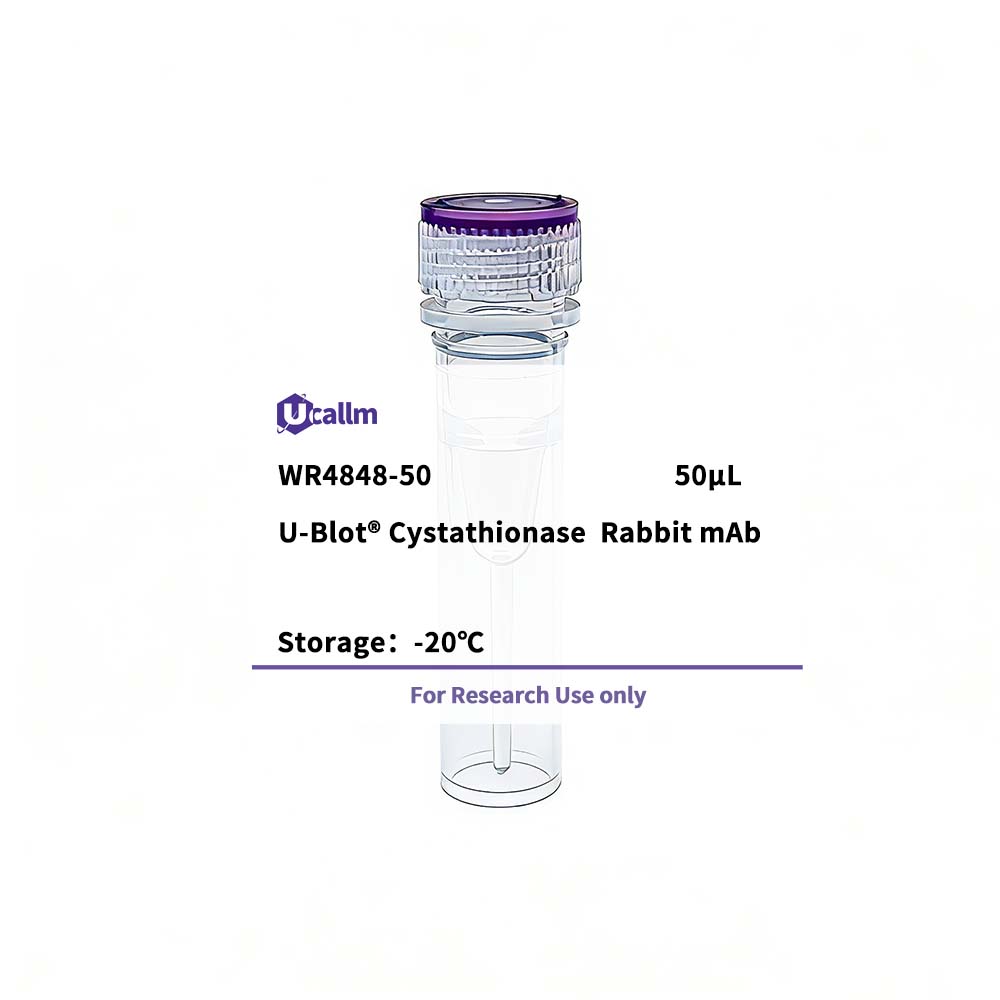
U-Blot® Cystathionase Rabbit mAb

Price range: $268.00 through $328.00

SKU: WR4848-50
Enter the quantity you would like, or drag the panel to find the quantity and price that best for you
Bulk QuoteAuthorize OEM & ODM

Product details

Background:This gene encodes a cytoplasmic enzyme in the trans-sulfuration pathway that converts cystathione derived from methionine into cysteine. Glutathione synthesis in the liver is dependent upon the availability of cysteine. Mutations in this gene cause cystathioninuria. Alternative splicing of this gene results in three transcript variants encoding different isoforms. [provided by RefSeq, Jun 2010],

Specifications

Size50μL/100μL
TargetCystathionase
ReactivityHuman
ApplicationsWB, IHC, IF, IP, ELISA
MW(Calculated)45kD
MW(Observed)45kD
Host SpeciesRabbit
IsotypeIgG,Kappa
Conjugate/ModificationUnmodified
Recommended Dilution RatioIHC 1:200-1:1000; WB 1:2000-1:10000; IF 1:200-1:1000; ELISA 1:5000-1:20000; IP 1:50-1:200; / Note: For IHC, we suggest antigen retrieval with TE buffer pH 9.0 (Cat#WT1004)
FormulationPBS, 50% glycerol, 0.05% Proclin 300, 0.05%BSA
PurificationRecombinant Antibody expressed in animal component-free (ACF) media, purified via Protein A affinity chromatography.
Storage-15°C to -25°C/1 year(Do not lower than -25°C)
Concentration
ClonalityMonoclonal
Clone NumberRM1007R
ImmunogenThe specific immunogen used to produce this antibody is proprietary information.
SpecificityEndogenous
Gene NameCTH
Protein NameCystathionine gamma-lyase (Cysteine-protein sulfhydrase) (Gamma-cystathionase)
Other Name
SpeciesHuman
Gene ID1491
UniprotP32929,
Species.1Mouse
Gene ID.1
Uniprot.1Q8VCN5,
Species.2Rat
Gene ID.2
Uniprot.2P18757
Cellular LocalizationCytoplasm.
Tissue ExpressionHighly expressed in liver (PubMed:10727430, PubMed:20305127). Also in muscle and lower expression in most tissues except heart, pituitary gland, spleen, thymus, and vascular tissue, where it is hardly detected (PubMed:20305127).
Signaling_pathway
Research Areas>>Glycine, serine and threonine metabolism; / >>Cysteine and methionine metabolism; / >>Selenocompound metabolism; / >>Metabolic pathways; / >>Biosynthesis of amino acids
FunctionCatalytic activity:L-cystathionine + H(2)O = L-cysteine + NH(3) + 2-oxobutanoate.,cofactor:Pyridoxal phosphate.,Disease:Defects in CTH are the cause of cystathioninuria [MIM:219500]. CTH is an autosomal recessive phenotype characterized by abnormal accumulation of plasma cystathionine, leading to increased urinary excretion.,pathway:Amino-acid biosynthesis; L-cysteine biosynthesis; L-cysteine from L-homocysteine and L-serine: step 2/2.,PTM:Phosphorylated upon DNA damage, probably by ATM or ATR.,similarity:Belongs to the trans-sulfuration enzymes family.,subunit:Homotetramer.,
Please login to post questions
Back to Top
Product has been added to your cart
