SKU: WR4687 Categories: ,

U-Blot® DDR1 Rabbit mAb

Price range: $268.00 through $328.00

SKU: WR4687-50
Enter the quantity you would like, or drag the panel to find the quantity and price that best for you
Bulk QuoteAuthorize OEM & ODM

Product details

Background:Receptor tyrosine kinases play a key role in the communication of cells with their microenvironment. These kinases are involved in the regulation of cell growth, differentiation and metabolism. The protein encoded by this gene belongs to a subfamily of tyrosine kinase receptors with homology to Dictyostelium discoideum protein discoidin I in their extracellular domain, and that are activated by various types of collagen. Expression of this protein is restricted to epithelial cells, particularly in the kidney, lung, gastrointestinal tract, and brain. In addition, it has been shown to be significantly overexpressed in several human tumors. Alternatively spliced transcript variants encoding different isoforms have been described for this gene. [provided by RefSeq, Feb 2011],

Specifications

Size50μL/100μL
TargetDDR1
ReactivityHuman, Mouse, Rat
ApplicationsWB, IHC, IF, IP, ELISA
MW(Calculated)101kD
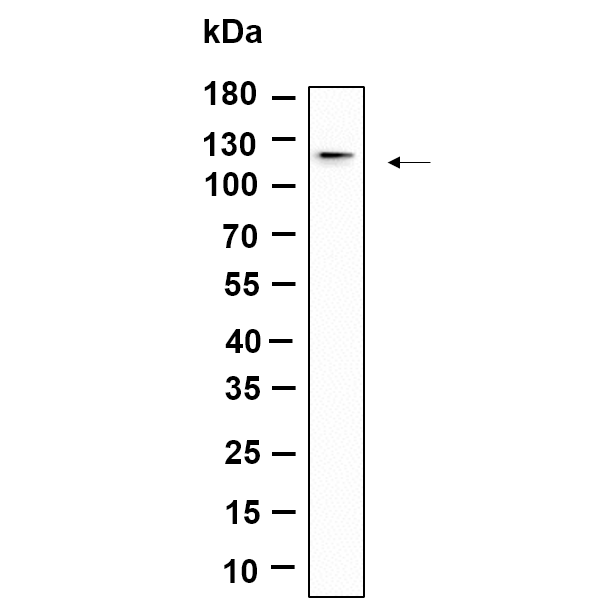
MW(Observed)125kD
Host SpeciesRabbit
IsotypeIgG,Kappa
Conjugate/ModificationUnmodified
Recommended Dilution RatioIHC 1:200-1:1000; WB 1:2000-1:10000; IF 1:200-1:1000; ELISA 1:5000-1:20000; IP 1:50-1:200; / Note: For IHC, we suggest antigen retrieval with TE buffer pH 9.0 (Cat#WT1004)
FormulationPBS, 50% glycerol, 0.05% Proclin 300, 0.05%BSA
PurificationRecombinant Antibody expressed in animal component-free (ACF) media, purified via Protein A affinity chromatography.
Storage-15°C to -25°C/1 year(Do not lower than -25°C)
Concentration
ClonalityMonoclonal
Clone NumberRM0981R
ImmunogenThe specific immunogen used to produce this antibody is proprietary information.
SpecificityEndogenous
Gene NameDDR1
Protein NameEpithelial discoidin domain-containing receptor 1
Other NameDDR1; / CAK; / EDDR1; / NEP; / NTRK4; / PTK3A; / RTK6; / TRKE; / Epithelial discoidin domain-containing receptor 1; / Epithelial discoidin domain receptor 1; / CD167 antigen-like family member A; / Cell adhesion kinase; / Discoidin receptor tyrosine kinase; / HGK2
SpeciesHuman
Gene ID780
UniprotQ08345,
Species.1Mouse
Gene ID.112305
Uniprot.1Q03146,
Species.2Rat
Gene ID.2
Uniprot.2Q63474
Cellular Localization[Isoform 1]: Cell membrane; Single-pass type I membrane protein.; [Isoform 2]: Cell membrane; Single-pass type I membrane protein.; [Isoform 3]: Secreted .; [Isoform 4]: Cell membrane; Single-pass type I membrane protein.
Tissue ExpressionDetected in T-47D, MDA-MB-175 and HBL-100 breast carcinoma cells, A-431 epidermoid carcinoma cells, SW48 and SNU-C2B colon carcinoma cells and Hs 294T melanoma cells (at protein level). Expressed at low levels in most adult tissues and is highest in the brain, lung, placenta and kidney. Lower levels of expression are detected in melanocytes, heart, liver, skeletal muscle and pancreas. Abundant in breast carcinoma cell lines. In the colonic mucosa, expressed in epithelia but not in the connective tissue of the lamina propria. In the thyroid gland, expressed in the epithelium of the thyroid follicles. In pancreas, expressed in the islets of Langerhans cells, but not in the surrounding epithelial cells of the exocrine pancreas. In kidney, expressed in the epithelia of the distal tubules. Not expressed in connective tissue, endothelial cells, adipose tissue, muscle cells or cells of hematopoietic origin.
Signaling_pathway
Research Areas
FunctionCatalytic activity:ATP + a [protein]-L-tyrosine = ADP + a [protein]-L-tyrosine phosphate.,Domain:The Gly/Pro-rich domains may be required for an unusual geometry of interaction with ligand or substrates.,Function:May be involved in cell-cell interactions and recognition.,similarity:Belongs to the protein kinase superfamily. Tyr protein kinase family. Insulin receptor subfamily.,similarity:Contains 1 F5/8 type C domain.,similarity:Contains 1 protein kinase domain.,tissue specificity:Expressed at low levels in most adult tissues and is highest in the brain and lung. Abundant in breast carcinoma cell lines.,
Please login to post questions

Back to Top
Product has been added to your cart
