SKU: WR4645 Categories: ,

U-Blot® DPEP3 Rabbit mAb

Price range: $268.00 through $328.00

SKU: WR4645-50
Enter the quantity you would like, or drag the panel to find the quantity and price that best for you
Bulk QuoteAuthorize OEM & ODM

Product details

Background:This gene encodes a membrane-bound glycoprotein from the family of dipeptidases involved in hydrolytic metabolism of various dipeptides, including penem and carbapenem beta-lactam antibiotics. This gene is located on chromosome 16 in a cluster with another member of this family. Alternatively spliced transcript variants that encode different isoforms have been found for this gene. [provided by RefSeq, Jul 2008]

Specifications

Size50μL/100μL
TargetDPEP3
ReactivityHuman
ApplicationsWB, IHC, IP
MW(Calculated)
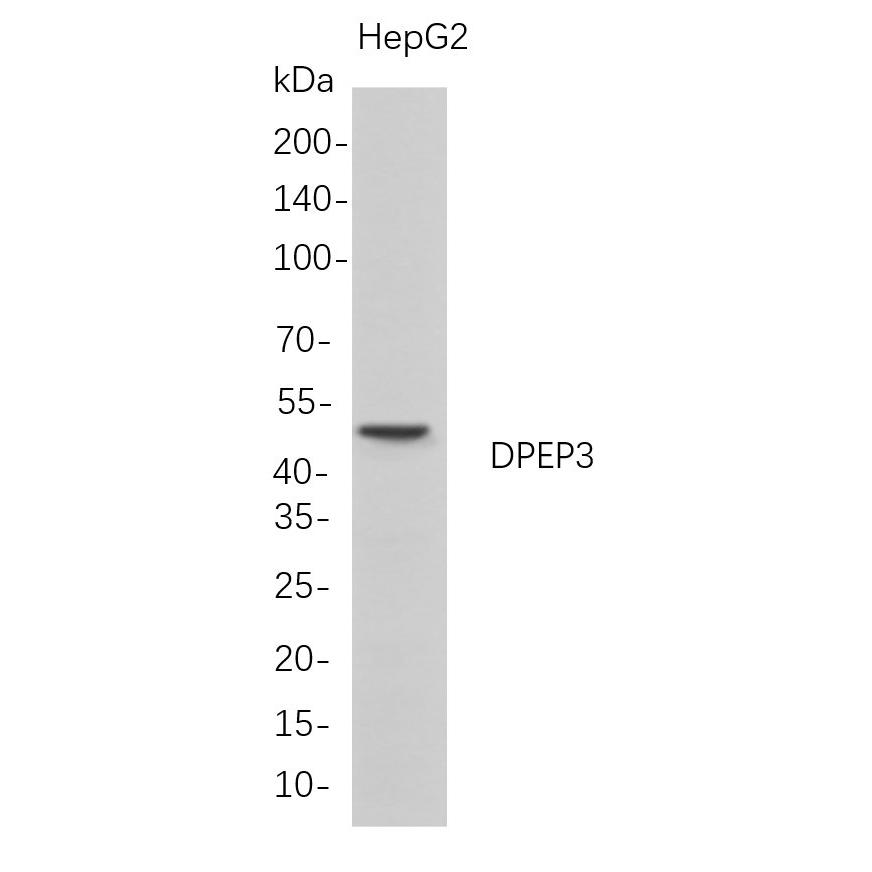
MW(Observed)54kD
Host SpeciesRabbit
IsotypeIgG,Kappa
Conjugate/ModificationUnmodified
Recommended Dilution RatioWB 1:1000-5000; IHC 1:100-300; IP 1:50-100 / Note: For IHC, we suggest antigen retrieval with TE buffer pH 9.0 (Cat#WT1004)
FormulationPBS, 50% glycerol, 0.05% Proclin 300, 0.05%BSA
PurificationRecombinant Antibody expressed in animal component-free (ACF) media, purified via Protein A affinity chromatography.
Storage-15°C to -25°C/1 year(Do not lower than -25°C)
Concentration
ClonalityMonoclonal
Clone NumberRM0779R
ImmunogenThe specific immunogen used to produce this antibody is proprietary information.
SpecificityEndogenous
Gene NameDPEP3; UNQ834/PRO1772
Protein NameDipeptidase 3
Other NameDPEP3; / UNQ834/PRO1772; / Dipeptidase 3
SpeciesHuman
Gene ID64180
UniprotQ9H4B8
Species.1
Gene ID.1
Uniprot.1
Species.2
Gene ID.2
Uniprot.2
Cellular LocalizationMembrane; Lipid-anchor, GPI-anchor.
Tissue Expression
Signaling_pathway
Research Areas
FunctionLacks dipeptidase activity and is unable to hydrolyze cystinyl-bis-glycine, leukotriene D4 and the beta-lactam antibiotic imipenem (PubMed:32325220). The absence of activity may be due to the inability of asparagine (instead of aspartate found in DPEP1/2) at position 359 to function as the acid/base catalyst and activate the nucleophilic water/hydroxide (PubMed:32325220). A tyrosine (instead of histidine) at position 269 reduces affinity for the beta zinc and may cause substrate steric hindrance (PubMed:32325220). {ECO:0000269|PubMed:32325220}.
Please login to post questions

Back to Top
Product has been added to your cart

