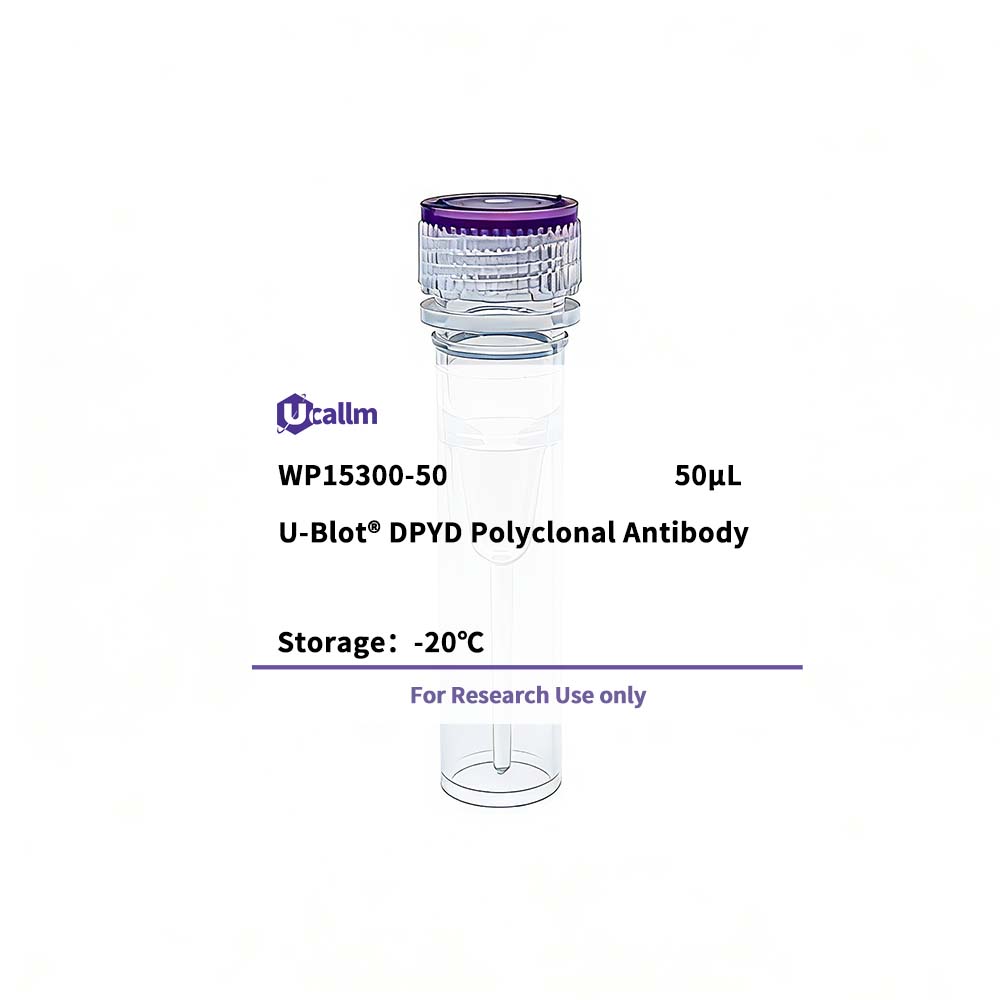
SKU: WP15300 Categories: ,

DPYD Polyclonal Antibody

Price range: $268.00 through $328.00

SKU: WP15300-100
Enter the quantity you would like, or drag the panel to find the quantity and price that best for you
Bulk QuoteAuthorize OEM & ODM

Product details

Background:

The protein encoded by this gene is a pyrimidine catabolic enzyme and the initial and rate-limiting factor in the pathway of uracil and thymidine catabolism. Mutations in this gene result in dihydropyrimidine dehydrogenase deficiency, an error in pyrimidine metabolism associated with thymine-uraciluria and an increased risk of toxicity in cancer patients receiving 5-fluorouracil chemotherapy. Two transcript variants encoding different isoforms have been found for this gene. [provided by RefSeq, May 2009],


Specifications

Size50μL/100μL
TargetDPYD
ReactivityHuman, Mouse, Rat
ApplicationsWB, IHC, IF, ELISA
MW(Calculated)
MW(Observed)120kD
Host SpeciesRabbit
IsotypeIgG
Conjugate/ModificationUnmodified
Recommended Dilution RatioWB 1:500-1:2000; IHC: 1:100-300; ELISA 1:20000; IF 1:50-200 / Note: For IHC, we suggest antigen retrieval with TE buffer pH 9.0 (Cat#WT1004)
FormulationLiquid in PBS containing 50% glycerol, 0.5% BSA and 0.02% sodium azide.
PurificationThe antibody was affinity-purified from rabbit antiserum by affinity-chromatography using epitope-specific immunogen.
Storage-15°C to -25°C/1 year(Do not lower than -25°C)
Concentration1 mg/ml
ClonalityPolyclonal
Clone Number
ImmunogenThe antiserum was produced against synthesized peptide derived from the Internal region of human DPYD. AA range:351-400
SpecificityDPYD Polyclonal Antibody detects endogenous levels of DPYD protein.
Gene NameDPYD
Protein NameDihydropyrimidine dehydrogenase [NADP(+)]
Other NameDPYD; / Dihydropyrimidine dehydrogenase [NADP; / +; / ]; / DHPDHase; / DPD; / Dihydrothymine dehydrogenase; / Dihydrouracil dehydrogenase
SpeciesHuman
Gene ID1806
UniprotQ12882,
Species.1Mouse
Gene ID.199586
Uniprot.1Q8CHR6,
Species.2Rat
Gene ID.281656
Uniprot.2O89000
Cellular LocalizationCytoplasm.
Tissue ExpressionFound in most tissues with greatest activity found in liver and peripheral blood mononuclear cells.
Signaling_pathway
Research Areas>>Pyrimidine metabolism; / >>beta-Alanine metabolism; / >>Pantothenate and CoA biosynthesis; / >>Drug metabolism - other enzymes; / >>Metabolic pathways
FunctionCatalytic activity:5,6-dihydrouracil + NADP(+) = uracil + NADPH.,cofactor:Binds 2 4Fe-4S clusters. Contains approximately 33 iron atoms per molecule.,cofactor:Binds 2 FAD.,cofactor:Binds 2 FMN.,Disease:Defects in DPYD are the cause of dihydropyrimidine dehydrogenase deficiency (DPYD deficiency) [MIM:274270]; also known as hereditary thymine-uraciluria or familial pyrimidinemia. DPYD deficiency is a disease characterized by persistent urinary excretion of excessive amounts of uracil, thymine and 5-hydroxymethyluracil. Patients suffering from this disease show a severe reaction to the anticancer drug 5-fluorouracil. This reaction includes stomatitis, Leukopenia, thrombocytopenia, hair loss, diarrhea, fever, marked weight loss, cerebellar ataxia, and neurologic symptoms, progressing to semicoma.,Function:Involved in pyrimidine base degradation. Catalyzes the reduction of uracil and thymine. Also involved the degradation of the chemotherapeutic drug 5-fluorouracil.,pathway:Amino-acid biosynthesis; beta-alanine biosynthesis.,similarity:Belongs to the dihydropyrimidine dehydrogenase family.,similarity:Contains 3 4Fe-4S ferredoxin-type domains.,subunit:Homodimer.,tissue specificity:Found in most tissues with greatest activity found in liver and peripheral blood mononuclear cells.,
Please login to post questions
Back to Top
Product has been added to your cart
