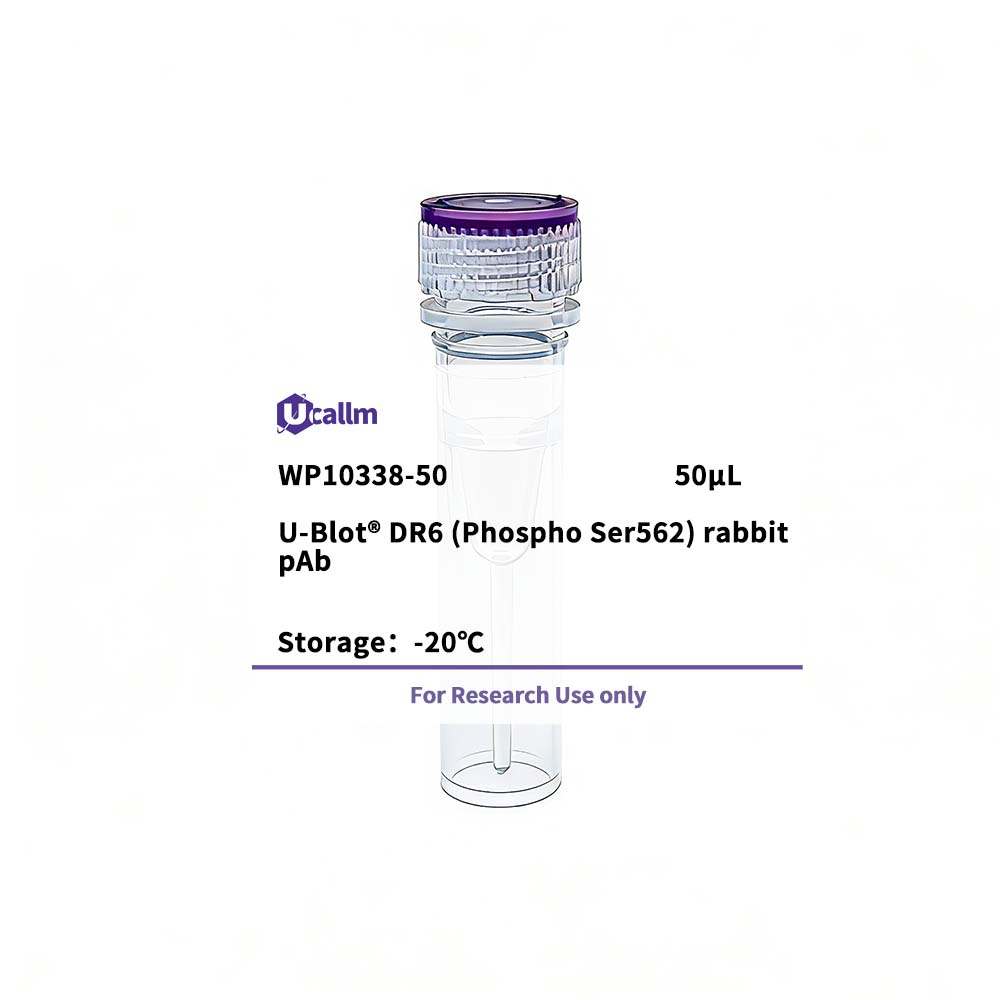
SKU: WP10338 Categories: ,

DR6 (Phospho Ser562) rabbit pAb

Price range: $288.00 through $368.00

SKU: WP10338-100
Enter the quantity you would like, or drag the panel to find the quantity and price that best for you
Bulk QuoteAuthorize OEM & ODM

Product details

Background:

This gene encodes a member of the tumor necrosis factor receptor superfamily. The encoded protein activates nuclear factor kappa-B and mitogen-activated protein kinase 8 (also called c-Jun N-terminal kinase 1), and induces cell apoptosis. Through its death domain, the encoded receptor interacts with tumor necrosis factor receptor type 1-associated death domain (TRADD) protein, which is known to mediate signal transduction of tumor necrosis factor receptors. Knockout studies in mice suggest that this gene plays a role in T-helper cell activation, and may be involved in inflammation and immune regulation. [provided by RefSeq, Jul 2013],


Specifications

Size50μL/100μL
TargetDR6 Phospho Ser562
ReactivityHuman, Mouse, Rat
ApplicationsWB
MW(Calculated)
MW(Observed)72kD
Host SpeciesRabbit
IsotypeIgG
Conjugate/Modificationphosphate
Recommended Dilution RatioWB 1:1000-2000
FormulationLiquid in PBS containing 50% glycerol, 0.5% BSA and 0.02% sodium azide.
PurificationThe antibody was affinity-purified from rabbit serum by affinity-chromatography using specific immunogen.
Storage-15°C to -25°C/1 year(Do not lower than -25°C)
Concentration1 mg/ml
ClonalityPolyclonal
Clone Number
ImmunogenSynthesized phosho peptide around human DR6 (Ser562)
SpecificityThis antibody detects endogenous levels of Human Mouse Rat DR6 (phospho-Ser562)
Gene NameTNFRSF21 DR6 UNQ437/PRO868
Protein NameDR6 (Ser562)
Other NameTumor necrosis factor receptor superfamily member 21; / Death receptor 6; / CD antigen CD358
SpeciesHuman
Gene ID27242
UniprotO75509,
Species.1Mouse
Gene ID.194185
Uniprot.1Q9EPU5
Species.2
Gene ID.2
Uniprot.2
Cellular LocalizationCell membrane; Single-pass type I membrane protein .
Tissue ExpressionDetected in fetal spinal cord and in brain neurons, with higher levels in brain from Alzheimer disease patients (at protein level). Highly expressed in heart, brain, placenta, pancreas, lymph node, thymus and prostate. Detected at lower levels in lung, skeletal muscle, kidney, testis, uterus, small intestine, colon, spleen, bone marrow and fetal liver. Very low levels were found in adult liver and peripheral blood leukocytes.
Signaling_pathwayEnvironmental Information Processing >> Signaling molecules and interaction >> Cytokine-cytokine receptor interaction
Research Areas>>Cytokine-cytokine receptor interaction
FunctionCaution:It is uncertain whether Met-1 or Met-25 is the initiator.,Function:May activate NF-kappa-B and JNK and promote apoptosis.,similarity:Contains 1 death domain.,similarity:Contains 4 TNFR-Cys repeats.,subunit:Associates with TRADD.,tissue specificity:Highly expressed in heart, brain, placenta, pancreas, lymph node, thymus and prostate. Detected at lower levels in lung, skeletal muscle, kidney, testis, uterus, small intestine, colon, spleen, bone marrow and fetal liver. Very low levels were found in adult liver and peripheral blood leukocytes.,
Please login to post questions
Back to Top
Product has been added to your cart
