U-Blot® EAAT1 Rabbit mAb

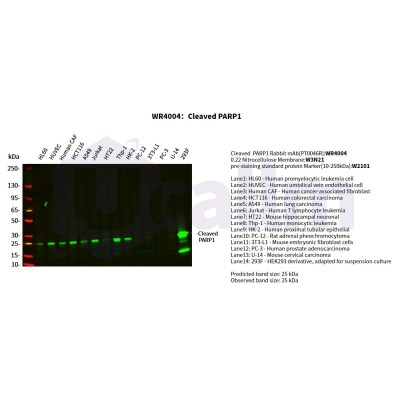
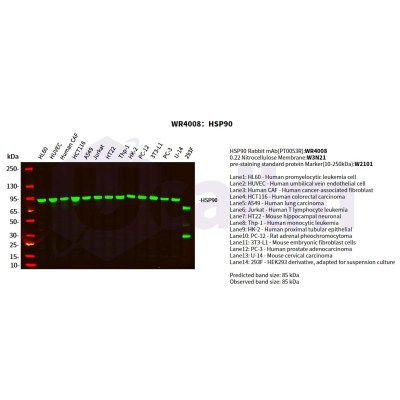
WR4103 Various whole cell lysates were separated by 4-20% SDS-PAGE, and the primary antibody was used at 4°C, over night with a 1:2500 dilution . The Dylight 800-conjugated Goat anti-Rabbit antibody(Cat:WS0446) was used to detect the antibody.

WR4103 Immunohistochemical analysis of paraffin-embedded rat brain tissue. 1, primary Antibody was diluted at 1:200(4~C,overnight). 2, EDTA pH 9.0 was used for antibody retrieval(>98~C,20min). 3,Secondary antibody was diluted at 1:200(room tempeRature, 30min).
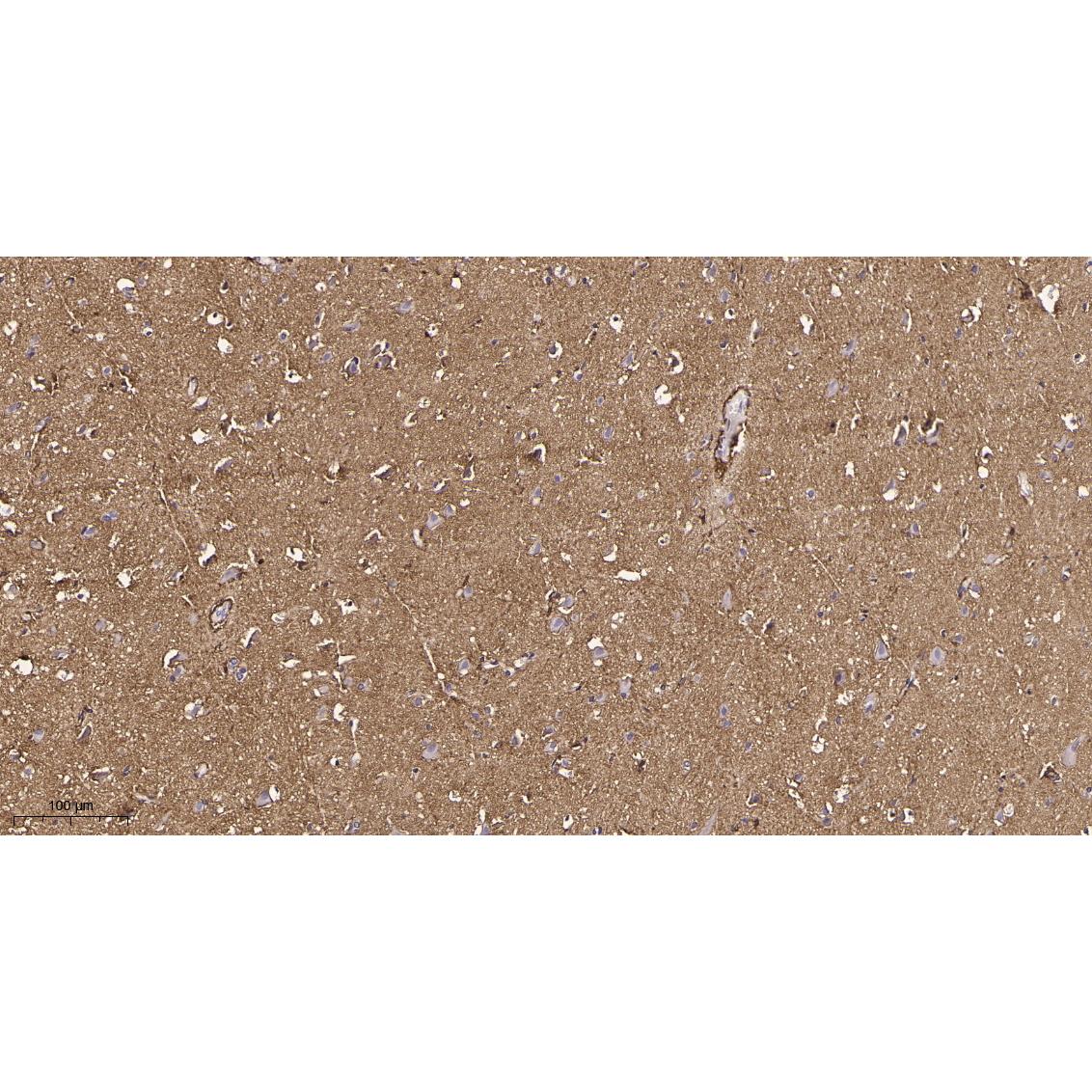
WR4103 Immunohistochemical analysis of paraffin-embedded human brain tissue. 1, primary Antibody was diluted at 1:200(4~C,overnight). 2, EDTA pH 9.0 was used for antibody retrieval(>98~C,20min). 3,Secondary antibody was diluted at 1:200(room tempeRature, 30min).

WR4103 Immunohistochemical analysis of paraffin-embedded mouse brain tissue. 1, primary Antibody was diluted at 1:200(4~C,overnight). 2, EDTA pH 9.0 was used for antibody retrieval(>98~C,20min). 3,Secondary antibody was diluted at 1:200(room tempeRature, 30min).
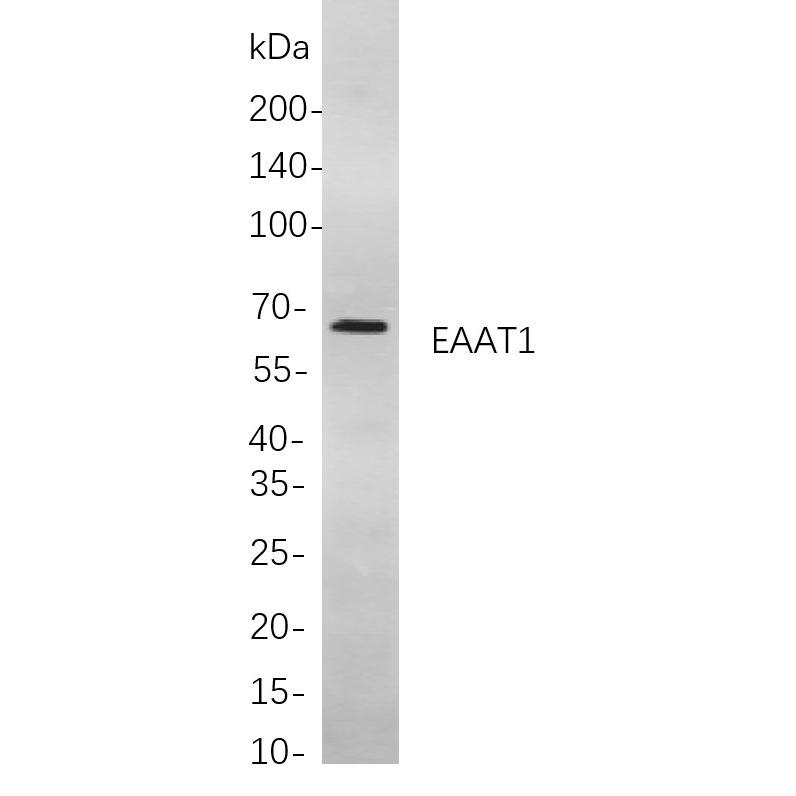
WR4103 Western blot analysis of lysates from U-87MG cells, using EAAT1 Rabbit mAb. The HRP-conjugated Goat anti-Rabbit IgG antibody (WS0002) was used to detect the antibody.
Price range: $268.00 through $328.00
Product details
Background:This gene encodes a member of a member of a high affinity glutamate transporter family. This gene functions in the termination of excitatory neurotransmission in central nervous system. Mutations are associated with episodic ataxia, Type 6. Alternative splicing results in multiple transcript variants.[provided by RefSeq, Feb 2014],
Specifications
| Size | 50μL/100μL |
| Target | EAAT1 |
| Reactivity | Human, Mouse, Rat |
| Applications | WB, IHC, IF, ELISA |
| MW(Calculated) | 60kD |
| MW(Observed) | 59kD |
| Host Species | Rabbit |
| Isotype | IgG,Kappa |
| Conjugate/Modification | Unmodified |
| Recommended Dilution Ratio | IHC 1:200-1000; WB 1:500-2000; IF 1:200-1000; ELISA 1:5000-20000; / Note: For IHC, we suggest antigen retrieval with TE buffer pH 9.0 (Cat#WT1004) |
| Formulation | PBS, 50% glycerol, 0.05% Proclin 300, 0.05%BSA |
| Purification | Recombinant Antibody expressed in animal component-free (ACF) media, purified via Protein A affinity chromatography. |
| Storage | -15°C to -25°C/1 year(Do not lower than -25°C) |
| Concentration | |
| Clonality | Monoclonal |
| Clone Number | RM0196R |
| Immunogen | The specific immunogen used to produce this antibody is proprietary information. |
| Specificity | Endogenous |
| Gene Name | SLC1A3 |
| Protein Name | Excitatory amino acid transporter 1 |
| Other Name | SLC1A3; / EAAT1; / GLAST; / GLAST1; / Excitatory amino acid transporter 1; / Sodium-dependent glutamate/aspartate transporter 1; / GLAST-1; / Solute carrier family 1 member 3 |
| Species | Human |
| Gene ID | 6507 |
| Uniprot | P43003, |
| Species.1 | Mouse |
| Gene ID.1 | |
| Uniprot.1 | P56564 |
| Species.2 | |
| Gene ID.2 | |
| Uniprot.2 | |
| Cellular Localization | Cell membrane |
| Tissue Expression | Detected in brain (PubMed:8218410, PubMed:7521911, PubMed:8123008). Detected at very much lower levels in heart, lung, placenta and skeletal muscle (PubMed:7521911, PubMed:8123008). Highly expressed in cerebellum, but also found in frontal cortex, hippocampus and basal ganglia (PubMed:7521911). |
| Signaling_pathway | Organismal Systems >> Nervous system >> Glutamatergic synapse;Organismal Systems >> Nervous system >> Synaptic vesicle cycle;Human Diseases >> Neurodegenerative disease >> Huntington disease |
| Research Areas | >>Synaptic vesicle cycle; / >>Glutamatergic synapse; / >>Huntington disease |
| Function | Disease:Defects in SLC1A3 are the cause of episodic ataxia type 6 (EA6) [MIM:612656]. EA6 is characterized by episodic ataxia, seizures, migraine and alternating hemiplegia.,Function:Transports L-glutamate and also L- and D-aspartate. Essential for terminating the postsynaptic action of glutamate by rapidly removing released glutamate from the synaptic cleft. Acts as a symport by cotransporting sodium.,PTM:Glycosylated.,similarity:Belongs to the sodium:dicarboxylate (SDF) symporter (TC 2.A.23) family.,tissue specificity:Highly expressed in cerebellum, but also found in frontal cortex, hippocampus and basal ganglia., |
Please login to post questions
Related products