SKU: WP12124 Categories: ,

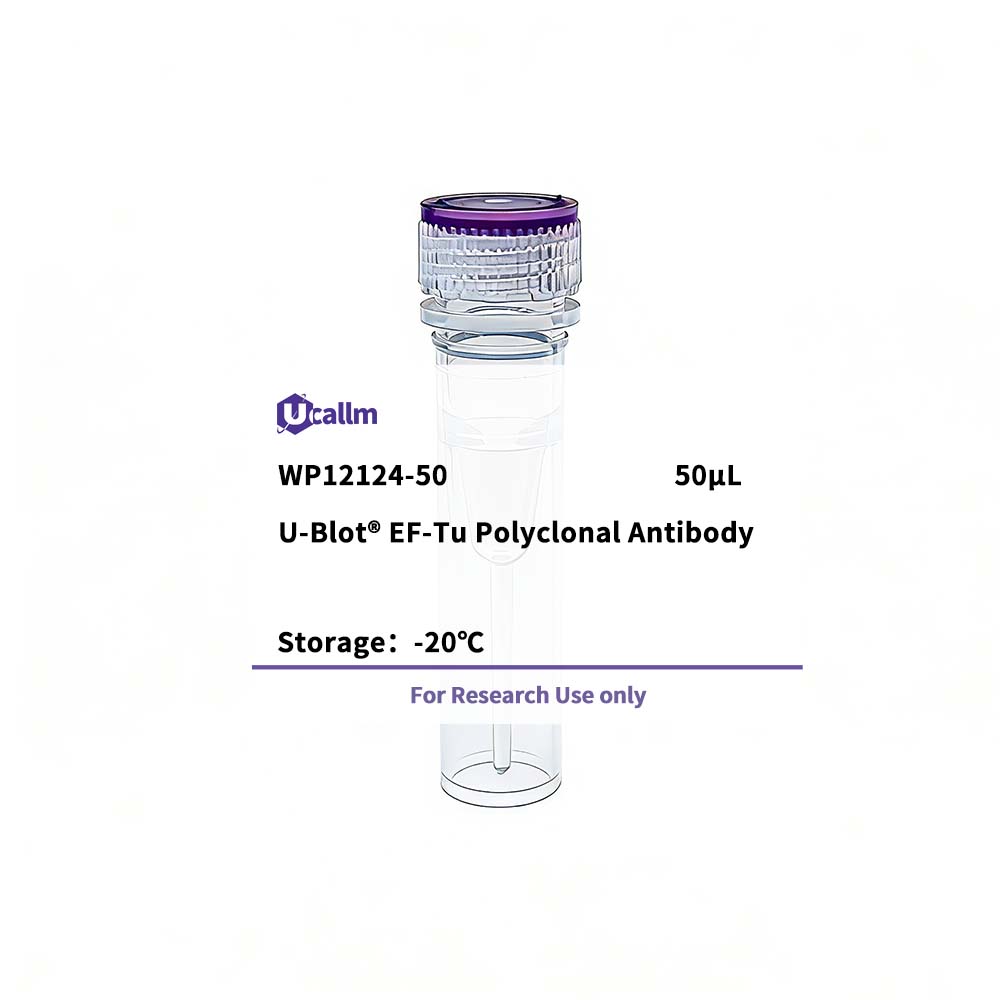
EF-Tu Polyclonal Antibody

Price range: $268.00 through $328.00

SKU: WP12124-100
Enter the quantity you would like, or drag the panel to find the quantity and price that best for you
Bulk QuoteAuthorize OEM & ODM

Product details

Background:

This gene encodes a protein which participates in protein translation in mitochondria. Mutations in this gene have been associated with combined oxidative phosphorylation deficiency resulting in lactic acidosis and fatal encephalopathy. A pseudogene has been identified on chromosome 17. [provided by RefSeq, Jul 2008],

Specifications

Size50μL/100μL
TargetEF-Tu
ReactivityHuman, Mouse, Rat
ApplicationsWB, IHC, IF, ELISA
MW(Calculated)
MW(Observed)50kD
Host SpeciesRabbit
IsotypeIgG
Conjugate/ModificationUnmodified
Recommended Dilution RatioWB 1:500-1:2000; IHC 1:100-1:300; ELISA 1:40000; IF 1:50-200 / Note: For IHC, we suggest antigen retrieval with TE buffer pH 9.0 (Cat#WT1004)
FormulationLiquid in PBS containing 50% glycerol, 0.5% BSA and 0.02% sodium azide.
PurificationThe antibody was affinity-purified from rabbit antiserum by affinity-chromatography using epitope-specific immunogen.
Storage-15°C to -25°C/1 year(Do not lower than -25°C)
Concentration1 mg/ml
ClonalityPolyclonal
Clone Number
ImmunogenThe antiserum was produced against synthesized peptide derived from human TUFM. AA range:301-350
SpecificityEF-Tu Polyclonal Antibody detects endogenous levels of EF-Tu protein.
Gene NameTUFM
Protein NameElongation factor Tu mitochondrial
Other NameTUFM; / Elongation factor Tu; / mitochondrial; / EF-Tu; / P43
SpeciesHuman
Gene ID7284
UniprotP49411,
Species.1Mouse
Gene ID.1233870
Uniprot.1Q8BFR5,
Species.2Rat
Gene ID.2293481
Uniprot.2P85834
Cellular LocalizationMitochondrion .
Tissue ExpressionBrain,Cajal-Retzius cell,Heart,Kidney,Liver,Lung,Placenta,P
Signaling_pathway
Research Areas
FunctionDisease:Defects in TUFM are the cause of combined oxidative phosphorylation deficiency type 4 (COXPD4) [MIM:610678]. COXPD4 is characterized by neonatal lactic acidosis, rapidly progressive encephalopathy, severely decreased mitochondrial protein synthesis, and combined deficiency of mtDNA-related mitochondrial respiratory chain complexes.,Function:This protein promotes the GTP-dependent binding of aminoacyl-tRNA to the A-site of ribosomes during protein biosynthesis.,similarity:Belongs to the GTP-binding elongation factor family. EF-Tu/EF-1A subfamily.,
Please login to post questions
Back to Top
Product has been added to your cart
