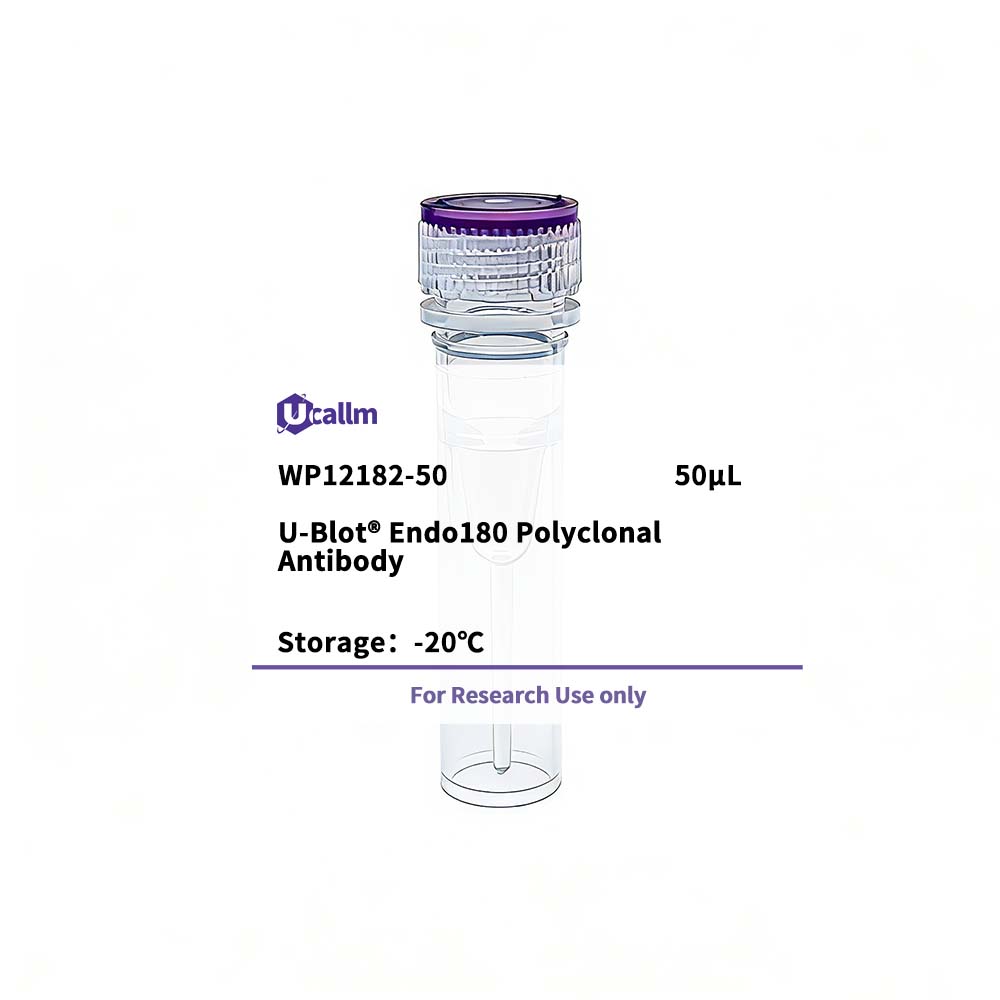
SKU: WP12182 Categories: ,

Endo180 Polyclonal Antibody

Price range: $268.00 through $328.00

SKU: WP12182-100
Enter the quantity you would like, or drag the panel to find the quantity and price that best for you
Bulk QuoteAuthorize OEM & ODM

Product details

Background:

mannose receptor C type 2(MRC2) Homo sapiens This gene encodes a member of the mannose receptor family of proteins that contain a fibronectin type II domain and multiple C-type lectin-like domains. The encoded protein plays a role in extracellular matrix remodeling by mediating the internalization and lysosomal degradation of collagen ligands. Expression of this gene may play a role in the tumorigenesis and metastasis of several malignancies including breast cancer, gliomas and metastatic bone disease. [provided by RefSeq, Feb 2012],

Specifications

Size50μL/100μL
TargetEndo180
ReactivityHuman, Mouse, Rat
ApplicationsWB, IHC, IF, ELISA
MW(Calculated)
MW(Observed)167kD
Host SpeciesRabbit
IsotypeIgG
Conjugate/ModificationUnmodified
Recommended Dilution RatioWB 1:500-1:2000; IHC 1:100-1:300; IF 1:200-1:1000; ELISA 1:20000; Not yet tested in other applications. / Note: For IHC, we suggest antigen retrieval with TE buffer pH 9.0 (Cat#WT1004)
FormulationLiquid in PBS containing 50% glycerol, 0.5% BSA and 0.02% sodium azide.
PurificationThe antibody was affinity-purified from rabbit antiserum by affinity-chromatography using epitope-specific immunogen.
Storage-15°C to -25°C/1 year(Do not lower than -25°C)
Concentration1 mg/ml
ClonalityPolyclonal
Clone Number
ImmunogenThe antiserum was produced against synthesized peptide derived from human MRC2. AA range:121-170
SpecificityEndo180 Polyclonal Antibody detects endogenous levels of Endo180 protein.
Gene NameMRC2
Protein NameC-type mannose receptor 2
Other NameMRC2; / CLEC13E; / ENDO180; / KIAA0709; / UPARAP; / C-type mannose receptor 2; / C-type lectin domain family 13 member E; / Endocytic receptor 180; / Macrophage mannose receptor 2; / Urokinase-type plasminogen activator receptor-associated protein; / UPAR-asso
SpeciesHuman
Gene ID9902
UniprotQ9UBG0,
Species.1Mouse
Gene ID.117534
Uniprot.1Q64449,
Species.2Rat
Gene ID.2498011
Uniprot.2Q4TU93
Cellular LocalizationMembrane; Single-pass type I membrane protein.
Tissue ExpressionUbiquitous with low expression in brain, placenta, lung, kidney, pancreas, spleen, thymus and colon. Expressed in endothelial cells, fibroblasts and macrophages. Highly expressed in fetal lung and kidney.
Signaling_pathwayCellular Processes >> Transport and catabolism >> Phagosome
Research Areas>>Phagosome; / >>Tuberculosis
FunctionDomain:C-type lectin domains 3 to 8 are not required for calcium-dependent binding of mannose, fucose and N-acetylglucosamine. C-type lectin domain 2 is responsible for sugar-binding in a calcium-dependent manner.,Domain:Fibronectin type-II domain mediates collagen-binding.,Domain:Ricin B-type lectin domain contacts with the second C-type lectin domain.,Function:May play a role as endocytotic lectin receptor displaying calcium-dependent lectin activity. Internalizes glycosylated ligands from the extracellular space for release in an endosomal compartment via clathrin-mediated endocytosis. May be involved in plasminogen activation system controlling the extracellular level of PLAUR/PLAU, and thus may regulate protease activity at the cell surface. May contribute to cellular uptake, remodeling and degradation of extracellular collagen matrices. May play a role during cancer progression as well as in other chronic tissue destructive diseases acting on collagen turnover. May participate in remodeling of extracellular matrix co-operating with the matrix metalloproteinases (MMPs).,online information:Endo180,PTM:N-glycosylated.,PTM:Phosphorylated.,similarity:Contains 1 fibronectin type-II domain.,similarity:Contains 1 ricin B-type lectin domain.,similarity:Contains 8 C-type lectin domains.,subunit:Interacts with C-terminal region of type I collagen/COL1A1 (By similarity). Interacts directly with PLAUR/UPAR and PLAU/pro-UPA to form a tri-molecular complex. Interacts with collagen V.,tissue specificity:Ubiquitous with low expression in brain, placenta, lung, kidney, pancreas, spleen, thymus and colon. Expressed in endothelial cells, fibroblasts and macrophages. Highly expressed in fetal lung and kidney.,
Please login to post questions
Back to Top
Product has been added to your cart



