SKU: WP2600 Categories: ,

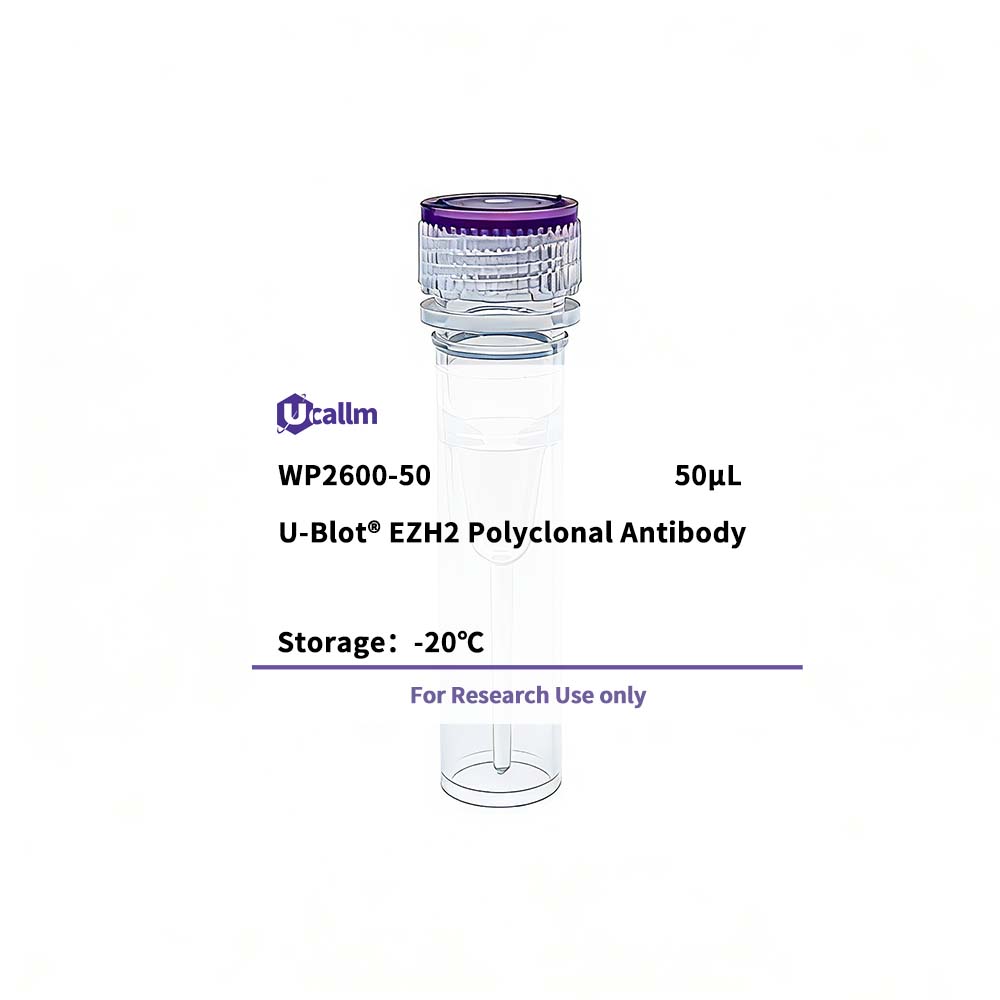
EZH2 Polyclonal Antibody

Price range: $268.00 through $328.00

SKU: WP2600-100
Enter the quantity you would like, or drag the panel to find the quantity and price that best for you
Bulk QuoteAuthorize OEM & ODM

Product details

Background:

enhancer of zeste 2 polycomb repressive complex 2 subunit(EZH2) Homo sapiens This gene encodes a member of the Polycomb-group (PcG) family. PcG family members form multimeric protein complexes, which are involved in maintaining the transcriptional repressive state of genes over successive cell generations. This protein associates with the embryonic ectoderm development protein, the VAV1 oncoprotein, and the X-linked nuclear protein. This protein may play a role in the hematopoietic and central nervous systems. Multiple alternatively splcied transcript variants encoding distinct isoforms have been identified for this gene. [provided by RefSeq, Feb 2011],

Specifications

Size50μL/100μL
TargetEZH2
ReactivityHuman, Mouse
ApplicationsWB, ELISA
MW(Calculated)
MW(Observed)82kD
Host SpeciesRabbit
IsotypeIgG
Conjugate/ModificationUnmodified
Recommended Dilution RatioWB 1:500-2000; ELISA 1:5000-20000
FormulationLiquid in PBS containing 50% glycerol,0.5% BSA and 0.02% sodium azide.
PurificationThe antibody was affinity-purified from rabbit antiserum by affinity-chromatography using epitope-specific immunogen.
Storage-15°C to -25°C/1 year(Do not lower than -25°C)
Concentration1 mg/ml
ClonalityPolyclonal
Clone Number
ImmunogenSynthesized peptide derived from part region of human protein
SpecificityEZH2 Polyclonal Antibody detects endogenous levels of protein.
Gene NameEZH2 KMT6
Protein NameHistone-lysine N-methyltransferase EZH2 (ENX-1) (Enhancer of zeste homolog 2) (Lysine N-methyltransferase 6)
Other Name
SpeciesHuman
Gene ID2146
UniprotQ15910,
Species.1Mouse
Gene ID.114056
Uniprot.1Q61188
Species.2
Gene ID.2
Uniprot.2
Cellular LocalizationNucleus . Localizes to the inactive X chromosome in trophoblast stem cells. .
Tissue ExpressionIn the ovary, expressed in primordial follicles and oocytes and also in external follicle cells (at protein level) (PubMed:31451685). Expressed in many tissues (PubMed:14532106). Overexpressed in numerous tumor types including carcinomas of the breast, colon, larynx, lymphoma and testis (PubMed:14532106).
Signaling_pathwayHuman Diseases >> Cancer: overview >> MicroRNAs in cancer
Research Areas>>Lysine degradation; / >>Metabolic pathways; / >>MicroRNAs in cancer
FunctionCatalytic activity:S-adenosyl-L-methionine + histone L-lysine = S-adenosyl-L-homocysteine + histone N(6)-methyl-L-lysine.,Caution:Two variants of the PRC2 complex have been described, termed PRC3 and PRC4. Each of the three complexes may include a different complement of EED isoforms, although the precise sequences of the isoforms in each complex have not been determined. The PRC2 and PRC4 complexes may also methylate 'Lys-26' of histone H1 in addition to 'Lys-27' of histone H3 (PubMed:15099518 and PubMed:15684044), although other studies have demonstrated no methylation of 'Lys-26' of histone H1 by PRC2 (PubMed:16431907).,developmental stage:Expression decreases during senescence of embryonic fibroblasts (HEFs). Expression peaks at the G1/S phase boundary.,Function:Polycomb group (PcG) protein. Catalytic subunit of the PRC2/EED-EZH2 complex, which methylates 'Lys-9' and 'Lys-27' of histone H3, leading to transcriptional repression of the affected target gene. Able to mono-, di- and trimethylate 'Lys-27' of histone H3 to form H3K27me1, H3K27me2 and H3K27me3, respectively. Compared to EZH2-containing complexes, it is more abundant in embryonic stem cells and plays a major role in forming H3K27me3, which is required for embryonic stem cell identity and proper differentiation. The PRC2/EED-EZH2 complex may also serve as a recruiting platform for DNA methyltransferases, thereby linking two epigenetic repression systems. Genes repressed by the PRC2/EED-EZH2 complex include HOXC8, HOXA9, MYT1 and CDKN2A.,induction:Expression is induced by E2F1, E2F2 and E2F3. Expression is reduced in cells subject to numerous types of stress including UV-, IR- and bleomycin-induced DNA damage and by activation of TP53/p53.,PTM:Phosphorylated by AKT1. Phosphorylation by AKT1 reduces methyltransferase activity.,similarity:Belongs to the histone-lysine methyltransferase family. EZ subfamily.,similarity:Contains 1 SET domain.,subunit:Binds ATRX via the SET domain (Probable). Component of the PRC2/EED-EZH2 complex, which includes EED, EZH2, SUZ12, RBBP4 and RBBP7 and possibly AEBP2. The minimum components required for methyltransferase activity of the PRC2/EED-EZH2 complex are EED, EZH2 and SUZ12. The PRC2 complex may also interact with DNMT1, DNMT3A, DNMT3B and PHF1 via the EZH2 subunit and with SIRT1 via the SUZ12 subunit. Interacts with HDAC1 and HDAC2.,tissue specificity:Expressed in many tissues. Overexpressed in numerous tumor types including carcinomas of the breast, colon, larynx, lymphoma and testis.,
Please login to post questions
Back to Top
Product has been added to your cart

