


F19A4 rabbit pAb
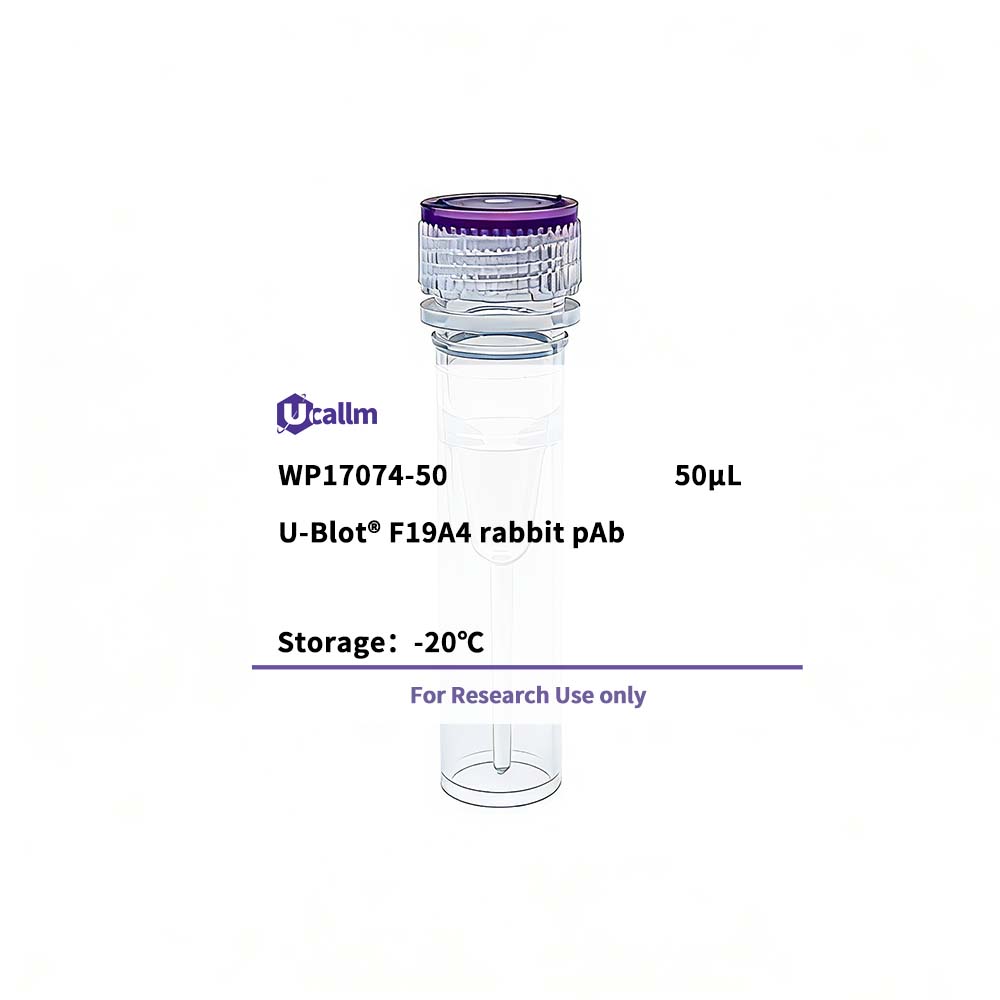
Ucallm_WP17074-50
Price range: $268.00 through $328.00
Product details
Background:
This gene is a member of the TAFA family which is composed of five highly homologous genes that encode small secreted proteins. These proteins contain conserved cysteine residues at fixed positions, and are distantly related to MIP-1alpha, a member of the CC-chemokine family. The TAFA proteins are predominantly expressed in specific regions of the brain, and are postulated to function as brain-specific chemokines or neurokines, that act as regulators of immune and nervous cells. Alternatively spliced transcript variants have been observed for this gene. [provided by RefSeq, Nov 2011],
Specifications
| Size | 50μL/100μL |
| Target | F19A4 |
| Reactivity | Human, Mouse |
| Applications | WB |
| MW(Calculated) | 15kD |
| MW(Observed) | |
| Host Species | Rabbit |
| Isotype | IgG |
| Conjugate/Modification | Unmodified |
| Recommended Dilution Ratio | WB 1:500-2000 |
| Formulation | Liquid in PBS containing 50% glycerol, 0.5% BSA and 0.02% sodium azide. |
| Purification | The antibody was affinity-purified from rabbit antiserum by affinity-chromatography using epitope-specific immunogen. |
| Storage | -15°C to -25°C/1 year(Do not lower than -25°C) |
| Concentration | 1 mg/ml |
| Clonality | Polyclonal |
| Clone Number | |
| Immunogen | Synthesized peptide derived from human F19A4 AA range: 40-90 |
| Specificity | This antibody detects endogenous levels of F19A4 at Human/Mouse |
| Gene Name | FAM19A4 TAFA4 |
| Protein Name | F19A4 |
| Other Name | |
| Species | Human |
| Gene ID | 151647 |
| Uniprot | Q96LR4, |
| Species.1 | Mouse |
| Gene ID.1 | 320701 |
| Uniprot.1 | Q7TPG5 |
| Species.2 | |
| Gene ID.2 | |
| Uniprot.2 | |
| Cellular Localization | Secreted . |
| Tissue Expression | Expressed in brain (PubMed:15028294). Expressed in LPS-stimulated monocytes and macrophages, especially in polarized M1 (PubMed:25109685). |
| Signaling_pathway | |
| Research Areas | |
| Function | Caution:The sequence shown here is derived from an Ensembl automatic analysis pipeline and should be considered as preliminary data.,similarity:Belongs to the FAM19/TAFA family.,tissue specificity:Brain-specific., |
Please login to post questions
Related products



